
What Does The Bible Say About Masturbation
June 18, 2024
What Does The Bible Say About Women Teaching
June 20, 2024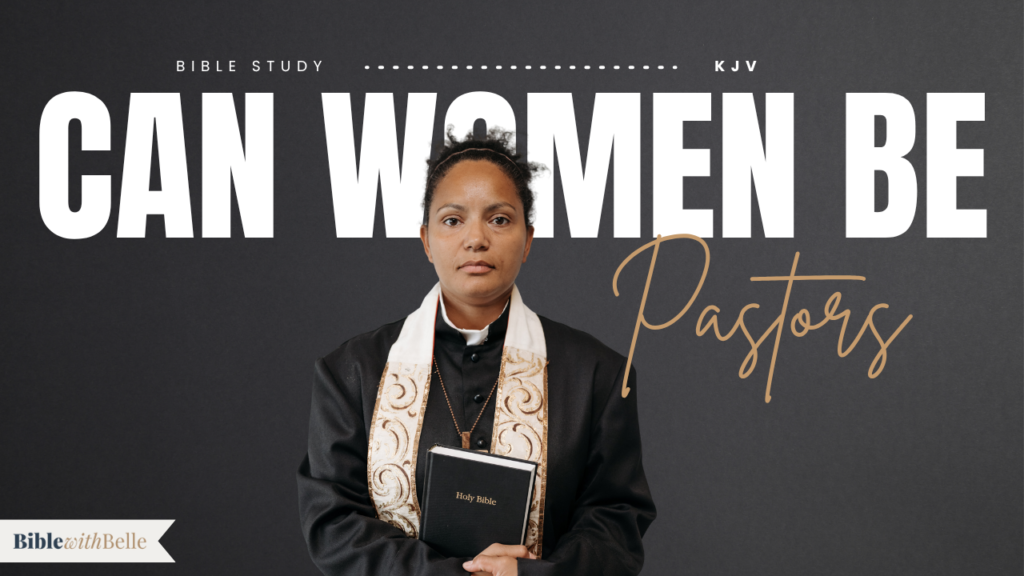
There are many women who love Jesus, study the Bible, and genuinely want to serve God. Some teach Sunday school, lead women’s Bible studies, share the gospel, and help others grow in their faith. Others feel drawn to preaching and pastoral ministry and want to understand what the Bible says about their role in the church.
This is a subject we need to approach with compassion. A woman who wants to serve God should never be made to feel that she is less valuable, less capable of understanding Scripture, or less important to the church simply because she is a woman. The Bible contains many examples of women who served the Lord faithfully, and their work should be recognised.
However, we also need to be willing to follow what Scripture teaches, even when it challenges what we might expect. The question is not whether women can serve God or whether they have important gifts. They can, and they do. The question is whether the Bible permits women to hold the office of pastor, responsible for the authoritative teaching and spiritual oversight of a local congregation.
When we examine Paul’s instructions about teaching and authority alongside the qualifications for church elders and overseers, we find a clear biblical basis for reserving this office for qualified men. We also need to look carefully at the women often mentioned as examples of female pastors, because serving faithfully in the early church is not the same as holding the office of pastor or elder.
Quick Answer: Can Women Be Pastors According to the Bible?
The New Testament teaches that women have important roles in the church, but its instructions about teaching, authority, and the qualifications of elders establish a pattern of qualified male leadership in the pastoral office.
The main passages are 1 Timothy 2:11–15, 1 Timothy 3:1–7, and Titus 1:5–9. Paul addresses women’s teaching and authority, then describes the qualifications of overseers and elders using male language, including the phrase “the husband of one wife.”
Read together, these passages provide a strong biblical basis for the conclusion that women should not hold the office of head pastor or elder responsible for the authoritative teaching and spiritual oversight of the congregation.
This does not mean women must remain silent in every church setting or cannot teach, disciple, evangelise, pray, prophesy, or serve in ministry. Scripture itself records women doing these things.
Some Christians interpret the passages about pastoral leadership differently. They understand Paul’s restrictions as addressing particular circumstances in the early church rather than establishing a continuing rule. However, the appeal to creation in 1 Timothy 2, together with the qualifications in 1 Timothy 3 and Titus 1, provides strong grounds for understanding the restriction as applying to the church beyond the original setting.
We also need to be careful when discussing the women mentioned in the New Testament. Phoebe, Priscilla, and Junia are often brought into this debate, but none is explicitly identified in Scripture as the head pastor of a local congregation. Phoebe is described in Romans 16:1 as a servant of the church in the King James Version, while some other translations use the word deacon. Neither description identifies her as a pastor or elder.
Let’s examine what the Bible actually says.
What If a Woman Feels Called to Preach the Gospel?
Some women genuinely love the Lord and feel a strong desire to tell others about Jesus. They want people to hear the gospel, understand the Bible, and come to know the truth. Perhaps they enjoy teaching Scripture, sharing their faith, or encouraging others to follow Christ. When that desire grows, they may begin to wonder whether God is calling them to become a pastor.
It is important to understand that being called to share the gospel is not the same as being called to hold the office of pastor.
Jesus commanded His followers to make disciples and teach others to obey His commands. Sharing the good news of salvation is not something reserved exclusively for men. Women can evangelise, explain the gospel, testify to what Christ has done, disciple other believers, and help people understand God’s Word.
However, a desire to spread the gospel does not automatically mean that someone should become a pastor. We need to distinguish between the desire to serve God and the specific responsibilities of a particular church office.
Matthew 28:19–20 — Jesus Commands His Followers to Make Disciples
Go ye therefore, and teach all nations, baptizing them in the name of the Father, and of the Son, and of the Holy Ghost:
Teaching them to observe all things whatsoever I have commanded you: and, lo, I am with you alway, even unto the end of the world. Amen.
Jesus commands His followers to make disciples and teach them to obey His commands. The work of spreading the gospel is central to the Christian faith.
A woman who feels a deep desire to tell people about Jesus should not automatically conclude that this desire is wrong simply because she cannot hold the office of pastor. She can share the gospel with family, friends, neighbours, and people she meets. She can participate in evangelism, support missionary work, disciple other women, and serve in many other ways that help people come to know Christ.
The important distinction is that the command to make disciples does not mean every believer is called to every ministry office. Christians have different gifts and responsibilities, and we must consider the specific instructions Scripture gives about those roles.
Romans 10:14–15 — The Importance of Preaching the Gospel
How then shall they call on him in whom they have not believed? and how shall they believe in him of whom they have not heard? and how shall they hear without a preacher?
And how shall they preach, except they be sent? as it is written, How beautiful are the feet of them that preach the gospel of peace, and bring glad tidings of good things!
Paul explains the importance of people hearing the gospel. Without hearing the good news about Jesus, people cannot respond to the message they have not yet received.
In this passage, Paul is discussing the proclamation of the gospel and the need for messengers to carry that message. The word preacher should not automatically be understood as meaning the modern office of pastor. Proclaiming the gospel and holding responsibility for the authoritative teaching and oversight of a local congregation are not identical roles.
A woman can share the gospel faithfully without becoming a head pastor. She can explain who Jesus is, tell others about His death and resurrection, and encourage people to repent and believe. The message of salvation is not something she must keep to herself.
How Can We Discern the Difference Between a Desire to Serve and a Call to Be a Pastor?
Sometimes a person experiences a strong desire to do something for God and assumes that the feeling must point towards a particular position. But a desire to serve the Lord does not automatically establish that someone is meant to hold a specific office.
We need to test our understanding against Scripture rather than allowing a feeling, however sincere, to determine what the Bible permits.
If a woman feels drawn to preach the gospel, she can ask herself what that desire actually involves. Does she want people to know Jesus? Does she want to explain Scripture, encourage believers, or help others understand salvation? Those are meaningful desires, and there are many ways to act on them faithfully.
If she believes she is being called to become a pastor, however, she also needs to examine the biblical qualifications and responsibilities of that office. A sincere feeling cannot override the instructions Scripture gives to the church.
This principle applies to men as well. A man who wants to be a pastor must not assume that his desire alone qualifies him. He must meet the biblical qualifications, demonstrate godly character, and be assessed by a church that takes Scripture seriously.
The question is not whether someone genuinely wants to serve God. The question is how that desire should be expressed in a way that is faithful to His Word.
Women Have an Important Part in Spreading the Gospel
The Bible does not teach that women must remain silent about Jesus or keep their faith to themselves. Women can share the good news, encourage others to follow Christ, explain Scripture in appropriate settings, and help build up the church.
A woman does not need the title of pastor to have a meaningful ministry. She can be faithful in sharing the gospel without holding an office that Scripture assigns to qualified men.
If you are a woman who feels a strong desire to serve the Lord, do not assume that the only way to fulfil that desire is to become a pastor. Ask God for wisdom, study His Word, seek guidance from mature Christians, and look for opportunities to use your gifts faithfully.
The desire to spread the gospel can be genuine and valuable without being a call to become a head pastor. We should encourage women to share Christ with others while also respecting the biblical qualifications for church leadership.
Men and Women Are Equally Valuable to God
Before looking at pastoral leadership, we need to establish an important truth: the Bible does not teach that women are inferior to men. Both were created by God, both bear His image, and both can know Him through Jesus Christ.
A woman’s worth is not determined by whether she holds a leadership title. She does not need to become a pastor to prove that she is gifted, faithful, intelligent, or valuable to God’s kingdom.
Genesis 1:27 — God Created Male and Female in His Image
So God created man in his own image, in the image of God created he him; male and female created he them.
Both men and women bear God’s image. Their dignity comes from their Creator, not from their position in the church.
Women have served God throughout the Bible in many meaningful ways. They have shown courage, spoken God’s truth, cared for others, supported ministry, and helped people grow in their faith. Their contributions should never be dismissed.
At the same time, equal worth does not automatically mean that every responsibility within the church has identical qualifications. We need to examine what Scripture says about each role rather than assume that equal value requires identical responsibilities.
Galatians 3:26–29 — All Believers Are One in Christ
For ye are all the children of God by faith in Christ Jesus.
For as many of you as have been baptized into Christ have put on Christ.
There is neither Jew nor Greek, there is neither bond nor free, there is neither male nor female: for ye are all one in Christ Jesus.
And if ye be Christ’s, then are ye Abraham’s seed, and heirs according to the promise.
Paul teaches that men and women share the same standing before God through faith in Jesus Christ. Salvation is not reserved for men, and women are not lesser members of God’s family.
However, this passage addresses our unity in Christ and our place among God’s people. It does not specifically set out the qualifications for pastors or elders. To understand church leadership, we must also consider the passages that directly address teaching, authority, and pastoral responsibilities.
What Does the Bible Say About Women Teaching and Leading the Church?
One of the most important passages on this subject is found in Paul’s first letter to Timothy. It addresses women’s learning, teaching, and authority, and it is central to understanding the biblical qualifications for pastoral leadership.
1 Timothy 2:11–15 — Paul’s Instructions About Teaching and Authority
Let the woman learn in silence with all subjection.
But I suffer not a woman to teach, nor to usurp authority over the man, but to be in silence.
For Adam was first formed, then Eve.
And Adam was not deceived, but the woman being deceived was in the transgression.
Notwithstanding she shall be saved in childbearing, if they continue in faith and charity and holiness with sobriety.
These verses need to be read carefully. Paul begins by instructing women to learn. He does not say that women should be excluded from understanding Scripture or growing in their knowledge of God.
He then addresses teaching and exercising authority over men. In the context of his instructions for the church, this passage provides a central reason for understanding the authoritative teaching and oversight of the congregation as responsibilities reserved for qualified men.
Notice that Paul explains his instruction by referring to Adam and Eve. He does not base his reasoning solely on a local custom. He appeals to the creation account, which is significant when considering whether his instruction applies beyond the original situation in Ephesus.
Some Christians argue that Paul was addressing false teaching or a particular problem in that church. However, the reference to creation, read alongside the qualifications for elders and overseers in his other letters, provides strong grounds for understanding the instruction as a continuing principle for church leadership.
It is also important not to misunderstand the word “silence” as a command that women must never speak in church. Other passages show women praying, prophesying, teaching in appropriate settings, and helping others understand the truth.
The distinction is between women serving and using their gifts in the church and holding the office responsible for authoritative teaching and spiritual oversight over the congregation.
The Bible’s Qualifications for Pastors and Elders
Paul does not leave the church to appoint leaders based simply on popularity, speaking ability, education, or personal ambition. He gives specific qualifications for those entrusted with spiritual oversight.
These qualifications are important because pastoral leadership is more than preaching a sermon. A pastor or elder is responsible for teaching sound doctrine, caring for the congregation, and helping protect the church from false teaching.
1 Timothy 3:1–7 — The Qualifications of an Overseer
This is a true saying, If a man desire the office of a bishop, he desireth a good work.
A bishop then must be blameless, the husband of one wife, vigilant, sober, of good behaviour, given to hospitality, apt to teach;
Not given to wine, no striker, not greedy of filthy lucre; but patient, not a brawler, not covetous;
One that ruleth well his own house, having his children in subjection with all gravity;
(For if a man know not how to rule his own house, how shall he take care of the church of God?)
Not a novice, lest being lifted up with pride he fall into the condemnation of the devil.
Moreover he must have a good report of them which are without; lest he fall into reproach and the snare of the devil.
Paul describes the qualifications of a bishop, or overseer. This office is closely associated with the role of elder and pastoral oversight in the New Testament church.
The wording is significant. Paul describes the overseer as “the husband of one wife” and uses male language throughout the qualifications. When we read this alongside his instructions in 1 Timothy 2, it supports the understanding that the pastoral office is intended for qualified men.
Some Christians argue that the wording focuses on marital faithfulness and character rather than excluding women. However, when the passage is read together with Paul’s teaching about authority and the creation of Adam and Eve, there is a strong biblical basis for male pastoral leadership.
We must also pay attention to the character required. Being male does not automatically qualify someone to be a pastor. He must be faithful, self-controlled, hospitable, mature, able to teach, and of good reputation.
A man who is arrogant, dishonest, abusive, or unwilling to live according to God’s Word does not meet these qualifications simply because he is a man. Churches must take the whole passage seriously.
Titus 1:5–9 — The Qualifications of Elders
For this cause left I thee in Crete, that thou shouldest set in order the things that are wanting, and ordain elders in every city, as I had appointed thee:
If any be blameless, the husband of one wife, having faithful children not accused of riot or unruly.
For a bishop must be blameless, as the steward of God; not selfwilled, not soon angry, not given to wine, no striker, not given to filthy lucre;
But a lover of hospitality, a lover of good men, sober, just, holy, temperate;
Holding fast the faithful word as he hath been taught, that he may be able by sound doctrine both to exhort and to convince the gainsayers.
Paul instructs Titus to appoint elders in the churches and describes the character expected of them. Again, the elder is described as “the husband of one wife.”
He must also be self-controlled, just, holy, hospitable, and committed to sound doctrine. He must understand God’s Word well enough to encourage believers and respond to teaching that contradicts the truth.
The repeated male description, considered alongside 1 Timothy 2, supports the conclusion that the pastoral office is reserved for qualified men.
This is not permission for men to dominate women or treat them as though they have no voice. A pastor is accountable to Christ and must care for God’s people faithfully. The qualifications in these passages are a serious responsibility, not a licence to control others.
Was Phoebe a Female Pastor?
Phoebe is one of the women most often mentioned in discussions about female pastors. Some people point to her as evidence that women held leadership positions in the early church. To understand what the Bible actually says, we need to look at the passage carefully.
Romans 16:1–2 — Phoebe Was a Servant of the Church
I commend unto you Phebe our sister, which is a servant of the church which is at Cenchrea:
That ye receive her in the Lord, as becometh saints, and that ye assist her in whatsoever business she hath need of you: for she hath been a succourer of many, and of myself also.
Paul commends Phoebe to the Christians in Rome and asks them to receive her and help her. He describes her as a servant of the church at Cenchrea and as someone who had helped many people, including himself.
Phoebe was clearly a respected Christian woman whose service mattered. Paul would not have commended her in this way if her work were unimportant.
But notice what the passage actually says: it does not call Phoebe a pastor, an elder, or the head of a congregation. It describes her as a servant of the church and someone who had helped many people.
Some modern Bible translations use the word deacon instead of servant. This is because the Greek word diakonos can refer to a servant or minister and can also be used for the church office of deacon. Translators and scholars disagree about whether Paul is identifying Phoebe specifically as a deacon or describing her more generally as a servant of the church.
It is therefore important not to make a stronger claim than the text supports. The KJV calls her a servant. Translations that call her a deacon are identifying a possible interpretation of the word Paul used. Neither translation calls her a pastor or elder.
Even if Phoebe held the office of deacon, that would not by itself establish that she was a head pastor. The New Testament distinguishes the qualifications for overseers or elders in 1 Timothy 3:1–7 and Titus 1:5–9 from its discussion of deacons in 1 Timothy 3:8–13. These are distinct roles, with different qualifications and responsibilities.
Deacons serve the church in important ways, but the title deacon is not the same as elder or overseer. A church may assign particular leadership responsibilities to deacons, but the New Testament does not identify Phoebe as the governing pastor of a local congregation.
People sometimes use Phoebe’s example to argue that women can be head pastors. However, Romans 16:1–2 does not say that she was one. The passage honours her service, and we should honour it too, without turning her into something the text does not establish.
What About Priscilla? Did She Teach Men?
Priscilla is another woman often discussed in debates about women in ministry. In Acts, Luke describes how she and her husband Aquila helped Apollos understand God’s Word more accurately.
Acts 18:24–26 — Priscilla Helped Apollos Understand the Truth
And a certain Jew named Apollos, born at Alexandria, an eloquent man, and mighty in the scriptures, came to Ephesus.
This man was instructed in the way of the Lord; and being fervent in the spirit, he spake and taught diligently the things of the Lord, knowing only the baptism of John.
And he began to speak boldly in the synagogue: whom when Aquila and Priscilla had heard, they took him unto them, and expounded unto him the way of God more perfectly.
Priscilla and her husband, Aquila, heard Apollos teaching and helped him understand the way of God more accurately. This passage shows that Priscilla played a meaningful role in explaining biblical truth.
We should not pretend that women have nothing to teach or that they cannot help men grow in their understanding of Scripture. Priscilla’s example shows that a woman can contribute to theological instruction.
However, Acts does not identify Priscilla as a pastor or elder. It describes her and Aquila helping Apollos understand the truth more fully. It does not say that she held the governing office of a local church.
Helping someone understand Scripture is not automatically the same as holding the office of pastor or elder. We need to distinguish between the work a person does in a particular situation and the office to which someone is appointed.
Priscilla’s example therefore demonstrates that women can serve and teach in meaningful ways, but it does not establish that she was a head pastor.
What About Junia? Was She an Apostle?
Some people point to Junia as evidence that women served as pastors in the early church. Paul mentions her in his letter to the Romans, but Christians disagree about how to interpret the phrase he uses to describe her.
Romans 16:7 — Paul Mentions Junia
Salute Andronicus and Junia, my kinsmen, and my fellowprisoners, who are of note among the apostles, who also were in Christ before me.
Christians interpret the phrase “of note among the apostles” differently. Some understand it to mean that Junia and Andronicus were well known to the apostles, while others believe Paul counted them among the apostles themselves.
Even if Junia held an apostolic or missionary role, that does not necessarily mean she served as a pastor or elder in a local church. The New Testament describes several forms of ministry, each with its own responsibilities, so we should not assume that every role carries the same authority or duties.
Paul’s words recognise Junia, but the passage does not explicitly identify her as the head pastor of a congregation.
It is important to let Scripture say what it says. We should recognise Junia’s place in the passage without using it to establish something the text does not directly state.
What About Women Who Prayed and Prophesied?
The Bible records women praying and prophesying, and these examples must be taken seriously. They show that Paul’s instructions about pastoral leadership cannot simply mean that women must never speak or contribute publicly in the church.
1 Corinthians 11:5 — Women Prayed and Prophesied
But every woman that prayeth or prophesieth with her head uncovered dishonoureth her head: for that is even all one as if she were shaven.
Paul refers to women praying and prophesying. His instruction concerns how they conducted themselves, rather than forbidding women from participating in these activities.
We must read this passage alongside Paul’s other instructions about order and teaching in the church. Christians interpret how these passages fit together differently, but women exercising spiritual gifts does not necessarily mean they should hold the office of pastor or elder.
Scripture does not prohibit women from every form of ministry. The Bible describes women praying, prophesying, teaching in appropriate contexts, and serving alongside men in the work of God.
The question is whether those activities establish that women may hold the pastoral office. The passages about prayer and prophecy do not explicitly identify these women as pastors or elders.
Acts 21:8–9 — Philip’s Daughters Prophesied
And the next day we that were of Paul’s company departed, and came unto Caesarea: and we entered into the house of Philip the evangelist, which was one of the seven; and abode with him.
And the same man had four daughters, virgins, which did prophesy.
Luke records that Philip’s four daughters prophesied. Their example demonstrates that women actively participated in the spiritual life of the early church and made meaningful contributions.
However, the passage does not call them pastors or elders. It records their prophetic ministry, not their appointment to the governing office of a local congregation.
We should not use Paul’s instructions about pastoral leadership to dismiss the spiritual gifts of women. Nor should we use the fact that women prophesied to conclude that they held an office the passage does not mention.
What About Deborah in the Old Testament?
Deborah served as a judge in Israel, and God worked through her to lead His people during a difficult period. Scripture records her story, and we must not ignore or dismiss her role.
However, the role of a judge in ancient Israel was not the same as the office of pastor or elder in a New Testament church. We cannot automatically assume that every type of leadership in Scripture has the same qualifications.
Deborah’s example demonstrates that God used women in significant ways. It does not directly establish that women should hold the pastoral office described in Paul’s letters to Timothy and Titus.
To understand the question of female pastors, we must examine the instructions given specifically about church leadership in the New Testament.
What If a Woman Feels Called to Preach the Gospel?
Some women genuinely love the Lord and feel a strong desire to tell others about Jesus. They want people to hear the gospel, understand the Bible, and come to know the truth. Perhaps they enjoy teaching Scripture, sharing their faith, or encouraging others to follow Christ. When that desire grows, they may begin to wonder whether God is calling them to become a pastor.
It is important to understand that being called to share the gospel is not the same as being called to hold the office of pastor.
Jesus commanded His followers to make disciples and teach others to obey His commands. Sharing the good news of salvation is not something reserved exclusively for men. Women can evangelise, explain the gospel, testify to what Christ has done, disciple other believers, and help people understand God’s Word.
However, a desire to spread the gospel does not automatically mean that someone should become a pastor. We need to distinguish between the desire to serve God and the specific responsibilities of a particular church office.
Matthew 28:19–20 — Jesus Commands His Followers to Make Disciples
Go ye therefore, and teach all nations, baptizing them in the name of the Father, and of the Son, and of the Holy Ghost:
Teaching them to observe all things whatsoever I have commanded you: and, lo, I am with you alway, even unto the end of the world. Amen.
Jesus commands His followers to make disciples and teach them to obey His commands. The work of spreading the gospel is central to the Christian faith.
A woman who feels a deep desire to tell people about Jesus should not automatically conclude that this desire is wrong simply because she cannot hold the office of pastor. She can share the gospel with family, friends, neighbours, and people she meets. She can participate in evangelism, support missionary work, disciple other women, and serve in many other ways that help people come to know Christ.
The important distinction is that the command to make disciples does not mean every believer is called to every ministry office. Christians have different gifts and responsibilities, and we must consider the specific instructions Scripture gives about those roles.
Romans 10:14–15 — The Importance of Preaching the Gospel
How then shall they call on him in whom they have not believed? and how shall they believe in him of whom they have not heard? and how shall they hear without a preacher?
And how shall they preach, except they be sent? as it is written, How beautiful are the feet of them that preach the gospel of peace, and bring glad tidings of good things!
Paul explains the importance of people hearing the gospel. Without hearing the good news about Jesus, people cannot respond to the message they have not yet received.
In this passage, Paul is discussing the proclamation of the gospel and the need for messengers to carry that message. The word preacher should not automatically be understood as meaning the modern office of pastor. Proclaiming the gospel and holding responsibility for the authoritative teaching and oversight of a local congregation are not identical roles.
A woman can share the gospel faithfully without becoming a head pastor. She can explain who Jesus is, tell others about His death and resurrection, and encourage people to repent and believe. The message of salvation is not something she must keep to herself.
How Can We Discern the Difference Between a Desire to Serve and a Call to Be a Pastor?
Sometimes a person experiences a strong desire to do something for God and assumes that the feeling must point towards a particular position. But a desire to serve the Lord does not automatically establish that someone is meant to hold a specific office.
We need to test our understanding against Scripture rather than allowing a feeling, however sincere, to determine what the Bible permits.
If a woman feels drawn to preach the gospel, she can ask herself what that desire actually involves. Does she want people to know Jesus? Does she want to explain Scripture, encourage believers, or help others understand salvation? Those are meaningful desires, and there are many ways to act on them faithfully.
If she believes she is being called to become a pastor, however, she also needs to examine the biblical qualifications and responsibilities of that office. A sincere feeling cannot override the instructions Scripture gives to the church.
This principle applies to men as well. A man who wants to be a pastor must not assume that his desire alone qualifies him. He must meet the biblical qualifications, demonstrate godly character, and be assessed by a church that takes Scripture seriously.
The question is not whether someone genuinely wants to serve God. The question is how that desire should be expressed in a way that is faithful to His Word.
Women Have an Important Part in Spreading the Gospel
The Bible does not teach that women must remain silent about Jesus or keep their faith to themselves. Women can share the good news, encourage others to follow Christ, explain Scripture in appropriate settings, and help build up the church.
A woman does not need the title of pastor to have a meaningful ministry. She can be faithful in sharing the gospel without holding an office that Scripture assigns to qualified men.
If you are a woman who feels a strong desire to serve the Lord, do not assume that the only way to fulfil that desire is to become a pastor. Ask God for wisdom, study His Word, seek guidance from mature Christians, and look for opportunities to use your gifts faithfully.
The desire to spread the gospel can be genuine and valuable without being a call to become a head pastor. We should encourage women to share Christ with others while also respecting the biblical qualifications for church leadership.
What Roles Can Women Have in the Church?
The Bible’s teaching about pastoral leadership does not mean that women should sit on the sidelines while men do all the meaningful work. Scripture gives women important responsibilities, and churches should encourage them to use their gifts faithfully.
Titus 2:3–5 — Women Teaching and Encouraging Other Women
The aged women likewise, that they be in behaviour as becometh holiness, not false accusers, not given to much wine, teachers of good things;
That they may teach the young women to be sober, to love their husbands, to love their children,
To be discreet, chaste, keepers at home, good, obedient to their own husbands, that the word of God be not blasphemed.
Paul specifically instructs older women to teach what is good and help younger women grow in godly living. This is a real responsibility within the church.
Women can disciple other women, teach children, share the gospel, encourage families, support missions, serve those in need, offer hospitality, and help others grow in their knowledge of Scripture. They can also study theology and contribute to the teaching of God’s Word in appropriate settings.
Churches should recognise these gifts rather than assuming women have little to offer because they cannot hold the pastoral office.
The exact responsibilities of ministry positions vary between churches. A Bible teacher, children’s ministry leader, or women’s ministry leader does not automatically hold the same office or authority as a pastor or elder. What matters is the actual responsibility involved and whether it accords with Scripture.
Women can serve God faithfully in many important church roles without being head pastors. Restricting one office does not mean excluding women from ministry.
What Should Pastoral Leadership Look Like?
The Bible’s teaching about male pastoral leadership must never be used as an excuse for arrogance, control, or abuse. Scripture sets high standards for those who lead the church, and those standards apply to every man who serves as a pastor or elder.
1 Peter 5:2–3 — Elders Must Shepherd God’s People Humbly
Feed the flock of God which is among you, taking the oversight thereof, not by constraint, but willingly; not for filthy lucre, but of a ready mind;
Neither as being lords over God’s heritage, but being ensamples to the flock.
Peter instructs elders to care for God’s people willingly and to lead by example rather than acting as though they own the congregation.
A pastor is accountable to Christ. He is responsible for teaching God’s Word faithfully and caring for the people entrusted to him. His position does not give him permission to manipulate others, silence legitimate concerns, or behave as though he is above correction.
A man does not qualify to lead merely because he is male. He must demonstrate the godly character and sound teaching required in Scripture.
Women must be treated with dignity and respect, and no one should use the Bible to justify controlling or abusive behaviour. Biblical leadership is a serious responsibility under Christ, not an opportunity to exercise power for personal gain.
What Does the Bible Say About Female Pastors? A Final Answer
When we read the relevant passages together, the New Testament provides a strong biblical basis for reserving the office of pastor or elder, with responsibility for authoritative teaching and spiritual oversight of the congregation, for qualified men.
In 1 Timothy 2:11–15, Paul addresses teaching and authority and refers to the creation of Adam and Eve. In 1 Timothy 3:1–7 and Titus 1:5–9, he gives the qualifications for overseers and elders, describing the officeholder as “the husband of one wife.”
These passages establish a pattern of male pastoral leadership. They should not be set aside simply because modern culture expects every position to be open to both sexes.
At the same time, Scripture records women serving God faithfully in many important ways. Priscilla helped explain God’s Word to Apollos. Phoebe was commended as a servant of the church and a helper to many. Junia is recognised in Paul’s letter to the Romans, and women prayed and prophesied in the early church.
These examples deserve to be recognised, but none explicitly identifies a woman as the governing pastor or elder of a local congregation. Phoebe’s description as a servant, or as a deacon in some translations, does not establish that she was a head pastor. Deacon and elder or overseer are distinct offices in the New Testament, and the passage about Phoebe does not call her a pastor.
Women are not excluded from serving God. They can teach in appropriate settings, disciple others, share the gospel, support ministry, care for people, and use their gifts to strengthen the church. Their work matters, and it should never be belittled.
The distinction is not between men who are valuable to God and women who are not. It is between different responsibilities within the church, as understood from the instructions Scripture gives.
Jesus Christ is the Head of the church. Every pastor, every ministry leader, and every believer is accountable to Him. The church’s responsibility is to honour His Word, treat people with dignity, and encourage both men and women to serve faithfully in the roles Scripture gives them.
✨ Still Have a Question?
You can send it through the Ask a Bible Question page, and I’ll respond with guidance from God’s Word.
You can also leave your questions on my YouTube channel, where I share clear, practical encouragement, and answers to common questions.