
Bible Verses about Patience
September 4, 2024
Bible Verses About Perseverance
September 4, 2024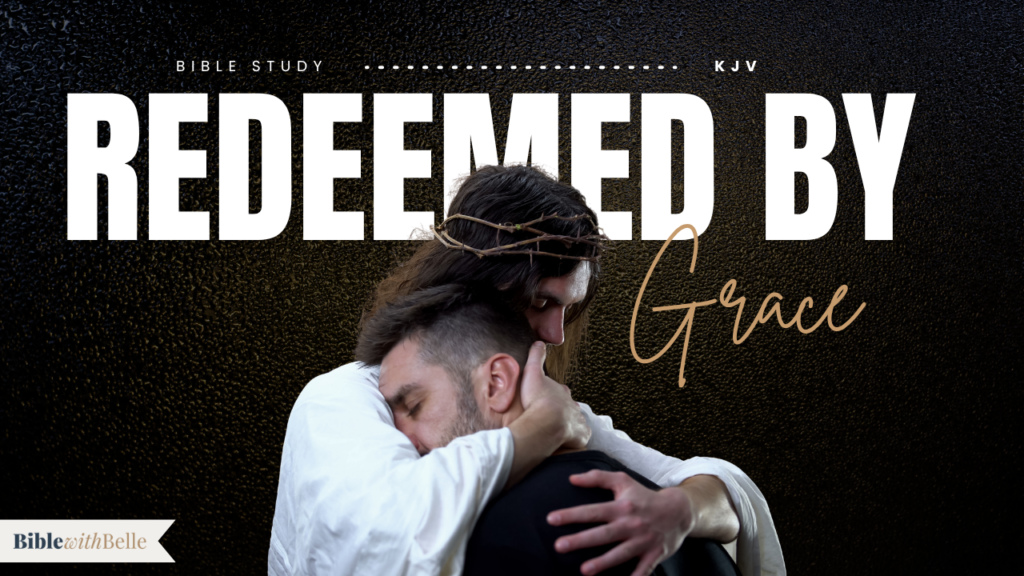
Redemption is one of the most beautiful themes running through the Bible. It tells us that God does not simply look at people in their brokenness and leave them there. Through Jesus Christ, God offers forgiveness, reconciliation, freedom from sin, and the hope of a restored relationship with Him.
The word redemption carries the idea of being bought back, rescued, or set free. In the Old Testament, redemption was often connected with God rescuing His people or someone being bought back from a difficult situation. The New Testament reveals the deepest fulfilment of that picture: Jesus Christ gave Himself for sinners so that those who trust in Him could be forgiven and reconciled to God.
That does not mean that redemption makes every consequence of our past disappear or guarantees that life will suddenly become easy. It means that our sin does not have to be the end of our story. In Christ, God offers something far greater than simply a clean slate. He gives us a new standing before Him and begins transforming our lives.
Quick Answer: What Does Redemption Mean in the Bible?
Biblical redemption means that God rescues and restores people through Jesus Christ. Humanity is separated from God because of sin, but Jesus gave Himself as a sacrifice for sin so that those who believe in Him can receive forgiveness and be reconciled to God.
Ephesians 1:7 says:
“In whom we have redemption through his blood, the forgiveness of sins, according to the riches of his grace;”
Our redemption is therefore not something we accomplish by becoming good enough. It is an act of God’s grace made possible through Jesus Christ.
Redemption also does not mean that Christians will never struggle again. We still have weaknesses, temptations, consequences, and seasons of suffering. But our relationship with God has changed. We are no longer required to remain under the guilt and condemnation of our sin when we have come to Christ in faith.
Redemption Begins With Our Need for a Saviour
To understand redemption, we first have to understand why we need to be redeemed.
The Bible teaches that sin separates humanity from God. We are not able to make ourselves righteous simply by trying harder or doing enough good things. Our deepest need is not merely to improve our behaviour but to be reconciled to God.
Romans 3:23–24 explains:
“For all have sinned, and come short of the glory of God;
Being justified freely by his grace through the redemption that is in Christ Jesus:”
This is why the gospel is such good news. God does not tell sinful people to somehow purchase their own way back to Him. He provides redemption through Jesus.
Our need for redemption also helps us understand why the death and resurrection of Jesus are at the centre of the Christian faith. Jesus did not simply come to give us advice about becoming better people. He came to save sinners.
Jesus Is the One Who Redeems Us
The New Testament consistently points us to Jesus Christ as the source of our redemption.
Jesus gave Himself for us. His death was not an accident or simply the tragic ending of His earthly ministry. He willingly laid down His life for sinners.
1 Peter 1:18–19 says:
“Forasmuch as ye know that ye were not redeemed with corruptible things, as silver and gold, from your vain conversation received by tradition from your fathers;
But with the precious blood of Christ, as of a lamb without blemish and without spot:”
Peter contrasts ordinary things such as silver and gold with something infinitely more precious: the blood of Christ.
Our redemption could not be purchased by money, human achievement, religious performance, or personal goodness. It required the sacrifice of Jesus.
Galatians 3:13 says:
“Christ hath redeemed us from the curse of the law, being made a curse for us: for it is written, Cursed is every one that hangeth on a tree:”
Jesus took upon Himself what sinners could never solve by their own efforts. He became the sacrifice for sin so that those who belong to Him could be reconciled to God.
Redemption Brings Forgiveness
One of the clearest blessings connected with redemption is forgiveness.
Sin brings guilt before God, but the gospel tells us that forgiveness is available through Christ. This does not mean that sin is unimportant. It means that Jesus has dealt with the problem of sin through His sacrifice.
Colossians 1:13–14 says:
“Who hath delivered us from the power of darkness, and hath translated us into the kingdom of his dear Son:
In whom we have redemption through his blood, even the forgiveness of sins:”
Notice how Paul connects redemption with forgiveness.
When God redeems us through Christ, He does not simply tell us to forget what happened. He deals with our sin and offers forgiveness.
This is especially important for someone who is carrying deep guilt or shame from their past. You may have made choices you regret, you may have hurt people. You may have spent years living in ways you now wish you could undo.
The gospel does not pretend those things never happened. Instead, it points you to the One who can forgive you, change you, and give you a new direction.
Redemption Does Not Mean Your Past Never Happened
Sometimes Christians misunderstand redemption and think it means God erases every consequence of everything that happened before we came to Him.
The Bible gives us a more realistic picture.
God can forgive our sin completely, but there may still be earthly consequences that need to be faced. There may be relationships that require rebuilding, damage that needs to be repaired, habits that need to be broken, or trust that needs to be restored over time.
Redemption does not require pretending that the past never happened.
Instead, it means that your past no longer has to determine your future with God.
Paul wrote in 2 Corinthians 5:17:
“Therefore if any man be in Christ, he is a new creature: old things are passed away; behold, all things are become new.”
Being made new in Christ does not mean becoming a completely different person overnight with no struggles. It means that belonging to Christ brings a new identity and begins a new work in your life.
Redemption Brings Freedom From Sin
Redemption is also connected with freedom.
Jesus did not redeem us so that we could remain comfortable in slavery to sin. He came to set us free.
John 8:34–36 says:
“Jesus answered them, Verily, verily, I say unto you, Whosoever committeth sin is the servant of sin.
And the servant abideth not in the house for ever: but the Son abideth ever.
If the Son therefore shall make you free, ye shall be free indeed.”
Christian freedom does not mean being free to do whatever we want without consequences. It means being freed from slavery to sin so that we can live for God.
That process can take time.
A person may genuinely belong to Christ and still struggle with temptation, destructive habits, or recurring sins. Redemption gives us a new direction, but spiritual growth is a process of learning to walk with God.
When you fall, the answer is not to conclude that you are beyond redemption. Bring your sin honestly before God, repent, receive His forgiveness, and continue following Christ.
Redemption Means There Is Hope for the Broken
One of the most encouraging truths about redemption is that God can work in lives that look completely broken.
This does not mean God approves of everything that has happened to us or everything we have done. It means our failures do not place us beyond His ability to save and transform.
Psalm 34:18 says:
“The LORD is nigh unto them that are of a broken heart; and saveth such as be of a contrite spirit.”
God is not indifferent to people who are brokenhearted.
The Bible contains many stories of people whose lives included failure, suffering, loss, rejection, or serious mistakes. Yet God continued working through them.
That does not mean every painful circumstance will be reversed exactly as we hope. Redemption is not a promise that every earthly situation will be restored according to our preferred outcome.
But it does mean that God can bring forgiveness, purpose, spiritual growth, and hope where there once seemed to be nothing but failure.
God Is Able to Restore What Has Been Broken
The Bible often speaks about God as a Redeemer who rescues His people.
Isaiah 43:1 says:
“But now thus saith the LORD that created thee, O Jacob, and he that formed thee, O Israel, Fear not: for I have redeemed thee, I have called thee by thy name; thou art mine.”
This verse was spoken specifically to Israel, so we should not take it as though every detail were originally addressed individually to every Christian today. But it reveals something important about God’s character: He is a God who redeems His people and calls them His own.
Psalm 130:7 says:
“Let Israel hope in the LORD: for with the LORD there is mercy, and with him is plenteous redemption.”
Redemption is connected with God’s mercy.
When we understand this, we can stop thinking that we have to make ourselves worthy before approaching Him. We come because He is merciful.
Redemption Gives Us a New Identity
Our past can become such a powerful part of the way we see ourselves that we struggle to imagine anything different.
You might think, “I’m the person who made that mistake.”
“I’ll always be the person who struggled with that sin.”
“I’ve ruined too much.”
“God could forgive other people, but surely He couldn’t forgive me.”
The gospel gives us a different foundation for our identity.
If you belong to Christ, your identity is no longer defined only by your worst mistake, your greatest failure, your greatest regret, or what someone else has done to you.
Romans 8:1 says:
“There is therefore now no condemnation to them which are in Christ Jesus, who walk not after the flesh, but after the Spirit.”
This does not mean Christians never need correction or repentance. It means that those who are in Christ are not living under God’s condemning judgment for their sin.
There is a difference between conviction that leads us toward repentance and hopeless condemnation that tells us there is no way back.
God’s grace calls us toward Him rather than telling us to run away from Him.
Redemption Leads to a Changed Life
Grace does not mean that sin no longer matters.
When we understand what Christ has done for us, the appropriate response is not to continue deliberately embracing sin as though redemption gives us permission to live however we want.
Titus 2:11–14 says:
“For the grace of God that bringeth salvation hath appeared to all men,
Teaching us that, denying ungodliness and worldly lusts, we should live soberly, righteously, and godly, in this present world;
Looking for that blessed hope, and the glorious appearing of the great God and our Saviour Jesus Christ;
Who gave himself for us, that he might redeem us from all iniquity, and purify unto himself a peculiar people, zealous of good works.”
Notice that Paul connects grace, salvation, redemption, and transformation.
Jesus redeems us from sin, and that redemption begins changing the way we live.
We will not become perfect overnight. We will still have moments when we stumble. But a redeemed life is increasingly directed toward Christ.
Redemption Is a Gift of Grace
We cannot earn redemption by being religious enough.
We cannot make God owe us salvation because we have done more good things than bad things.
Salvation is God’s gift of grace received through faith in Jesus Christ.
Ephesians 2:8–9 says:
“For by grace are ye saved through faith; and that not of yourselves: it is the gift of God:
Not of works, lest any man should boast.”
This is one of the most important truths to understand about redemption.
You do not clean yourself up first and then come to Jesus.
You come to Jesus, and He begins His work in you.
That does not mean repentance is unnecessary. Genuine faith in Christ involves turning toward Him rather than clinging to sin. But our ability to save ourselves has never been the foundation of salvation.
The foundation is Christ.
Redemption Gives Us Hope Beyond This Life
The Bible’s message of redemption ultimately reaches beyond our present circumstances.
Christ did not come merely to make earthly life a little easier. He came to save us and give us eternal life.
Romans 3:23–26 explains:
“For all have sinned, and come short of the glory of God;
Being justified freely by his grace through the redemption that is in Christ Jesus:
Whom God hath set forth to be a propitiation through faith in his blood, to declare his righteousness for the remission of sins that are past, through the forbearance of God;
To declare, I say, at this time his righteousness: that he might be just, and the justifier of him which believeth in Jesus.”
The hope of redemption is therefore much bigger than having a better life now.
It is the hope of being made right with God through Christ.
Bible Verses About Redemption
Here are several passages that help us understand what the Bible teaches about redemption.
Ephesians 1:7
“In whom we have redemption through his blood, the forgiveness of sins, according to the riches of his grace;”
Redemption is directly connected with Christ’s sacrifice and God’s grace.
Colossians 1:13–14
“Who hath delivered us from the power of darkness, and hath translated us into the kingdom of his dear Son:
In whom we have redemption through his blood, even the forgiveness of sins:”
God delivers His people from the dominion of darkness and brings them into the kingdom of Christ.
1 Peter 1:18–19
“Forasmuch as ye know that ye were not redeemed with corruptible things, as silver and gold, from your vain conversation received by tradition from your fathers;
But with the precious blood of Christ, as of a lamb without blemish and without spot:”
Our redemption was not purchased with earthly wealth. It was accomplished through Christ.
Galatians 3:13
“Christ hath redeemed us from the curse of the law, being made a curse for us: for it is written, Cursed is every one that hangeth on a tree:”
Christ took upon Himself the curse so that redemption could be offered to those who trust in Him.
Romans 3:24
“Being justified freely by his grace through the redemption that is in Christ Jesus:”
Redemption comes through God’s grace, not human achievement.
Titus 2:14
“Who gave himself for us, that he might redeem us from all iniquity, and purify unto himself a peculiar people, zealous of good works.”
Jesus gave Himself to redeem us from sin and produce a people who desire to live for Him.
Psalm 130:7
“Let Israel hope in the LORD: for with the LORD there is mercy, and with him is plenteous redemption.”
God’s redemption is rooted in His mercy.
Job 19:25
“For I know that my redeemer liveth, and that he shall stand at the latter day upon the earth:”
Job expressed hope in his Redeemer even in the midst of tremendous suffering.
Isaiah 44:22
“I have blotted out, as a thick cloud, thy transgressions, and, as a cloud, thy sins: return unto me; for I have redeemed thee.”
God calls His people back to Him and speaks of redemption alongside the removal of their transgressions.
Romans 8:1
“There is therefore now no condemnation to them which are in Christ Jesus, who walk not after the flesh, but after the Spirit.”
Those who are in Christ do not need to live under condemnation.
John 8:36
“If the Son therefore shall make you free, ye shall be free indeed.”
True spiritual freedom is found in Jesus.
Revelation 5:9
“And they sung a new song, saying, Thou art worthy to take the book, and to open the seals thereof: for thou wast slain, and hast redeemed us to God by thy blood out of every kindred, and tongue, and people, and nation;”
The picture of redemption ultimately points to Jesus and the people He has redeemed for God.
What Redemption Does Not Mean
Because redemption is sometimes misunderstood, it is important to be clear about what it does and does not mean.
Redemption does not mean that you will never struggle again.
It does not mean that every consequence of your past will immediately disappear.
Redemption does not mean that every broken relationship will automatically be restored.
It does not mean that Christians never experience suffering, temptation, grief, or disappointment.
And it does not mean that God approves of sin because He forgives it.
Instead, redemption means that through Jesus Christ, sinners can be forgiven and reconciled to God. It means that sin does not have to have the final word. It means that God’s grace is greater than our ability to save ourselves.
If You Feel Too Far Gone, Look to Christ
Perhaps you are reading this because you are carrying something from your past.
Maybe you have made choices you deeply regret. Maybe you have spent years running from God. Perhaps you feel ashamed of who you have become, or you wonder whether God could really forgive you after everything you have done.
The message of redemption is not that your past did not matter.
It is that your past does not have to be the end of your story.
Jesus came for sinners.
He came to save the lost.
He came to call people back to God.
And He gave His life so that forgiveness could be offered.
Romans 10:9 says:
“That if thou shalt confess with thy mouth the Lord Jesus, and shalt believe in thine heart that God hath raised him from the dead, thou shalt be saved.”
If you have never trusted Jesus Christ, redemption begins with turning to Him in faith and receiving the salvation He offers.
If you already belong to Christ but have fallen, do not allow shame to convince you that there is no way back. Confess your sin, repent, receive God’s forgiveness, and keep walking with Him.
You may not be able to change everything that happened yesterday.
But in Christ, yesterday does not have to determine who you become tomorrow.
Final Encouragement
Redemption is ultimately a story about Jesus.
It is the story of a holy God who did not leave sinful humanity without hope. It is the story of Christ giving Himself for sinners so that forgiveness and reconciliation with God could be made possible.
Your redemption is not based on how impressive your life looks.
It is not based on whether you have managed to fix every part of yourself.
Redemption is not based on whether your past is clean.
It is based on Christ.
And that is why there is hope.
Ephesians 1:7 gives us a beautiful summary:
“In whom we have redemption through his blood, the forgiveness of sins, according to the riches of his grace;”
If you are in Christ, you do not have to spend the rest of your life being defined by what you used to be.
You can walk forward knowing that you have been redeemed by Jesus, forgiven by His grace, and called to live a new life with Him.
✨ Still Have a Question?
You can send it through the Ask a Bible Question page, and I’ll respond with guidance from God’s Word.
You can also leave your questions on my YouTube channel, where I share clear, practical encouragement, and answers to common questions.