
What does it mean to be born again?
August 31, 2025
How do I start reading the Bible if I’m new?
August 31, 2025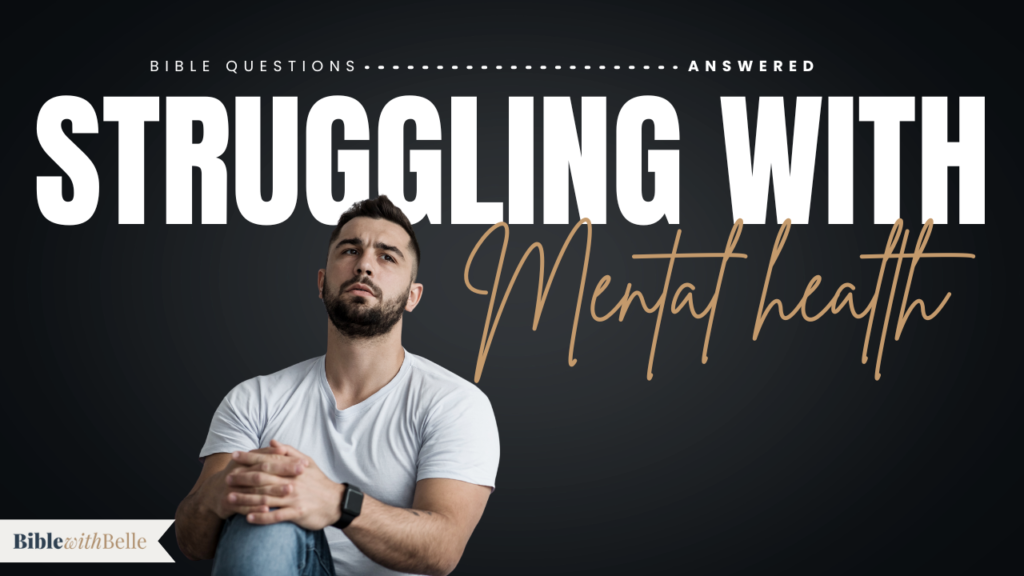
It is easy to think that Christians should always feel peaceful, joyful and hopeful. After all, the Bible tells us to trust God, not be anxious and rejoice in all circumstances.
So what does it mean when a Christian is struggling with anxiety or depression?
Does it mean their faith is weak? Does it mean they are not trusting God enough? Could it mean there is something wrong with their relationship with Him?
The Bible gives us a different picture. God’s people experienced fear, sadness, loneliness, grief and deep emotional pain throughout Scripture. Having difficult emotions does not automatically mean that someone has weak faith. Sometimes a person can love God deeply and still go through a very difficult emotional season.
Can Christians Struggle With Anxiety or Depression?
Yes. Christians can struggle with anxiety, depression and other forms of emotional distress.
The Bible does not teach that becoming a Christian means you will never experience sadness, fear or emotional pain again. We still live in a broken world, and our minds and bodies are affected by many different things.
Sometimes emotional struggles can be connected to difficult circumstances, grief, trauma, stress, physical health, relationships, exhaustion or other factors. There is not always one simple explanation.
What we do know is that God does not abandon us when we are struggling.
Psalm 34:18 — God Is Near the Brokenhearted
“The LORD is nigh unto them that are of a broken heart; and saveth such as be of a contrite spirit.”
God is not only near us when we are happy and everything is going well. He is also near when we are hurting.
Anxiety Does Not Mean You Do Not Trust God
One of the biggest misconceptions Christians can have is that feeling anxious automatically means they do not trust God.
But there is a difference between experiencing anxiety and choosing to live in constant unbelief.
You can know that God is in control and still feel afraid. You can believe that God will take care of you and still have moments where your thoughts feel overwhelming.
Faith does not mean that you never experience fear. Sometimes faith means taking your fear to God instead of allowing it to control you.
Philippians 4:6–7 — Bring Your Anxiety to God
“Be careful for nothing; but in every thing by prayer and supplication with thanksgiving let your requests be made known unto God.
And the peace of God, which passeth all understanding, shall keep your hearts and minds through Christ Jesus.”
Paul tells us to bring our worries to God through prayer.
He does not tell us to pretend that we have no worries.
When anxiety comes, we can bring those fears honestly to God and ask Him to help us.
The Bible Tells Us Not to Be Anxious, But What Does That Mean?
When the Bible tells us not to be anxious, it is not telling someone who struggles with anxiety that they are a bad Christian.
It is teaching us where we should take our worries.
Jesus tells us not to live consumed by worry because our heavenly Father knows what we need.
Matthew 6:31–32 — God Knows What You Need
“Therefore take no thought, saying, What shall we eat? or, What shall we drink? or, Wherewithal shall we be clothed?
(For after all these things do the Gentiles seek:) for your heavenly Father knoweth that ye have need of all these things.”
God knows what you need before you even ask Him.
The answer to anxiety is not simply telling yourself, “Stop being anxious.” We need to learn to bring our worries to the God who cares for us.
Christians Can Experience Deep Sadness
The Bible contains many examples of God’s people experiencing profound sadness.
One of the clearest examples is found in the life of Elijah.
After experiencing a powerful victory, Elijah became afraid and exhausted. He ran away, sat under a tree and asked God to let him die.
1 Kings 19:4 — Elijah Was Deeply Distressed
“But he himself went a day’s journey into the wilderness, and came and sat down under a juniper tree: and he requested for himself that he might die; and said, It is enough; now, O LORD, take away my life; for I am not better than my fathers.”
Elijah was God’s prophet.
He had seen God work powerfully.
Yet he still reached a point where he was completely overwhelmed.
The Bible does not present this moment as proof that Elijah had stopped believing in God.
God Cared for Elijah’s Physical Needs
What is especially interesting about Elijah’s story is what God did next.
God did not immediately give Elijah a long lecture about having more faith.
Instead, Elijah slept and was given food and water.
1 Kings 19:5–6 — Elijah Rested and Ate
“And as he lay and slept under a juniper tree, behold, then an angel touched him, and said unto him, Arise and eat.
And he looked, and, behold, there was a cake baken on the coals, and a cruse of water at his head. And he did eat and drink, and laid him down again.”
This is an important reminder that our physical condition can affect how we feel emotionally.
Elijah was exhausted, afraid and overwhelmed. God cared for him physically before continuing to work with him spiritually.
There are times when rest, food, support and proper care are important parts of looking after ourselves.
Jesus Experienced Deep Emotional Pain
Jesus Himself experienced intense sorrow.
Knowing that He was about to be crucified, Jesus went to the Garden of Gethsemane and experienced profound distress.
Matthew 26:38 — Jesus Was Deeply Sorrowful
“Then saith he unto them, My soul is exceeding sorrowful, even unto death: tarry ye here, and watch with me.”
Jesus was not lacking faith.
He was not spiritually weak.
He knew exactly what His Father had sent Him to accomplish, yet He still experienced overwhelming sorrow.
This shows us something important: deep emotional pain is not automatically evidence of a lack of faith.
Jesus Understands What It Feels Like to Hurt
Jesus became fully human.
He experienced hunger, tiredness, grief, rejection, loneliness and physical pain. He understands human suffering in a way that should bring great comfort to Christians who are struggling.
Hebrews 4:15 — Jesus Understands Our Weakness
“For we have not an high priest which cannot be touched with the feeling of our infirmities; but was in all points tempted like as we are, yet without sin.”
You do not have to explain your pain to Jesus as though He cannot understand it.
He knows what it is like to experience suffering.
Depression Does Not Mean God Has Left You
When someone is depressed, they may feel emotionally numb, hopeless or very far away from God.
They may pray but feel nothing.
They may read the Bible and struggle to concentrate.
They may wonder why God does not seem to be helping.
Those feelings can be incredibly painful, but feelings are not always an accurate measure of God’s presence.
God can be near even when you do not feel Him.
Psalm 23:4 — God Is With Us in the Darkest Places
“Yea, though I walk through the valley of the shadow of death, I will fear no evil: for thou art with me; thy rod and thy staff they comfort me.”
Notice that David says “though I walk through the valley.”
There are valleys in life.
Being in one does not mean God has abandoned you.
You Can Pray When You Are Struggling
You do not need to pray perfectly when you are struggling emotionally.
Sometimes prayer may simply be, “God, I am hurting. Please help me.”
The Psalms show us that God’s people brought their real emotions to Him.
They expressed fear, sadness, confusion, anger and desperation.
Psalm 42:11 — Hope in God
“Why art thou cast down, O my soul? and why art thou disquieted within me? hope thou in God: for I shall yet praise him, who is the health of my countenance, and my God.”
David was honest about how he felt while still choosing to place his hope in God.
You can do the same.
You Do Not Have to Hide Your Struggles From God
Sometimes Christians feel pressure to appear as though everything is fine.
They may think they need to say, “I’m blessed,” even when they are falling apart inside.
But God already knows what is happening in your heart.
You do not have to perform happiness for Him.
Psalm 62:8 — Pour Out Your Heart to God
“Trust in him at all times; ye people, pour out your heart before him: God is a refuge for us. Selah.”
God invites us to pour out our hearts to Him.
That means we can be honest.
Tell Him what you are afraid of.
Tell Him what hurts.
Tell Him when you feel exhausted.
Tell Him when you don’t understand why you feel the way you do.
Should Christians Get Professional Help?
There is nothing unbiblical about seeking help when you are struggling.
God can work through prayer, Scripture, Christian community and professional support.
Seeking help from a doctor, psychologist, counsellor or other qualified professional does not mean that you do not trust God.
We seek medical help for physical problems without assuming that we have failed God. Emotional and mental struggles can also require proper care.
Proverbs 11:14 — There Is Wisdom in Counsel
“Where no counsel is, the people fall: but in the multitude of counsellors there is safety.”
Getting wise help can be part of caring for yourself and allowing others to support you.
If you are struggling with ongoing anxiety or depression, especially if it is affecting your ability to function, speak with a qualified health professional.
Asking for Help Is Not a Sign of Weakness
Sometimes people believe they should be able to handle everything themselves because they are Christians.
But God did not create us to live completely alone.
We need other people.
Galatians 6:2 — Carry One Another’s Burdens
“Bear ye one another’s burdens, and so fulfil the law of Christ.”
There may be seasons when you need someone else to help carry what feels too heavy for you.
That might be a trusted Christian friend, pastor, family member, counsellor, doctor or mental health professional.
You do not have to go through everything alone.
Be Careful About Telling Someone Their Anxiety Is Just a Lack of Faith
We should be very careful when speaking to someone who is struggling.
Telling a person, “You wouldn’t feel anxious if you really trusted God,” can add shame to an already painful situation.
The Bible does call us to trust God, but it also shows us people who loved God while experiencing intense emotional distress.
We should encourage people toward God without making them feel guilty for struggling.
God Can Meet You in Your Weakness
You may wish that you felt stronger.
You may wish you could simply stop worrying.
You may wish you could wake up one morning and feel completely different.
Sometimes healing happens gradually.
God can strengthen us in the middle of our weakness rather than waiting until we have everything together.
2 Corinthians 12:9 — God’s Grace Is Sufficient
“And he said unto me, My grace is sufficient for thee: for my strength is made perfect in weakness.”
Your weakness does not make you useless to God.
You can still pray, love others, serve God and grow in your faith while going through a difficult season.
God Can Bring Good From Difficult Seasons
This does not mean that anxiety or depression is good.
It means God is capable of working even in painful circumstances.
He can use difficult seasons to draw us closer to Him, teach us dependence on Him and help us understand other people who are hurting.
Romans 8:28 — God Works for Good
“And we know that all things work together for good to them that love God, to them who are the called according to his purpose.”
God does not need our suffering to be good in itself for Him to bring something good from it.
He can meet us in the middle of our pain and use even difficult experiences for His purposes.
Your Struggle Does Not Define Your Relationship With God
If you are a Christian struggling with anxiety or depression, do not assume that your emotional state tells you how close you are to God.
You can feel distant from God and still belong to Him.
You can feel afraid and still have faith.
You can feel exhausted and still love Jesus.
You can have days where you struggle to pray and still be God’s child.
Our relationship with God is based on His grace and what Christ has done, not on whether we feel emotionally strong every day.
Romans 8:38–39 — Nothing Can Separate Us From God’s Love
“For I am persuaded, that neither death, nor life, nor angels, nor principalities, nor powers, nor things present, nor things to come,
Nor height, nor depth, nor any other creature, shall be able to separate us from the love of God, which is in Christ Jesus our Lord.”
Your difficult season does not surprise God.
He has not stopped loving you because you are struggling.
What If I Feel Like God Is Not Helping Me?
Sometimes we pray for God to take away our anxiety or depression, but the struggle continues.
That can leave us wondering why God has not answered.
The Bible does not promise that every struggle will disappear immediately when we pray.
Paul prayed repeatedly about his own suffering, yet God did not remove it in the way Paul expected. Instead, God taught him to depend on His grace.
2 Corinthians 12:8–10 — God’s Grace in Weakness
“For this thing I besought the Lord thrice, that it might depart from me.
And he said unto me, My grace is sufficient for thee: for my strength is made perfect in weakness.
Most gladly therefore will I rather glory in my infirmities, that the power of Christ may rest upon me.
Therefore I take pleasure in infirmities, in reproaches, in necessities, in persecutions, in distresses for Christ’s sake: for when I am weak, then am I strong.”
Sometimes God changes our circumstances.
Sometimes He changes us while we are still in the circumstance.
Either way, He is able to sustain us.
Keep Bringing Your Struggles to God
If anxiety or depression is part of your life right now, you do not need to choose between faith and getting help.
You can do both.
Pray while you seek professional care.
Read Scripture while you talk to someone you trust.
Ask God for strength while taking practical steps to look after yourself.
There is no contradiction between trusting God and using the help He provides through other people.
Can Christians Struggle With Anxiety or Depression?
Yes. Christians can experience anxiety, depression, grief, fear and other forms of emotional pain.
The Bible does not teach that a person’s struggles automatically prove that their faith is weak. We see God’s people experiencing deep distress throughout Scripture, including Elijah, David and even Jesus during His time in Gethsemane.
What matters is what we do with our pain.
We can bring it to God rather than hiding it from Him. We can seek wise support rather than trying to carry everything alone. We can continue trusting God even when our emotions are telling us that everything feels hopeless.
1 Peter 5:7 — God Cares About What You Are Carrying
“Casting all your care upon him; for he careth for you.”
God cares about you when you are strong, and He cares about you when you are struggling.
If you are anxious, bring your anxiety to Him.
If you are depressed, bring your sadness to Him.
If you feel exhausted, tell Him.
And if you need help, do not be afraid to ask for it.
Struggling does not mean you have failed God. You are still allowed to need help, still allowed to have difficult emotions and, most importantly, you are still deeply loved by God.
✨ Still Have a Question?
You can send it through the Ask a Bible Question page, and I’ll respond with guidance from God’s Word.
You can also leave your questions on my YouTube channel. This is where I regularly share Bible verses, encouragement, and answers to common questions.