
How Do I Forgive Someone Who Hurt Me Deeply?
September 1, 2025
Why Doesn’t God Answer My Prayers?
September 1, 2025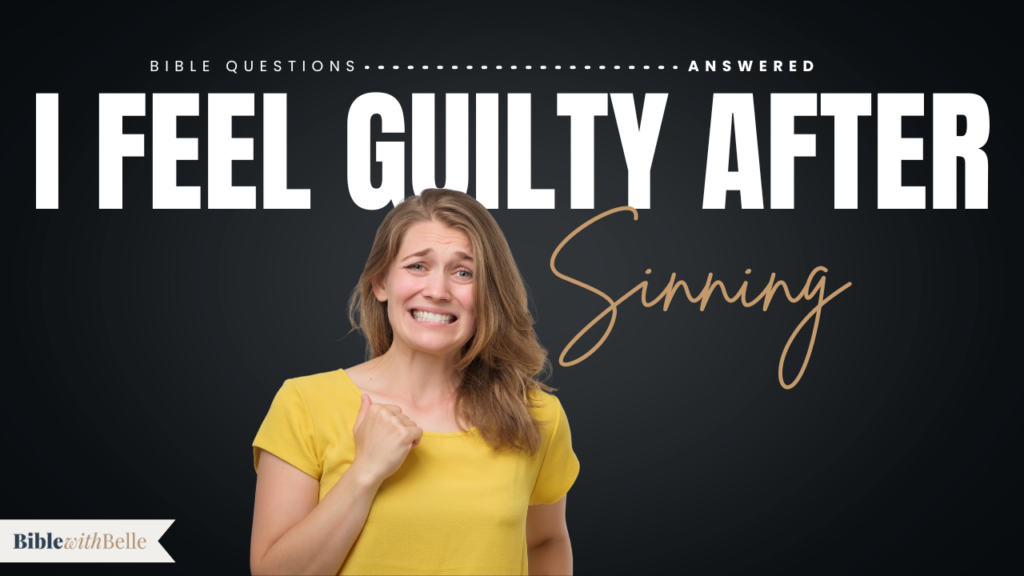
Have you ever asked God to forgive you, truly meant it, and yet still felt guilty afterwards?
You know you have confessed your sin. You have asked God for forgiveness and you want to turn away from what you did, but the guilt is still there. You might keep thinking about what happened, wishing you could go back and change it.
You may even wonder, “If God has forgiven me, why do I still feel guilty?”
This is something many Christians struggle with. Sometimes our feelings take longer to catch up with what God has already promised us in His Word.
The important thing to remember is that God’s forgiveness is not based on how forgiven you feel. It is based on His faithfulness.
God Forgives When We Truly Repent
When we confess our sin and genuinely turn to God, we can trust His promise of forgiveness.
1 John 1:9 — God Forgives Our Sins
“If we confess our sins, he is faithful and just to forgive us our sins, and to cleanse us from all unrighteousness.”
Notice what this verse says about God.
He is faithful and just to forgive us.
Our forgiveness is not dependent on whether we feel better afterwards. It is based on what God has promised.
You may still feel terrible about what you did, but your feelings do not cancel God’s Word.
If you have genuinely repented, you can trust that God has forgiven you.
Repentance Means Turning Back to God
Repentance is more than simply feeling bad about something.
It means recognising that what we did was wrong, confessing it to God and turning away from that sin.
That does not mean you will never struggle with that sin again. Christians can fall into the same sins and patterns more than once.
What matters is that your heart is turning toward God rather than deliberately choosing to live in rebellion against Him.
Acts 3:19 — Repent and Turn to God
“Repent ye therefore, and be converted, that your sins may be blotted out, when the times of refreshing shall come from the presence of the Lord;”
God does not want you trapped forever in what you have done.
He wants you to turn back to Him.
Why Do I Still Feel Guilty?
There can be several reasons guilt remains after repentance.
Sometimes it is because we are struggling to forgive ourselves. We know God has forgiven us, but we keep replaying what happened in our minds and punishing ourselves for it.
Other times, guilt can remain because the consequences of our actions are still there. Forgiveness does not always mean that every earthly consequence immediately disappears. You may still need to repair a relationship, apologise to someone or make a different choice moving forward.
There are also times when guilt is connected to shame and condemnation rather than genuine conviction.
Understanding the difference can help you recognise what is happening.
Conviction and Condemnation Are Not the Same
The Holy Spirit can convict us when we sin.
Conviction helps us recognise what we have done wrong and leads us back to God. It gives us a reason to repent and change.
Condemnation is different.
Condemnation tells you that you are hopeless, worthless, beyond forgiveness or permanently defined by what you have done.
The Bible does not tell a repentant Christian to live under that kind of condemnation.
Romans 8:1 — There Is No Condemnation in Christ
“There is therefore now no condemnation to them which are in Christ Jesus, who walk not after the flesh, but after the Spirit.”
When God reveals sin to us, His purpose is not to destroy us with shame.
He wants to bring us back to Him.
Once you have confessed and repented, you do not need to keep putting yourself on trial for the same sin.
What If I Still Feel Bad About What I Did?
Feeling regret does not necessarily mean something is wrong.
Sometimes guilt reminds us that what we did mattered.
If you hurt someone, you may genuinely feel sorrow over it. If you made a serious mistake, you may wish you could undo it.
That kind of sorrow can lead us to make things right.
The problem comes when regret turns into constant self-condemnation.
There is a difference between saying, “What I did was wrong, and I am thankful God forgave me,” and saying, “What I did was so terrible that God could never really forgive me.”
The first can lead to growth.
The second keeps you trapped in shame.
God Does Not Want You to Live in Condemnation
When Jesus forgives us, He does not want us to spend the rest of our lives believing that our past has more power than His sacrifice.
Jesus paid for sin completely.
Hebrews 10:14 — Christ’s Sacrifice Is Sufficient
“For by one offering he hath perfected for ever them that are sanctified.”
You do not have to keep paying for a sin that Christ has already paid for.
That does not make sin unimportant.
It means Jesus’ sacrifice is greater than your failure.
What If I Keep Remembering My Sin?
Sometimes the hardest part is your own mind.
You remember what happened over and over again. You think about what you should have done differently, what you should have said or how you wish you could go back and change it.
When that happens, remind yourself of what God has already said.
Psalm 103:12 — God Removes Our Sins
“As far as the east is from the west, so far hath he removed our transgressions from us.”
God is not holding your forgiven sin over your head.
If you have confessed and repented, you can stop returning to the same place and punishing yourself for something God has already forgiven.
You may still remember what happened, but you do not have to remain trapped by it.
The Enemy Is Called the Accuser
The Bible also describes Satan as an accuser.
Revelation 12:10 — Satan Is the Accuser
“And I heard a loud voice saying in heaven, Now is come salvation, and strength, and the kingdom of our God, and the power of his Christ: for the accuser of our brethren is cast down, which accused them before our God day and night.”
The enemy wants people to believe that their sin is bigger than God’s grace.
He wants you to stay focused on your failure instead of what Jesus has done.
But when those accusations come, you can return to Scripture.
You can remind yourself that God has forgiven you.
You can remind yourself that Jesus died for your sin.
You can remind yourself that your past does not have the final word over your life.
Forgiving Yourself Can Be Difficult
Sometimes the person who needs to accept God’s forgiveness is you.
You may think, “I know God says He forgives me, but I can’t forgive myself.”
The problem is that we can sometimes make ourselves the final judge.
We decide that what we did is too terrible to move past, even though God has offered forgiveness through Christ.
There is humility in admitting that we did wrong, but there can also be pride hidden in refusing to accept God’s forgiveness.
If God has offered you grace, you do not need to decide that your sin is too great for Him.
Ephesians 1:7 — We Have Forgiveness Through Christ
“In whom we have redemption through his blood, the forgiveness of sins, according to the riches of his grace;”
Forgiveness is not something you earn by feeling bad enough.
It is a gift of God’s grace through Jesus.
Forgiveness Does Not Mean Ignoring What Happened
Accepting God’s forgiveness does not mean pretending your sin did not matter.
Sin has consequences.
If you hurt someone, you may need to apologise.
If you damaged something, you may need to make it right.
If you have developed a sinful pattern, you may need to make changes so that you are not continually putting yourself in the same situation.
Repentance should lead to a changed direction.
But making things right is different from trying to earn God’s forgiveness.
You do not make yourself forgiven by punishing yourself.
You respond to forgiveness by allowing God to change your life.
What If I Keep Falling Into the Same Sin?
This is another reason people can feel guilty even after repenting.
You may have genuinely repented, but then you fall into the same sin again.
That can make you wonder whether your original repentance was real.
Struggling with sin does not automatically mean you were never sincere.
Christians are still growing.
We can have weaknesses, temptations and patterns that take time to overcome.
The answer is not to give up and decide that you cannot change.
Keep bringing it to God.
Ask Him for strength.
Look honestly at what is leading you into the sin and make changes where you can.
Proverbs 24:16 — The Righteous Get Back Up
“For a just man falleth seven times, and riseth up again: but the wicked shall fall into mischief.”
Falling does not mean you have to stay on the ground.
Get back up.
Turn back to God.
Keep walking.
God’s Grace Is Greater Than Your Failure
Sometimes we struggle to believe that God could really forgive us because we know exactly what we have done.
We know the thoughts nobody else knows.
We remember the choices we wish we could take back.
But God’s grace is not based on how impressive we are.
It is based on Him.
Romans 5:20 — Grace Is Greater Than Sin
“Moreover the law entered, that the offence might abound. But where sin abounded, grace did much more abound:”
That does not give us permission to keep sinning.
Instead, it shows us that our sin does not have to be the end of our story.
God’s grace is greater.
What Should I Do When Guilt Comes Back?
When the guilt comes back, do not simply argue with your feelings.
Go back to God’s Word.
Remind yourself what God has promised.
You can pray honestly and say, “God, I know I have already confessed this, but I still feel guilty. Please help me believe Your promise of forgiveness rather than my feelings.”
Then thank Him for His grace.
If there is something you still need to make right, do it.
If you need to apologise, apologise.
If you need to change a behaviour, work with God to change it.
But once you have genuinely repented, do not keep punishing yourself as though Jesus’ sacrifice was not enough.
What If I Don’t Feel Forgiven?
This is important because feelings can be very convincing.
You might think, “If God really forgave me, I would feel different.”
But forgiveness is not a feeling.
You can feel guilty and still be forgiven.
You can feel ashamed and still be forgiven.
You can feel far from God and still be forgiven.
Our feelings change constantly.
God’s promises do not.
2 Corinthians 5:17 — You Are Made New in Christ
“Therefore if any man be in Christ, he is a new creature: old things are passed away; behold, all things are become new.”
Your past is not your identity anymore.
If you belong to Christ, your identity is found in Him.
That does not mean you forget everything you have done. It means you no longer have to let your past control who you become.
Let God Use Your Past for Good
Sometimes the things we are most ashamed of can eventually become places where God shows His grace most clearly.
Someone who has experienced God’s forgiveness may be able to understand another person’s struggle in a way they could not before.
Someone who has been restored can encourage another person who feels beyond hope.
Someone who has experienced God’s grace can tell others that they are not too far gone.
Your past does not have to be wasted.
God can redeem what was broken and use your story to point other people toward Him.
2 Corinthians 1:3–4 — Comfort Others With the Comfort We Receive
“Blessed be God, even the Father of our Lord Jesus Christ, the Father of mercies, and the God of all comfort;
Who comforteth us in all our tribulation, that we may be able to comfort them which are in any trouble, by the comfort wherewith we ourselves are comforted of God.”
God can take the places where we have experienced failure, pain and restoration and use them to help someone else.
You Do Not Have to Keep Paying for Your Sin
If you have genuinely repented and God has forgiven you, you do not need to keep punishing yourself.
Jesus already paid the price.
Isaiah 53:5 — Jesus Bore Our Sin
“But he was wounded for our transgressions, he was bruised for our iniquities: the chastisement of our peace was upon him; and with his stripes we are healed.”
Think about what that means.
Jesus did not die so that you could spend the rest of your life trying to pay for your own sins through guilt.
He died to bring forgiveness and reconciliation with God.
Your part is to repent, receive His grace and continue walking with Him.
Why Do I Feel Guilty Even After I’ve Repented?
If you have repented and still feel guilty, it does not necessarily mean that God has not forgiven you.
Sometimes your emotions simply need time to catch up with the truth of God’s Word.
You may still regret what happened. You may still remember it. You may still have consequences to deal with. You may even struggle with the temptation to repeat the same sin.
But none of those things mean you have to live under condemnation.
Conviction brings us back to God. Condemnation keeps us hiding from Him.
When God shows you something that needs to change, listen to Him.
Confess it.
Repent.
Make things right where you can.
Then receive His forgiveness and keep moving forward.
Romans 8:1 — You Are Not Condemned in Christ
“There is therefore now no condemnation to them which are in Christ Jesus, who walk not after the flesh, but after the Spirit.”
If you have repented, you do not have to keep asking God to forgive the same sin as though He did not hear you the first time.
Thank Him for His forgiveness.
Trust His Word.
When the guilt comes back, remind yourself of the truth instead of letting your feelings become your authority.
You may have made a mistake, but your mistake is not greater than God’s grace.
You may have sinned, but your sin does not have to define the rest of your life.
You may remember what happened, but you do not have to remain trapped in it.
Jesus has already paid for your sin.
So repent when you need to repent, receive God’s forgiveness, learn from what happened and keep walking with Him.
You are not called to live forever in the guilt of your past. You are called to walk forward in the grace of Jesus Christ.
✨ Still Have a Question?
You can send it through the Ask a Bible Question page, and I’ll respond with guidance from God’s Word.
You can also leave your questions on my YouTube channel. This is where I regularly share Bible verses, encouragement, and answers to common questions.