
Bible Verses About the Number of the Beast
August 14, 2024
Bible Verses About Breakups
August 17, 2024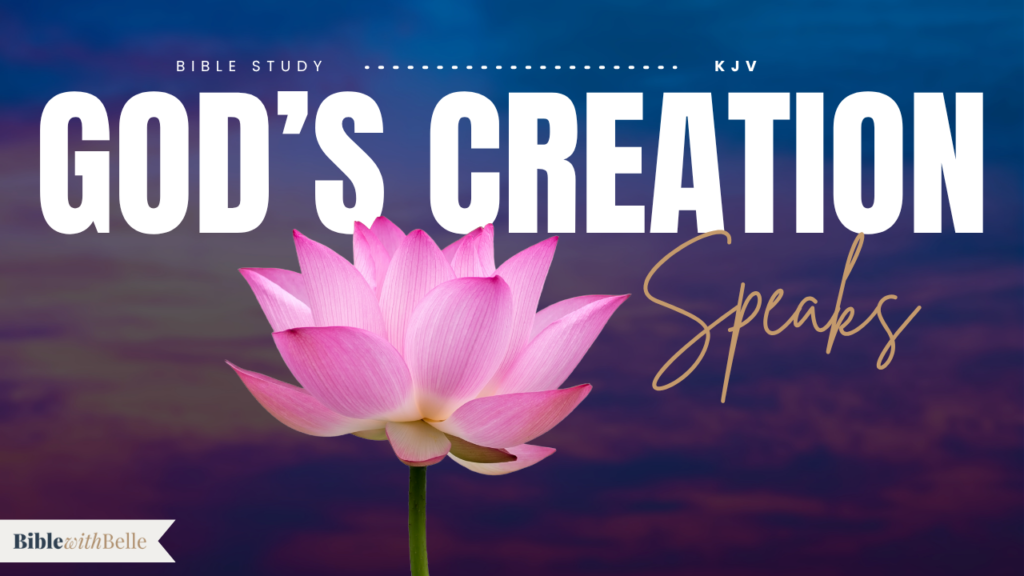
There is something about being outside that can make you stop for a moment. You might look at the ocean, watch birds flying across the sky, see a beautiful sunset, walk through a forest, or simply notice a tiny flower growing beside the road.
The Bible tells us that creation isn’t meaningless scenery. The world around us was made by God, and nature can point our hearts back toward the One who created it.
That doesn’t mean nature is God, or that we should worship creation. The Bible makes a clear distinction between the Creator and what He created. But when we look at the beauty, order, power and variety of the natural world, we have reason to stop and wonder at the God behind it.
Quick Answer
The Bible teaches that God created nature and that creation displays His glory, power and wisdom. The heavens, earth, seas, animals, plants and everything in creation belong to Him.
Scripture repeatedly uses nature to teach us about God. The heavens declare His glory, the earth reveals His handiwork, animals demonstrate His care, and creation reminds us of His power.
Nature also reminds us that creation has been affected by sin and that God has a future purpose for restoring what has been broken.
As Christians, we can enjoy nature, thank God for it, learn from it, and care for the world He has entrusted to us without turning creation itself into an object of worship.
God Created Nature
The story of nature begins with God.
The very first verse of the Bible says:
Genesis 1:1
“In the beginning God created the heaven and the earth.”
Before there were oceans, mountains, forests, animals or stars, there was God.
Everything we see in the natural world ultimately points back to Him as Creator.
Genesis goes on to describe God creating light, the sky, land, seas, plants, the sun, moon and stars, birds, fish and animals. Again and again, God looked at what He had made and declared it good.
Genesis 1:31
“And God saw every thing that he had made, and, behold, it was very good.”
Nature wasn’t an accident or an afterthought.
God intentionally created the world.
Nature Declares God’s Glory
One of the clearest Bible verses about nature is Psalm 19.
Psalm 19:1–4
“The heavens declare the glory of God; and the firmament sheweth his handywork.
Day unto day uttereth speech, and night unto night sheweth knowledge.
There is no speech nor language, where their voice is not heard.
Their line is gone out through all the earth, and their words to the end of the world.”
I love the picture this gives us.
The heavens don’t literally speak with human voices, but creation continually points beyond itself to its Creator.
You can look at the night sky and be reminded of how great God is.
Or watch the waves of the ocean and be reminded of His power.
You can see a tiny flower and be reminded of His creativity.
Creation doesn’t replace God’s Word, but it can turn our attention toward Him.
Creation Shows Us Something About God
Paul explains that creation gives humanity evidence of God’s power and divine nature.
Romans 1:19–20
“Because that which may be known of God is manifest in them; for God hath shewed it unto them.
For the invisible things of him from the creation of the world are clearly seen, being understood by the things that are made, even his eternal power and Godhead; so that they are without excuse.”
There is something remarkable about the fact that we can look at something that God made and recognise that there is a Creator behind it.
The natural world cannot tell us everything we need to know about God. We need God’s revealed Word to know Him personally and understand the gospel. But creation does reveal something about His greatness, power and divine nature.
When you stand beneath a sky filled with stars, you’re looking at something God made.
If you hear the ocean crashing against the shore, you’re hearing something that exists because God created the world in which it moves.
When you see the complexity and variety of living things, you can stop and consider the wisdom of the Creator.
The Heavens Belong to God
The Bible often points upward toward the heavens when speaking about God’s greatness.
David wrote:
Psalm 8:3–4
“When I consider thy heavens, the work of thy fingers, the moon and the stars, which thou hast ordained;
What is man, that thou art mindful of him? and the son of man, that thou visitest him?”
There is something humbling about looking at the enormous universe and realising how small we are.
But David doesn’t stop with feeling small.
He marvels that the God who created the heavens is also mindful of humanity.
The same God who made the stars knows you.
That is an incredible thought.
Nature can remind us of how great God is, but it can also remind us that this great God cares about His creation.
God Cares for His Creation
The Bible shows us that God isn’t distant from the natural world.
He knows what is happening within His creation and provides for His creatures.
Jesus used birds to teach His disciples about God’s care.
Matthew 6:26
“Behold the fowls of the air: for they sow not, neither do they reap, nor gather into barns; yet your heavenly Father feedeth them. Are ye not much better than they?”
Jesus wasn’t saying birds never have to search for food or that Christians will never experience hardship.
He was teaching His followers not to live consumed by anxiety about whether God knows or cares for them.
If God cares for the birds, how much more does He care about you?
Look at the Flowers
Jesus also pointed His disciples toward the flowers of the field.
Matthew 6:28–30
“And why take ye thought for raiment? Consider the lilies of the field, how they grow; they toil not, neither do they spin:
And yet I say unto you, That even Solomon in all his glory was not arrayed like one of these.
Wherefore, if God so clothe the grass of the field, which is to day, and to morrow is cast into the oven, shall he not much more clothe you, O ye of little faith?”
Jesus used something ordinary in nature to teach something important about trusting God.
The flowers weren’t created merely to be a theological illustration. They are part of God’s creation. But Jesus used them to help people see beyond what was immediately in front of them.
Sometimes we need that reminder too.
We can become so consumed with bills, problems, responsibilities and everything we don’t know about tomorrow that we forget to stop and remember who God is.
Animals Can Teach Us
Job also points toward the natural world when speaking about God’s wisdom and power.
Job 12:7–10
“But ask now the beasts, and they shall teach thee; and the fowls of the air, and they shall tell thee:
Or speak to the earth, and it shall teach thee: and the fishes of the sea shall declare unto thee.
Who knoweth not in all these that the hand of the Lord hath wrought this?
In whose hand is the soul of every living thing, and the breath of all mankind.”
Animals don’t literally preach sermons to us.
But their existence points toward the God who created and sustains life.
There is something humbling about observing the natural world and recognising that we aren’t the creators of it.
God is.
Creation Shows God’s Wisdom
Psalm 104 spends a great deal of time describing God’s creation and the creatures within it.
Psalm 104:24–25
“O Lord, how manifold are thy works! in wisdom hast thou made them all: the earth is full of thy riches.
So is this great and wide sea, wherein are things creeping innumerable, both small and great beasts.”
Look at the variety of creation.
Different animals, plants, environments, oceans, seasons and landscapes all exist within the world God made.
The psalmist responds to this by praising God’s wisdom.
Sometimes we can become so familiar with nature that we stop noticing how remarkable it is.
A tree is just a tree.
A bird is just a bird.
The sunrise is just another sunrise.
But when we slow down and actually pay attention, creation can stir a sense of wonder in us.
Creation Was Made for God’s Glory
Creation ultimately points back to God rather than itself.
John writes:
John 1:3
“All things were made by him; and without him was not any thing made that was made.”
Everything that exists was made through Christ.
That means the Christian shouldn’t look at creation and stop at, “Isn’t nature beautiful?”
We can go one step further.
“God made this.”
“Look at His creativity.”
“Look at His power.”
“Look at His wisdom.”
“Thank You, God.”
That is where appreciation of nature can become an act of worship.
We Shouldn’t Worship Nature
There is an important distinction here.
The Bible tells us to appreciate creation, but it never tells us to worship creation.
Creation is not God.
The sun is not God.
The moon is not God.
The ocean is not God.
The mountains are not God.
The trees and animals are not gods.
They are created things.
God alone is worthy of worship.
Paul describes humanity’s sinful tendency to exchange worship of the Creator for worship of created things.
Romans 1:25
“Who changed the truth of God into a lie, and worshipped and served the creature more than the Creator, who is blessed for ever. Amen.”
There is nothing wrong with loving nature.
There is nothing wrong with enjoying hiking, beaches, forests, gardens, animals or beautiful scenery.
But we should never confuse the beauty of creation with the Creator Himself.
The right response to creation isn’t worshipping nature.
It’s worshipping the God who made it.
Nature Can Lead Us to Gratitude
The Bible repeatedly responds to creation with praise.
Psalm 95:3–5
“For the Lord is a great God, and a great King above all gods.
In his hand are the deep places of the earth: the strength of the hills is his also.
The sea is his, and he made it: and his hands formed the dry land.”
Imagine standing beside the ocean and remembering that it belongs to God.
Or looking at a mountain and remembering that its strength comes from something He created.
Imagine walking through a garden and thanking God for the plants growing around you.
Nature gives us countless opportunities to stop and say, “Thank You.”
Creation Is Not Perfect Anymore
The Bible also gives us an important reason why nature can be both beautiful and broken.
Creation was affected by humanity’s fall into sin.
Paul writes:
Romans 8:19–22
“For the earnest expectation of the creature waiteth for the manifestation of the sons of God.
For the creature was made subject to vanity, not willingly, but by reason of him who hath subjected the same in hope,
Because the creature itself also shall be delivered from the bondage of corruption into the glorious liberty of the children of God.
For we know that the whole creation groaneth and travaileth in pain together until now.”
This helps explain something we all recognise.
Nature can be breathtakingly beautiful, but it can also be destructive.
There are storms, floods, earthquakes, disease, decay and death.
Creation is not currently the way it was in the beginning.
That doesn’t mean every natural disaster or painful event should be described as something God specifically caused for a particular purpose. Scripture instead gives us the bigger picture: creation itself is affected by the brokenness of a world under the curse of sin and is waiting for God’s future restoration.
God Will Restore Creation
The Christian hope isn’t that God will simply abandon this broken creation.
The Bible points toward a future in which God makes all things new.
Revelation describes the future God is bringing about:
Revelation 21:1
“And I saw a new heaven and a new earth: for the first heaven and the first earth were passed away; and there was no more sea.”
Whatever the full details of this future restoration, Scripture makes one thing very clear: God’s purposes for creation aren’t finished.
The brokenness we see around us isn’t the final word.
God is working toward the fulfilment of His purposes, and Christians look forward to the day when sin, death and suffering will no longer have the final say.
We Have a Responsibility Toward Creation
God gave humanity a particular responsibility within creation.
In Genesis, God placed Adam in the garden to work it and keep it.
Genesis 2:15
“And the Lord God took the man, and put him into the garden of Eden to dress it and to keep it.”
Humanity has been given a role within God’s creation.
That doesn’t mean the Bible gives us a modern environmental policy for every question we might face. But it does give us a clear principle: God’s creation is not ours to treat as though it has no value.
We can be grateful for what God has made and seek to care for the parts of creation that have been placed in our hands.
That can be as simple as not deliberately destroying what we don’t need to destroy, caring for animals responsibly, looking after the environment around us and being thankful rather than wasteful.
Nature Can Remind Us to Slow Down
Life can become incredibly busy.
Sometimes we’re constantly looking at screens, answering messages, working, cleaning, paying bills and thinking about everything that needs to happen next.
Then we step outside.
We hear birds, feel the wind, see clouds moving across the sky and we notice the trees.
And for a moment, everything feels a little quieter.
Nature isn’t a substitute for God, and being outside isn’t automatically a spiritual experience. But creation can give us an opportunity to slow down and remember the Creator.
Psalm 46:10 says:
“Be still, and know that I am God.”
In its original context, this verse isn’t simply telling us to go outside and relax. But the principle of stopping and recognising God’s sovereignty is still deeply valuable.
Sometimes we really do need to stop.
Nature Can Remind Us That God Provides
Look at the way plants grow.
God has designed the natural world with patterns of growth, seasons and provision.
Psalm 104 says:
Psalm 104:14–15
“He causeth the grass to grow for the cattle, and herb for the service of man: that he may bring forth food out of the earth;
And wine that maketh glad the heart of man, and oil to make his face to shine, and bread which strengtheneth man’s heart.”
God provides through the world He created.
This doesn’t mean Christians will never experience hunger, poverty or hardship. Scripture certainly doesn’t promise that.
But creation reminds us that God is the ultimate provider.
Everything we have ultimately comes from Him.
The Beauty of Nature Can Point Beyond Itself
Have you ever seen something so beautiful that you just stopped and stared?
Maybe it was a sunset, a mountain, the ocean, a field of flowers or it was an animal doing something unexpectedly funny.
That sense of wonder is worth paying attention to.
Instead of stopping at the beauty itself, let it turn your thoughts toward the One who created it.
Psalm 96 says:
Psalm 96:11–12
“Let the heavens rejoice, and let the earth be glad; let the sea roar, and the fulness thereof.
Let the field be joyful, and all that is therein: then shall all the trees of the wood rejoice.”
The Bible often uses creation itself as a picture of praise.
The natural world points beyond itself toward God.
Bible Verses About Nature
Here are some beautiful Bible verses about nature, creation and the glory of God.
Genesis 1:1 — God Created the Heavens and Earth
“In the beginning God created the heaven and the earth.”
Everything begins with God as Creator.
Genesis 1:31 — God’s Creation Was Very Good
“And God saw every thing that he had made, and, behold, it was very good.”
Creation was originally described by God as good.
Psalm 8:3–4 — The Heavens and Stars
“When I consider thy heavens, the work of thy fingers, the moon and the stars, which thou hast ordained;
What is man, that thou art mindful of him? and the son of man, that thou visitest him?”
The heavens remind us of both God’s greatness and His care for humanity.
Psalm 19:1 — Creation Declares God’s Glory
“The heavens declare the glory of God; and the firmament sheweth his handywork.”
The heavens point toward their Creator.
Psalm 24:1 — The Earth Belongs to God
“The earth is the Lord’s, and the fulness thereof; the world, and they that dwell therein.”
Everything ultimately belongs to God.
Psalm 65:9 — God Cares for the Earth
“Thou visitest the earth, and waterest it: thou greatly enrichest it with the river of God, which is full of water.”
God’s provision is seen throughout creation.
Psalm 95:4–5 — The Earth and Sea Are God’s
“In his hand are the deep places of the earth: the strength of the hills is his also.
The sea is his, and he made it: and his hands formed the dry land.”
The natural world belongs to the God who made it.
Psalm 104:24 — God’s Wisdom in Creation
“O Lord, how manifold are thy works! in wisdom hast thou made them all: the earth is full of thy riches.”
Creation displays God’s wisdom and abundance.
Psalm 148:7–10 — Creation Praises God
“Praise the Lord from the earth, ye dragons, and all deeps:
Fire, and hail; snow, and vapours; stormy wind fulfilling his word:
Mountains, and all hills; fruitful trees, and all cedars:
Beasts, and all cattle; creeping things, and flying fowl.”
The psalm calls the whole created order to praise its Creator.
Isaiah 55:12 — Mountains and Trees
“For ye shall go out with joy, and be led forth with peace: the mountains and the hills shall break forth before you into singing, and all the trees of the field shall clap their hands.”
Isaiah uses the imagery of creation rejoicing to describe God’s salvation and restoration.
Matthew 6:26 — The Birds of the Air
“Behold the fowls of the air: for they sow not, neither do they reap, nor gather into barns; yet your heavenly Father feedeth them.”
Jesus used God’s care for creation to remind us that God knows what we need.
Matthew 6:28–29 — The Flowers of the Field
“And why take ye thought for raiment? Consider the lilies of the field, how they grow; they toil not, neither do they spin:
And yet I say unto you, That even Solomon in all his glory was not arrayed like one of these.”
The flowers remind us to trust God rather than being consumed by anxiety.
Job 12:7–10 — Learn From Creation
“But ask now the beasts, and they shall teach thee; and the fowls of the air, and they shall tell thee:
Or speak to the earth, and it shall teach thee: and the fishes of the sea shall declare unto thee.
Who knoweth not in all these that the hand of the Lord hath wrought this?
In whose hand is the soul of every living thing, and the breath of all mankind.”
The natural world points toward God’s hand in creation.
Romans 1:20 — God’s Power Seen in Creation
“For the invisible things of him from the creation of the world are clearly seen, being understood by the things that are made, even his eternal power and Godhead.”
Creation gives us a glimpse of God’s eternal power and divine nature.
Romans 8:22 — Creation Groans
“For we know that the whole creation groaneth and travaileth in pain together until now.”
Creation is currently affected by the brokenness of sin and awaits God’s future purposes.
Revelation 4:11 — God Created All Things
“Thou art worthy, O Lord, to receive glory and honour and power: for thou hast created all things, and for thy pleasure they are and were created.”
God alone is worthy of worship because He is the Creator of all things.
Final Thought
The next time you look at the sky, hear the ocean, watch a bird, walk through a forest or notice a beautiful flower, take a moment to remember where it all came from.
Creation is not God.
But creation points us toward God.
The heavens declare His glory. The earth displays His handiwork. The animals remind us of His care. The changing seasons remind us of His order. And the beauty around us can stir our hearts to gratitude and worship.
We don’t need to worship nature.
We can worship the One who made it.
And perhaps that’s one of the most beautiful things about creation: when we stop long enough to really look at it, it can remind us that we live in a world made by a God who is far greater than anything we can see.
Psalm 104:24
“O Lord, how manifold are thy works! in wisdom hast thou made them all: the earth is full of thy riches.”
The next time you see something beautiful in nature, don’t just admire what God made.
Thank Him for it.
✨ Still Have a Question?
You can send it through the Ask a Bible Question page, and I’ll respond with guidance from God’s Word.
You can also leave your questions on my YouTube channel, where I share clear, practical encouragement, and answers to common questions.