

Bible Verses about Baptism
August 13, 2024
Bible Verses About Mothers
August 14, 2024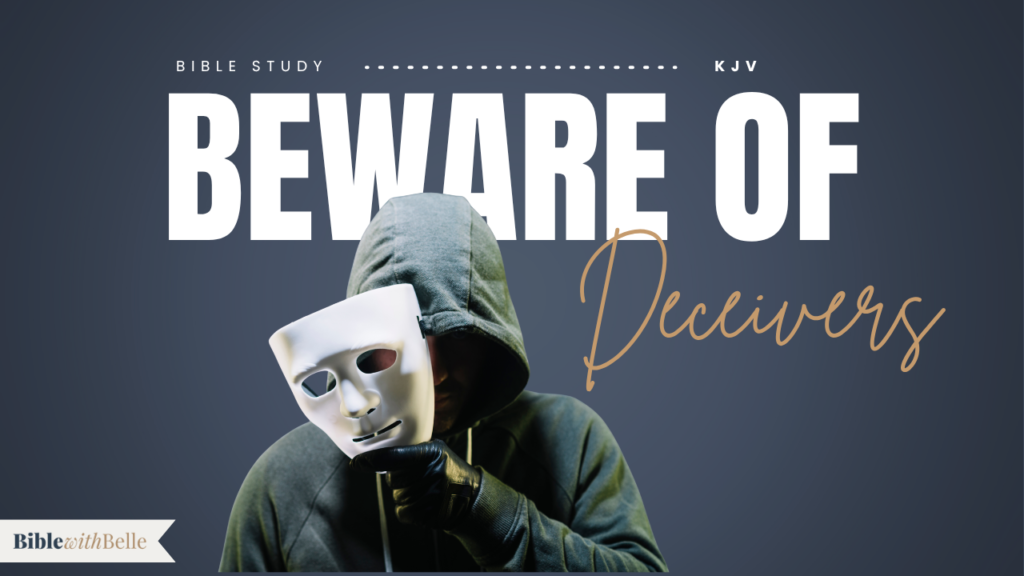
Have you ever looked at a person or situation and thought you knew exactly what you were seeing, only to discover later that things weren’t what they seemed?
It happens all the time. Someone can appear kind but have harmful intentions. A teaching can sound biblical while quietly twisting Scripture. A person can look successful, spiritual, trustworthy, or even righteous while hiding what is really happening underneath.
And sometimes we can be deceived simply because we want to believe what we see.
The Bible has a lot to say about this. God doesn’t want us to live suspicious of everyone or constantly assume the worst, but He does call us to wisdom and discernment. We aren’t supposed to judge everything by appearances, blindly believe every message, or assume that something is good simply because it looks good.
Quick Answer
The Bible warns that appearances can be deceptive and teaches us to look beyond what is visible, examine the fruit of people’s lives, test what we are taught against God’s Word, and seek wisdom from God.
Jesus warned about false prophets who come disguised as harmless sheep while actually being dangerous wolves. Paul also warned that Satan can disguise himself as an angel of light.
“For the Lord seeth not as man seeth; for man looketh on the outward appearance, but the Lord looketh on the heart.”
— 1 Samuel 16:7
Something looking good doesn’t automatically make it good. Something sounding spiritual doesn’t automatically mean it is from God. And someone appearing trustworthy doesn’t mean we should ignore what their actions consistently reveal.
God calls us to seek truth.
The Bible Says We Shouldn’t Judge Only by Appearances
We naturally judge things by what we can see.
We notice someone’s appearance, personality, reputation, success, confidence, possessions, social position, or the way they speak. These things can influence the way we feel about someone before we really know their character.
But God sees something we cannot see.
When Samuel was looking for the person God had chosen to become king of Israel, he initially thought Eliab looked like the obvious choice. God corrected him.
1 Samuel 16:7 says:
“But the Lord said unto Samuel, Look not on his countenance, or on the height of his stature; because I have refused him: for the Lord seeth not as man seeth; for man looketh on the outward appearance, but the Lord looketh on the heart.”
This doesn’t mean we should ignore people’s actions or refuse to make wise judgments. It means appearances aren’t enough.
Someone can look impressive and have a terrible character. Someone can look ordinary and have a heart devoted to God.
We need to be careful about assuming we know what is happening inside a person simply because of what we see on the outside.
Jesus Warned About False Prophets
One of the clearest warnings about deception comes directly from Jesus.
Matthew 7:15 says:
“Beware of false prophets, which come to you in sheep’s clothing, but inwardly they are ravening wolves.”
Notice the picture Jesus gives us.
The false prophet doesn’t walk up looking like a wolf.
They come in sheep’s clothing.
In other words, the danger is partly in the disguise.
This is why Christians cannot determine whether someone is trustworthy simply because they use Christian language, quote Bible verses, appear compassionate, have a large following, or seem spiritually impressive.
Jesus tells us to look deeper.
You Can Know People by Their Fruit
Immediately after warning about false prophets, Jesus gives us a way to recognise what is genuine.
Matthew 7:16 says:
“Ye shall know them by their fruits.”
And later He says:
“Wherefore by their fruits ye shall know them.”
— Matthew 7:20
Fruit takes time to see.
Someone can put on a good appearance for a while. They can say the right things. They can make a wonderful first impression.
But eventually, character shows itself.
How does this person treat people when they don’t get what they want? How do they respond when challenged? Do their private actions match their public words? Do they tell the truth? Do they show humility? Do they take responsibility when they are wrong?
Nobody is perfect, including Christians. Seeing a person’s flaws doesn’t automatically mean they’re deceptive.
The question is what kind of pattern their life produces.
Satan Can Disguise Himself as an Angel of Light
The Bible gives us an even more serious warning about spiritual deception.
Paul wrote:
“And no marvel; for Satan himself is transformed into an angel of light.”
— 2 Corinthians 11:14
This is important because deception doesn’t always look evil.
Something can look beautiful, spiritual, comforting, or convincing and still lead people away from God.
Satan’s goal is not necessarily to make something look obviously wicked. Deception works much better when it looks believable.
That is why Christians need to be careful with teachings, spiritual experiences, supernatural claims, and messages that appear religious.
The question isn’t simply, “Does this feel spiritual?”
The question is, “Does this agree with God’s Word?”
Not Everything That Sounds Biblical Is Biblical
One of the most dangerous forms of deception is partial truth.
A person can quote a real Bible verse while completely misusing it.
A teacher can say something that sounds Christian but quietly changes what Scripture actually teaches.
A message can contain enough truth to make the false parts difficult to notice.
This is why Christians need to know the Bible for themselves.
Acts 17:11 gives us a wonderful example. The Bereans listened to Paul, but they didn’t simply accept everything he said without examination.
“These were more noble than those in Thessalonica, in that they received the word with all readiness of mind, and searched the scriptures daily, whether those things were so.”
They were willing to listen, but they also searched the Scriptures.
That’s a healthy approach to teaching.
Don’t reject something simply because you haven’t heard it before, but don’t accept something simply because a confident person said it either.
Open the Bible.
Study it.
Compare what you’re hearing with what God has actually said.
False Teachers Can Look Righteous
Paul warned that deception can become even more convincing when it appears righteous.
2 Corinthians 11:13–15 says:
“For such are false apostles, deceitful workers, transforming themselves into the apostles of Christ.
And no marvel; for Satan himself is transformed into an angel of light.
Therefore it is no great thing if his ministers also be transformed as the ministers of righteousness; whose end shall be according to their works.”
This is why appearance alone isn’t a safe measure of truth.
Someone can have a Christian platform and still teach error.
Someone can speak confidently about God and still be wrong.
Someone can appear extremely spiritual and still have motives that aren’t honouring to God.
We need discernment.
Jesus Exposed Religious Hypocrisy
Jesus also confronted people who appeared righteous outwardly while their hearts were far from God.
In Matthew 23, Jesus strongly rebuked the scribes and Pharisees.
He said:
“Woe unto you, scribes and Pharisees, hypocrites! for ye are like unto whited sepulchres, which indeed appear beautiful outward, but are within full of dead men’s bones, and of all uncleanness.”
— Matthew 23:27
The picture is striking.
A tomb could be made beautiful on the outside while containing death inside.
Jesus was exposing the difference between outward religious appearance and genuine righteousness.
God isn’t impressed by a performance.
He wants truth in the inward parts.
God Cares About the Heart
This is one of the biggest themes throughout Scripture.
God isn’t merely interested in what we look like to other people.
He cares about who we actually are.
Psalm 51:6 says:
“Behold, thou desirest truth in the inward parts: and in the hidden part thou shalt make me to know wisdom.”
You can fool other people for a while.
You can manage your reputation.
You can hide things from friends, family, church members, coworkers, or even the people closest to you.
But you cannot hide your heart from God.
That can sound frightening if we’re thinking about our own failures, but it can also be incredibly comforting.
God sees everything about you, including the things you don’t know how to explain to anyone else.
And He calls us to become people of genuine faith rather than people who simply look like we have faith.
Don’t Confuse Discernment With Suspicion
There is an important balance here.
The Bible tells us to be discerning, but it doesn’t tell us to assume everyone is lying.
We aren’t called to become paranoid.
Discernment means carefully examining what we see and hear rather than blindly accepting it.
Proverbs 18:17 says:
“He that is first in his own cause seemeth just; but his neighbour cometh and searcheth him.”
There are often two sides to a story.
Sometimes the person who tells the story first may genuinely believe their version is completely accurate. That doesn’t automatically mean they’re lying, but it reminds us that we should be careful about making conclusions before we understand the whole situation.
Wisdom takes time.
Be Careful With Your Own Assumptions
Deception isn’t always something another person does to us.
Sometimes we deceive ourselves.
We can see what we want to see.
We can excuse behaviour because we love someone. We can ignore warning signs because we don’t want to admit something is wrong. We can believe a flattering story because it makes us feel important.
Jeremiah 17:9 says:
“The heart is deceitful above all things, and desperately wicked: who can know it?”
We need God’s truth not only to recognise deception in other people, but also to examine our own hearts.
Ask yourself honestly: Am I believing this because it is true, or because I desperately want it to be true?
That’s not always an easy question, but it can protect us from making decisions based entirely on emotion.
Test What You Hear
The Bible tells Christians to test spiritual claims rather than accepting them automatically.
1 John 4:1 says:
“Beloved, believe not every spirit, but try the spirits whether they are of God: because many false prophets are gone out into the world.”
This is especially important when someone claims to speak for God.
Don’t assume that something is from God because someone says, “God told me.”
Don’t assume a message is true because it sounds supernatural.
Don’t assume a teaching is biblical because the person delivering it uses Bible verses.
Test it.
Does it agree with Scripture? Does it point people toward the true Christ? Does it contradict something God has clearly revealed?
God’s Word is the standard.
Truth Matters More Than What Feels Good
Sometimes deception is attractive because the truth isn’t what we want to hear.
A false message may promise that everything will work out exactly as we want. It may tell us that we don’t need to change. It may tell us that our choices don’t matter. It may flatter us instead of correcting us.
But God’s truth doesn’t exist to make us comfortable all the time.
Sometimes God’s Word challenges us.
Sometimes it exposes our sin.
Sometimes it asks us to forgive when we don’t want to.
Sometimes it tells us to walk away from something we desperately want.
Sometimes it corrects beliefs we’ve held for years.
That doesn’t make God’s truth unloving.
Proverbs 27:6 says:
“Faithful are the wounds of a friend; but the kisses of an enemy are deceitful.”
Sometimes truth hurts before it heals.
Deception Can Happen in Relationships
False appearances can be particularly painful when they involve someone you trusted.
Maybe someone presented themselves as a good friend but repeatedly betrayed you.
Maybe someone seemed loving but manipulated you behind closed doors.
Maybe someone appeared trustworthy but lied to you.
Maybe you discovered that the person you thought you knew was very different from the person they presented to the world.
If you’ve experienced this, you may struggle to trust anyone again.
It’s understandable.
But don’t allow someone else’s deception to convince you that you can never trust anyone.
Instead, learn to slow down.
Trust can be built over time. Pay attention to patterns. Look at actions as well as words. Don’t ignore repeated warning signs simply because someone occasionally says the right thing.
And remember that forgiveness doesn’t mean you have to pretend deception didn’t happen.
You can forgive someone and still establish boundaries.
Don’t Be Deceived by Outward Success
We can also be deceived by success.
Someone may have money, a beautiful home, an impressive career, a large social following, or an apparently perfect family.
That doesn’t tell you what is happening in their heart.
Jesus warned against building our lives around earthly treasures.
Matthew 6:19–20 says:
“Lay not up for yourselves treasures upon earth, where moth and rust doth corrupt, and where thieves break through and steal:
But lay up for yourselves treasures in heaven, where neither moth nor rust doth corrupt, and where thieves do not break through nor steal.”
What looks successful from the outside isn’t necessarily successful in God’s eyes.
And the opposite is also true.
Someone who appears to have very little may have tremendous faith, wisdom, generosity, and love for God.
Don’t measure a person’s spiritual life by their possessions.
Don’t Be Deceived by Your Own Appearance
This isn’t only about other people.
We also need to ask whether our own outward appearance matches what is happening inside us.
It’s possible to look like a Christian without actually surrendering our lives to Christ.
It’s possible to know Bible verses without obeying God’s Word.
It’s possible to attend church while holding onto bitterness, pride, dishonesty, or unrepentant sin.
James 1:22 says:
“But be ye doers of the word, and not hearers only, deceiving your own selves.”
That’s a sobering verse.
We can deceive ourselves by listening to God’s Word without actually putting it into practice.
God doesn’t want a Christian life that exists only on the outside.
He wants genuine faith.
How Can I Protect Myself From Deception?
The Bible gives us practical principles.
First, know God’s Word. The more familiar you are with Scripture, the easier it becomes to recognise when something contradicts it.
Second, pray for wisdom. James 1:5 says:
“If any of you lack wisdom, let him ask of God, that giveth to all men liberally, and upbraideth not.”
Third, don’t rush. Manipulation often depends on pressure, emotion, fear, or urgency. Give yourself time to think and pray.
Fourth, look at fruit. Don’t judge a person solely by what they say. Pay attention to consistent actions and character.
Fifth, seek wise counsel. Proverbs 11:14 says:
“Where no counsel is, the people fall: but in the multitude of counsellors there is safety.”
And finally, keep your eyes on Christ.
The goal of discernment isn’t to become obsessed with finding everything that is wrong with everyone else.
It’s to become increasingly grounded in God’s truth.
Bible Verses About False Appearances and Deception
1 Samuel 16:7
“For the Lord seeth not as man seeth; for man looketh on the outward appearance, but the Lord looketh on the heart.”
John 7:24
“Judge not according to the appearance, but judge righteous judgment.”
Matthew 7:15
“Beware of false prophets, which come to you in sheep’s clothing, but inwardly they are ravening wolves.”
Matthew 7:16
“Ye shall know them by their fruits.”
Matthew 7:20
“Wherefore by their fruits ye shall know them.”
2 Corinthians 11:14
“And no marvel; for Satan himself is transformed into an angel of light.”
2 Corinthians 11:15
“Therefore it is no great thing if his ministers also be transformed as the ministers of righteousness; whose end shall be according to their works.”
Colossians 2:8
“Beware lest any man spoil you through philosophy and vain deceit, after the tradition of men, after the rudiments of the world, and not after Christ.”
1 John 4:1
“Beloved, believe not every spirit, but try the spirits whether they are of God: because many false prophets are gone out into the world.”
Proverbs 12:22
“Lying lips are abomination to the Lord: but they that deal truly are his delight.”
Ephesians 4:25
“Wherefore putting away lying, speak every man truth with his neighbour: for we are members one of another.”
Psalm 119:160
“Thy word is true from the beginning: and every one of thy righteous judgments endureth for ever.”
Final Thought
The world is full of appearances.
People can look one way and be another. Words can sound convincing while hiding deception. Spiritual messages can sound beautiful while contradicting God’s Word. Something can be popular, successful, attractive, or impressive without being good.
That’s why God calls us to discernment.
You don’t have to become suspicious of everyone. You don’t have to assume the worst about people. And you don’t have to live afraid of being deceived.
But you should learn God’s Word.
You should pray for wisdom.
You should pay attention to fruit.
You should test what you hear.
And you should remember that appearances aren’t the final measure of truth.
God sees what we cannot see.
He sees the heart.
And when you’re unsure what to believe, don’t simply ask, “Does this look good?”
Ask, “What does God say?”
— Psalm 119:105
✨ Still Have a Question?
You can send it through the Ask a Bible Question page, and I’ll respond with guidance from God’s Word.
You can also leave your questions on my YouTube channel, where I share clear, practical encouragement, and answers to common questions.