
Where To Get A Free Bible
June 14, 2024
What Does The Bible Say About Cremation
June 15, 2024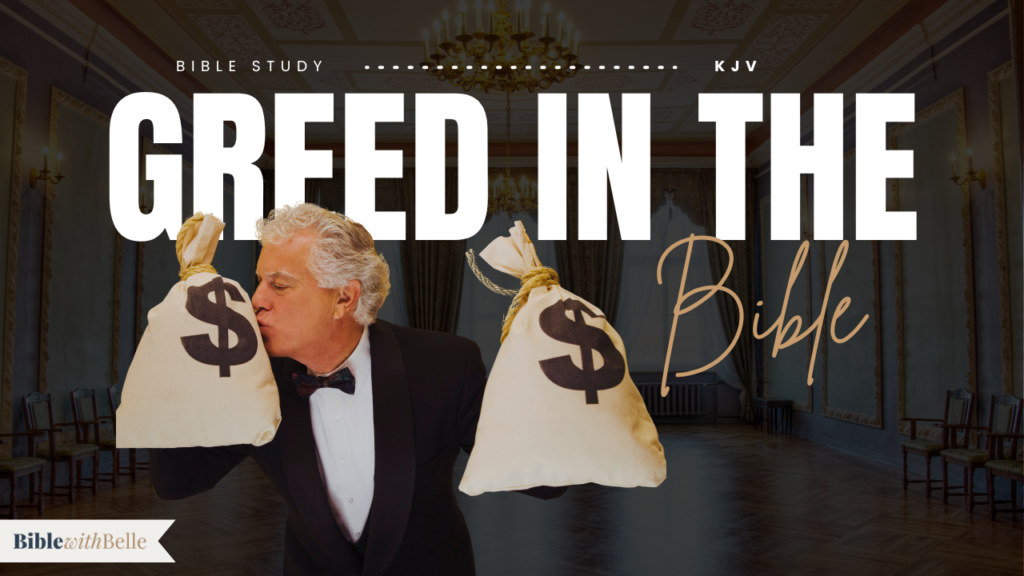
Greed is a sin that can quietly take hold of the human heart. It is not limited to wealthy people or those who want to become rich. Greed can affect anyone who places too much importance on money, possessions, status, or getting what they want, even when it comes at the expense of others.
The Bible has much to say about greed because God is concerned not only with what we do, but also with what motivates our decisions. We can appear generous while secretly wanting more for ourselves, we can have plenty and still feel dissatisfied. At times we can even pursue financial success so relentlessly that we neglect our families, compromise our integrity, or push God out of the centre of our lives.
So, what does the Bible say about greed? Is wanting more money a sin? Can Christians be wealthy without being greedy? And how can we recognise and overcome greed in our own hearts?
Scripture gives us clear answers. God does not condemn every desire to improve our circumstances or every possession we own. However, He strongly warns against covetousness, the love of money, selfish ambition, and the belief that acquiring more will bring lasting satisfaction.
The Bible teaches that greed is sinful because it places our desires above God’s will and the needs of others. Christians are called to practise contentment, generosity, honesty, and faithful stewardship, remembering that our greatest treasure is found in God rather than in earthly possessions.
Quick Answer: What Does the Bible Say About Greed?
The Bible teaches that greed is a sinful desire to acquire more money, possessions, power, or personal advantage for ourselves. It becomes a serious spiritual problem when our desire for more controls our decisions, leads us to mistreat others, or takes the place God should have in our lives.
Jesus directly warned His followers to guard against covetousness because a person’s life does not consist in the abundance of possessions. Paul described covetousness as idolatry and warned that the love of money can lead people into many kinds of evil.
However, the Bible does not teach that having money, working hard, saving, or providing for your family is automatically greedy. The issue is the condition of our hearts and how we use what God has entrusted to us.
Christians are called to:
- Put God above money and possessions.
- Be content rather than constantly craving more.
- Work honestly and manage resources wisely.
- Give generously and help those in need.
- Refuse to exploit others for personal gain.
- Trust God rather than treating wealth as their source of security.
Greed promises satisfaction through getting more, but Scripture directs us toward a different way of living: trusting God, loving others, and using what we have faithfully.
What Is Greed According to the Bible?
Greed is an excessive desire to possess more than we need or to obtain more for ourselves without sufficient concern for what is right, what God desires, or how our actions affect others.
It can involve money, property, possessions, influence, recognition, or power. A person does not have to be wealthy to be greedy. Someone with very little can be consumed by the desire to have more, while someone with considerable wealth can use their resources responsibly and generously.
Greed is therefore not measured simply by the size of a bank account. It concerns the attitude of the heart.
Luke 12:15 — Guard Against Covetousness
And he said unto them, Take heed, and beware of covetousness: for a man’s life consisteth not in the abundance of the things which he possesseth.
Jesus spoke these words after someone asked Him to intervene in a family inheritance dispute. Rather than becoming a judge in their financial disagreement, Jesus warned His listeners about the danger of covetousness.
His words reveal an important truth: possessions do not determine the value of a person’s life.
Our culture often encourages us to measure success by what we own, how much we earn, the home we live in, or the lifestyle we can afford. It can be easy to believe that having more will finally make us feel secure, important, or satisfied.
Jesus challenges that way of thinking. A person’s worth is not determined by their possessions, and accumulating wealth cannot provide the spiritual life that comes from knowing God.
This does not mean that financial stability is unimportant or that we should never work towards improving our circumstances. It means we must not allow possessions to become the measure of our lives.
Is Greed a Sin?
Yes. The Bible explicitly identifies greed, covetousness, and the love of money as serious spiritual dangers.
Greed becomes sinful when we allow our desires to rule us rather than submitting our lives to God. It can lead us to become selfish, dishonest, envious, or indifferent to the suffering of others.
Scripture also warns that greed can become a form of idolatry. An idol is not necessarily a physical object. Anything that takes the place God should have in our hearts can become an object of worship.
Colossians 3:5 — Covetousness Is Idolatry
Mortify therefore your members which are upon the earth; fornication, uncleanness, inordinate affection, evil concupiscence, and covetousness, which is idolatry:
Paul instructs Christians to put sinful desires to death rather than allow them to control their lives. He places covetousness alongside other sinful attitudes and behaviours, then identifies it as idolatry.
Why would covetousness be described this way?
Because greed can cause us to desire something so intensely that it begins to take God’s place in our lives. We may think about money constantly, sacrifice what is right to acquire it, or trust our possessions more than we trust the Lord.
When acquiring more becomes our greatest priority, our hearts are no longer properly directed towards God.
This is why greed cannot be dismissed as merely a personality trait or a harmless desire to succeed. Scripture calls believers to recognise it, repent of it, and put it away.
The Love of Money Is Dangerous
One of the most well-known biblical warnings about greed appears in Paul’s first letter to Timothy. Paul explains that the desire for riches can lead people into temptation and spiritual destruction.
1 Timothy 6:6–10 — The Love of Money
But godliness with contentment is great gain.
For we brought nothing into this world, and it is certain we can carry nothing out.
And having food and raiment let us be therewith content.
But they that will be rich fall into temptation and a snare, and into many foolish and hurtful lusts, which drown men in destruction and perdition.
For the love of money is the root of all evil: which while some coveted after, they have erred from the faith, and pierced themselves through with many sorrows.
Paul is not saying that money itself is evil or that every wealthy person is sinful. His warning concerns the love of money and the desire to become rich at the expense of godliness.
Money can be used to provide for a family, support a ministry, care for people in need, and meet practical responsibilities. The problem arises when it becomes the thing we desire above everything else.
Notice also that Paul connects godliness with contentment. He reminds believers that we enter the world with nothing and cannot take our earthly possessions with us when we die.
Greed forgets this reality. It encourages us to spend our lives chasing what is temporary while neglecting what matters eternally.
Paul’s warning is particularly serious because he says that some people, through their desire for money, have wandered from the faith and brought many sorrows upon themselves.
The lesson is not that Christians must avoid financial success. It is that money must never become more important than obedience to God.
Does the Bible Say Money Is the Root of All Evil?
No. This familiar statement is often quoted incorrectly.
The Bible does not say that money itself is the root of all evil. The verse specifically identifies the love of money as the root of all kinds of evil.
1 Timothy 6:10 — The Love of Money
For the love of money is the root of all evil: which while some coveted after, they have erred from the faith, and pierced themselves through with many sorrows.
Paul is warning about what happens when money becomes an object of excessive desire. A person who loves money above righteousness may be tempted to lie, cheat, exploit others, neglect responsibilities, or compromise their faith to acquire more.
Money itself is a resource. It can be used for good or evil, depending on how it is acquired, valued, and spent.
The important distinction is between possessing money and being controlled by the desire for it.
A Christian can work hard, earn a good income, save for the future, and provide for their family without being greedy. However, even someone with very little money can struggle with covetousness if their heart is consumed by wanting what others have.
God calls us to examine our motives rather than assume that a person’s wealth automatically reveals their spiritual condition.
Can Christians Be Rich Without Being Greedy?
Yes. The Bible does not teach that every wealthy person is greedy or that Christians must deliberately remain poor to please God.
Scripture contains examples of people who possessed considerable resources and used them in ways that served God’s purposes. The issue is not simply how much a person owns, but whether they trust God, act righteously, and use their resources responsibly.
Paul gives specific instructions to Christians who are rich, showing that wealth brings responsibilities rather than automatically making someone sinful.
1 Timothy 6:17–19 — Instructions for Those Who Are Rich
Charge them that are rich in this world, that they be not highminded, nor trust in uncertain riches, but in the living God, who giveth us richly all things to enjoy;
That they do good, that they be rich in good works, ready to distribute, willing to communicate;
Laying up in store for themselves a good foundation against the time to come, that they may lay hold on eternal life.
Paul does not instruct wealthy believers to give away every possession simply because they have money. Instead, he warns them against pride and placing their trust in uncertain riches.
He then tells them to do good, be generous, and be willing to share.
This passage shows that wealth can be managed faithfully when it is not treated as the foundation of a person’s security or identity. Those who have more resources have opportunities to help others and support good work.
However, possessing wealth does not excuse selfishness. A person who uses their resources to exploit others, pursue status, or satisfy every personal desire is not living according to the spirit of Paul’s instructions.
The biblical question is not simply, “How much do you have?” It is also, “Where is your trust, and how are you using what you have been given?”
Greed Can Become an Idol
An idol is anything that takes the place of God in our hearts. In biblical times, idols were often physical objects worshipped as gods. But Scripture also warns against allowing our desires and possessions to become objects of devotion.
Money can become an idol when we trust it more than God, pursue it above righteousness, or believe it can provide the security and satisfaction that only God can ultimately give.
Matthew 6:24 — You Cannot Serve God and Mammon
No man can serve two masters: for either he will hate the one, and love the other; or else he will hold to the one, and despise the other. Ye cannot serve God and mammon.
Jesus explains that we cannot give our ultimate allegiance to two competing masters. In this passage, mammon refers to wealth or material possessions.
Money becomes spiritually dangerous when it begins to direct our lives. We may compromise our values to earn more, neglect worship and relationships because of financial ambition, or become unwilling to help anyone because we are afraid of losing what we own.
Jesus calls His followers to recognise that God must come first.
This does not mean Christians should be careless with money or refuse to plan for the future. Responsible financial management can be an important part of stewardship. The problem is allowing wealth to control our hearts and determine our choices.
We should use money as a resource, not serve it as a master.
Greed and Covetousness Are Closely Connected
Greed is often accompanied by covetousness, which is the desire to possess what belongs to someone else or to acquire more for ourselves.
Covetousness can begin quietly. We see another person’s home, income, possessions, appearance, or lifestyle and begin to resent what we do not have. Instead of being grateful for God’s provision, we become dissatisfied and fixated on what belongs to someone else.
The desire may then influence our actions. We might become dishonest, take advantage of others, or sacrifice important responsibilities in pursuit of something we want.
Exodus 20:17 — Do Not Covet What Belongs to Others
Thou shalt not covet thy neighbour’s house, thou shalt not covet thy neighbour’s wife, nor his manservant, nor his maidservant, nor his ox, nor his ass, nor any thing that is thy neighbour’s.
God included this command among the Ten Commandments given to Israel. It addresses more than outward actions; it also concerns the desires we allow to grow in our hearts.
A person might never steal a neighbour’s possessions but still spend their life envying what that neighbour owns. The command warns against this inward desire to possess what belongs to another.
For Christians today, the principle is a reminder to guard our hearts against envy and resentment. We should not allow another person’s success or possessions to make us bitter about our own circumstances.
It is possible to admire someone’s achievements without coveting what they have. We can celebrate another person’s blessings while remaining grateful for what God has entrusted to us.
Greed Can Lead to Dishonesty and Exploitation
Greed does not always remain an inward desire. When left unchecked, it can influence how we treat other people.
Someone consumed by the pursuit of wealth may lie, manipulate others, withhold what is owed, or take advantage of people who are vulnerable. The desire for personal gain can gradually become more important than justice and compassion.
The Bible strongly condemns this kind of behaviour. God cares about how people earn money and how they treat those who depend on them.
James 5:1–6 — A Warning to the Rich Who Exploit Others
Go to now, ye rich men, weep and howl for your miseries that shall come upon you.
Your riches are corrupted, and your garments are motheaten.
Your gold and silver is cankered; and the rust of them shall be a witness against you, and shall eat your flesh as it were fire. Ye have heaped treasure together for the last days.
Behold, the hire of the labourers who have reaped down your fields, which is of you kept back by fraud, crieth: and the cries of them which have reaped are entered into the ears of the Lord of sabaoth.
Ye have lived in pleasure on the earth, and been wanton; ye have nourished your hearts, as in a day of slaughter.
Ye have condemned and killed the just; and he doth not resist you.
James gives a severe warning against wealthy people who have accumulated riches through injustice and exploitation. His concern is not merely that they possess money, but that they have withheld wages, pursued selfish pleasure, and mistreated others.
The passage reminds us that God sees injustice even when those responsible appear successful. Financial prosperity does not mean that a person has God’s approval.
A Christian cannot justify dishonesty or exploitation by claiming that financial success is a blessing. God cares about righteousness, fairness, and the treatment of other people.
This warning should encourage believers to earn money honestly, fulfil their obligations, and refuse to profit from the suffering or vulnerability of others.
Greed Can Make Us Forget the Needs of Others
One of the dangers of greed is that it turns our attention inward. We become so concerned with acquiring and protecting what belongs to us that we stop noticing the needs of those around us.
The Bible teaches that love should shape how we use our resources. This does not mean we must meet every request for help or give away everything we own. It means we should not become so attached to possessions that we lose compassion for others.
1 John 3:17–18 — Love Must Be More Than Words
But whoso hath this world’s good, and seeth his brother have need, and shutteth up his bowels of compassion from him, how dwelleth the love of God in him?
My little children, let us not love in word, neither in tongue; but in deed and in truth.
John challenges believers to consider how genuine love is demonstrated. If someone has the means to help a fellow believer in need but deliberately closes their heart to that person’s suffering, their actions contradict the love they claim to possess.
This does not mean that every Christian must give away money whenever someone asks. Wisdom, responsibilities, and the actual circumstances all matter.
However, greed can make us unwilling to share even when we are able to help. We may become so protective of our possessions that another person’s hardship no longer moves us.
God calls His people to a different attitude. We should be willing to consider the needs of others and use our resources in ways that reflect genuine love.
The Bible Calls Us to Be Content
Contentment is one of the strongest biblical answers to greed.
Contentment does not mean that we must stop working, abandon our goals, or accept every difficult circumstance without seeking improvement. It means that we do not allow the desire for more to control our hearts.
A content person can work towards a better future while remaining grateful for what they have today. They can pursue financial stability without believing that money is the source of their worth or happiness.
Hebrews 13:5 — Be Content With What You Have
Let your conversation be without covetousness; and be content with such things as ye have: for he hath said, I will never leave thee, nor forsake thee.
The writer of Hebrews connects contentment with freedom from covetousness and confidence in God’s presence.
The verse does not tell Christians that they must never want their circumstances to improve. Rather, it warns against allowing the pursuit of possessions to dominate our lives.
The reason given is deeply encouraging: God has promised never to leave or forsake His people.
Greed often grows from the belief that we need more to feel secure. Scripture directs us to a deeper foundation for our security in God’s faithfulness.
We can work diligently, plan wisely, and seek to improve our circumstances while remembering that money cannot provide everything our hearts need.
Does Contentment Mean We Should Never Want More?
No. Wanting to improve your circumstances is not automatically greed.
It is reasonable to want a safe home, a stable income, enough money to provide for your family, or savings for unexpected expenses. These desires can reflect responsible planning rather than selfishness.
The problem arises when the desire for more becomes excessive, controls our priorities, or leads us to compromise what is right.
Paul explains that contentment is something he learned through different circumstances in life.
Philippians 4:11–13 — Learning to Be Content
Not that I speak in respect of want: for I have learned, in whatsoever state I am, therewith to be content.
I know both how to be abased, and I know how to abound: every where and in all things I am instructed both to be full and to be hungry, both to abound and to suffer need.
I can do all things through Christ which strengtheneth me.
Paul explains that he learned to remain content whether he had plenty or experienced need. His circumstances changed, but his faith in Christ remained the foundation of his strength.
This passage is not a promise that Christians will always have everything they want. Paul openly acknowledges that he experienced hunger and need.
His example teaches us that contentment is not dependent on having an abundance of possessions. It grows as we learn to trust Christ in different circumstances.
We can still work towards financial goals and pray for provision. However, we do not have to postpone gratitude until we have everything we desire.
Greed Distracts Us From Eternal Priorities
Jesus warned His followers not to make earthly possessions the centre of their lives. Material things are temporary, and they cannot provide the lasting treasure that comes from belonging to God.
When greed takes control, we can spend so much time pursuing money and possessions that we neglect our relationship with God, our families, our responsibilities, and opportunities to serve others.
Matthew 6:19–21 — Lay Up Treasures in Heaven
Lay not up for yourselves treasures upon earth, where moth and rust doth corrupt, and where thieves break through and steal:
But lay up for yourselves treasures in heaven, where neither moth nor rust doth corrupt, and where thieves do not break through nor steal:
For where your treasure is, there will your heart be also.
Jesus contrasts earthly treasures with heavenly treasures. Earthly possessions are vulnerable to loss and decay, while the things of eternal value are not subject to the same limitations.
His teaching challenges us to consider what we are living for. If all our time, energy, and attention are devoted to acquiring possessions, our priorities may have become centred on temporary things.
Storing up treasure in heaven involves living faithfully before God, loving others, practising generosity, and seeking His kingdom. It means allowing eternal priorities to shape the way we use our time and resources.
Jesus does not say that owning possessions is inherently sinful. He warns against making them the focus of our hearts.
What Is the Difference Between Greed and Good Stewardship?
Greed and stewardship can both involve money, but they come from very different attitudes.
Greed asks, “How can I get more for myself?”
Stewardship asks, “How can I use what God has entrusted to me wisely?”
A greedy person may accumulate possessions simply because they want more, regardless of the consequences. A faithful steward recognises that resources come with responsibilities and should be managed thoughtfully.
The Bible encourages diligence, planning, and responsible provision. These are not contrary to contentment. In fact, wise stewardship can help us avoid unnecessary financial pressure and provide for people who depend on us.
Proverbs 21:5 — Diligent Planning
The thoughts of the diligent tend only to plenteousness; but of every one that is hasty only to want.
This proverb contrasts careful planning with hasty decisions. It teaches the value of diligence and thoughtfulness in practical matters.
A Christian can apply this wisdom by budgeting, saving where possible, paying obligations responsibly, and considering the consequences before making financial commitments.
These habits do not automatically make someone wealthy, nor does the proverb promise that every carefully planned goal will succeed. Its principle is that thoughtful diligence is generally wiser than impulsive action.
Responsible financial management becomes a problem only when it is driven by an unhealthy obsession with money or a refusal to consider anything beyond personal gain.
How Can Christians Overcome Greed?
Recognising greed is only the beginning. Scripture calls us to turn away from sinful desires and develop attitudes that reflect God’s character.
Overcoming greed does not necessarily happen overnight. It may involve examining our motives, changing our spending habits, learning to be grateful, and becoming more willing to share with others.
Here are practical ways to apply the Bible’s teaching.
1. Examine what controls your thoughts.
Ask yourself whether money and possessions occupy more of your attention than they should. Are you constantly comparing yourself with others? Do you feel that you can never have enough? Are you willing to compromise your values to get what you want?
Honest reflection can help you recognise when a desire has become unhealthy.
2. Practise gratitude.
Make a habit of recognising the good things you already have. Gratitude does not mean pretending that your problems do not exist. It means refusing to let dissatisfaction blind you to what is good and valuable in your life.
3. Learn to be content.
Set reasonable goals without believing that happiness depends on achieving every one of them. You can work towards a better financial position while remaining grateful in your current circumstances.
4. Use money responsibly.
Budget carefully, avoid impulsive purchases, and think about the purpose behind your financial decisions. Responsible planning can help you meet your obligations without allowing money to become the centre of your life.
5. Practise generosity.
Look for appropriate opportunities to help people in need, support good work, or share what you have. Generosity helps us remember that possessions are not meant to become objects of worship.
6. Refuse dishonest gain.
Never allow the desire for money to justify lying, cheating, exploiting others, or withholding what you owe. Financial success is not worth compromising your integrity before God.
7. Put God first.
Make your relationship with God the priority that shapes your decisions. Seek His wisdom, study His Word, and remember that your security and worth are not determined by your possessions.
What Does Jesus Teach About Greed?
Jesus repeatedly warned against the danger of placing wealth and possessions above God. One of His clearest teachings appears in the parable of the rich fool.
Luke 12:16–21 — The Parable of the Rich Fool
And he spake a parable unto them, saying, The ground of a certain rich man brought forth plentifully:
And he thought within himself, saying, What shall I do, because I have no room where to bestow my fruits?
And he said, This will I do: I will pull down my barns, and build greater; and there will I bestow all my fruits and my goods.
And I will say to my soul, Soul, thou hast much goods laid up for many years; take thine ease, eat, drink, and be merry.
But God said unto him, Thou fool, this night thy soul shall be required of thee: then whose shall those things be, which thou hast provided?
So is he that layeth up treasure for himself, and is not rich toward God.
The rich man in this parable had an abundant harvest. His problem was not simply that he had possessions or planned for the future. Instead, his thoughts centred on accumulating wealth for himself and enjoying a life of ease, without considering his relationship with God.
He assumed that his riches would provide lasting security, but he had forgotten that his life was not under his control.
The parable exposes the danger of living as though earthly possessions are the ultimate goal. A person can accumulate considerable wealth and still be spiritually poor if they neglect God.
Jesus concludes by warning against laying up treasure for ourselves while failing to be rich towards God.
This is a powerful reminder that our lives are temporary and that financial success cannot replace a right relationship with our Creator.
Bible Verses About Greed and Covetousness
The following passages summarise important biblical teachings about greed, contentment, generosity, and the danger of loving money. Each passage shows that God is concerned with both our outward actions and the desires of our hearts.
Proverbs 15:27 — Greed Brings Trouble
He that is greedy of gain troubleth his own house; but he that hateth gifts shall live.
This proverb warns that the pursuit of dishonest or excessive gain can bring harm even to one’s own household. Financial ambition should never become an excuse to damage relationships or compromise integrity.
Proverbs 28:25 — Trusting God Instead of Greed
He that is of a proud heart stirreth up strife: but he that putteth his trust in the LORD shall be made fat.
This proverb contrasts pride with trust in the Lord. In the language of the King James Version, “made fat” conveys the idea of flourishing or being enriched. The verse encourages us to place our confidence in God rather than allowing pride and self-interest to direct our lives.
Ecclesiastes 5:10 — Money Does Not Satisfy the Greedy
He that loveth silver shall not be satisfied with silver; nor he that loveth abundance with increase: this is also vanity.
This verse describes the emptiness of making wealth the object of our love. The more a person is driven by the desire for more, the harder it can become to find satisfaction.
Matthew 6:24 — You Cannot Serve Two Masters
No man can serve two masters: for either he will hate the one, and love the other; or else he will hold to the one, and despise the other. Ye cannot serve God and mammon.
Jesus teaches that wealth must not become our master. God deserves our ultimate allegiance, and money must remain a resource rather than the centre of our devotion.
Luke 12:15 — Life Is More Than Possessions
And he said unto them, Take heed, and beware of covetousness: for a man’s life consisteth not in the abundance of the things which he possesseth.
Jesus reminds us that a person’s worth and life cannot be measured by possessions. Greed loses sight of this truth by treating material abundance as the measure of success.
Colossians 3:5 — Covetousness Is Idolatry
Mortify therefore your members which are upon the earth; fornication, uncleanness, inordinate affection, evil concupiscence, and covetousness, which is idolatry:
Paul calls believers to reject covetousness because it can take the place that belongs to God. Our desires must be brought under His authority rather than allowed to control us.
Hebrews 13:5 — Be Content With What You Have
Let your conversation be without covetousness; and be content with such things as ye have: for he hath said, I will never leave thee, nor forsake thee.
Contentment grows from confidence in God’s faithfulness. We can pursue responsible goals without allowing the desire for more to dominate our lives.
1 Timothy 6:10 — The Love of Money
For the love of money is the root of all evil: which while some coveted after, they have erred from the faith, and pierced themselves through with many sorrows.
Paul warns that loving money can lead people away from faithfulness and into painful consequences. The problem is not money itself, but the desire that places it above God.
1 John 3:17–18 — Show Love Through Action
But whoso hath this world’s good, and seeth his brother have need, and shutteth up his bowels of compassion from him, how dwelleth the love of God in him?
My little children, let us not love in word, neither in tongue; but in deed and in truth.
John reminds believers that genuine love should influence how we treat those in need. Our possessions should not make us indifferent to the suffering of others.
Final Thoughts: Choose Contentment Over Greed
The Bible teaches that greed is a serious sin because it turns our hearts towards selfish desire and away from God. It can lead to dishonesty, envy, exploitation, and a constant dissatisfaction with what we have.
Yet Scripture does not condemn every desire for financial stability or every person who possesses wealth. We can work hard, provide for our families, save responsibly, and pursue worthwhile goals without allowing money to become our master.
The difference lies in our hearts. Are we using our resources faithfully, or are we allowing the pursuit of more to control us? We can reflect if we are grateful for God’s provision, or do we constantly compare ourselves with others? Are we willing to help people in need, or have our possessions become more important than compassion?
God calls His people to a better way of living. He teaches us to be content, act honestly, practise generosity, and place our trust in Him rather than in uncertain riches.
If you recognise greed in your own heart, do not simply excuse it or pretend it is not there. Acknowledge it before God, repent of the attitudes and actions that are wrong, and begin making choices that reflect His Word. Through His grace, you can grow in contentment and learn to use what you have to bless others.
Remember that money cannot give you lasting peace, determine your worth, or secure your eternal future. Possessions are temporary, but your relationship with God has eternal significance.
Do not spend your life chasing more while neglecting what matters most. Seek God first, be faithful with what He has entrusted to you, and let generosity replace selfishness and contentment replace greed.
✨ Still Have a Question?
You can send it through the Ask a Bible Question page, and I’ll respond with guidance from God’s Word.
You can also leave your questions on my YouTube channel, where I share clear, practical encouragement, and answers to common questions.