Bible Verses About Fatherhood
March 18, 2025
Bible Verses About Leadership
March 21, 2025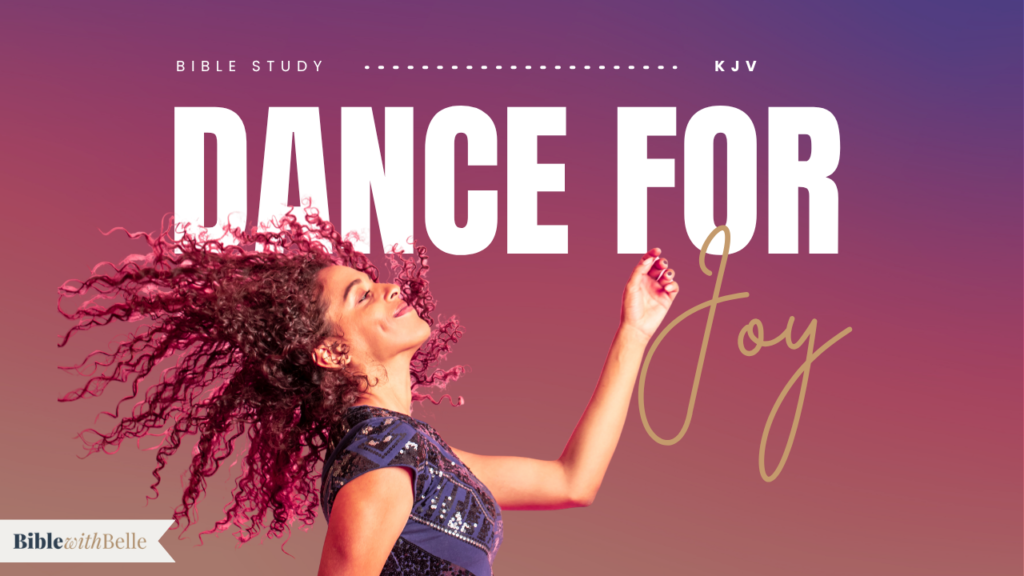
The Bible has a lot to say about dancing, but it does not give a simple rule saying that all dancing is either sinful or acceptable.
There are several examples of dancing in Scripture that are connected with joy, celebration, victory and praise. David danced before the Lord, Miriam and the women of Israel danced after God delivered them from Egypt, and the Psalms specifically mention praising God with dancing.
However, the Bible also records dancing in contexts involving idolatry and sinful behaviour.
So, rather than asking only “Is dancing a sin?”, Christians should consider the purpose, context, motives and conduct involved.
Quick Answer: What Does the Bible Say About Dancing?
The Bible does not say that dancing itself is a sin.
Scripture contains positive examples of dancing, including dancing as an expression of joy, celebration and praise. At the same time, some biblical examples connect dancing with idolatry and sinful behaviour.
For Christians, the important question is not simply whether someone is dancing, but what kind of dancing they are doing and whether it honours God.
When considering whether a particular type of dancing is appropriate, it can be helpful to ask:
- What is the purpose of the dancing?
- Is it appropriate for the situation?
- Does it involve sexual or provocative behaviour?
- What are my motives?
- Could it encourage me or someone else toward sin?
- Can I participate while maintaining a clear conscience before God?
- Does my behaviour honour Christ?
Ecclesiastes 3:4 — A Time to Dance
“A time to weep, and a time to laugh, a time to mourn, and a time to dance:”
The Bible does not present dancing as inherently sinful.
Ecclesiastes includes dancing among the different experiences and activities that have an appropriate time and place.
Does the Bible Say Dancing Is a Sin?
No. The Bible does not prohibit dancing in general.
In fact, there are several occasions where dancing is described positively.
The meaning of dancing depends on the circumstances surrounding it. Dancing can express happiness and celebration, but it can also occur alongside behaviour that Scripture condemns.
This is why Christians should consider the broader biblical principles rather than treating every form of dancing as automatically good or automatically sinful.
Psalm 30:11 — God Turns Mourning Into Dancing
“Thou hast turned for me my mourning into dancing: thou hast put off my sackcloth, and girded me with gladness;”
David uses dancing as a picture of the joy that God brings after a period of mourning.
The verse presents dancing positively, showing that physical expression can accompany genuine joy and gratitude toward God.
Bible Verses About Dancing and Praise
Scripture contains passages that directly connect dancing with praising God.
This demonstrates that dancing itself cannot be classified as sinful in every circumstance.
Psalm 149:3 — Praise God With Dancing
“Let them praise his name in the dance: let them sing praises unto him with the timbrel and harp.”
The psalm encourages God’s people to praise Him through singing, music and dancing.
This is one of the clearest biblical examples of dancing being used as an expression of praise.
Psalm 150:4 — Praise Him With Dance
“Praise him with the timbrel and dance: praise him with stringed instruments and organs.”
Psalm 150 calls God’s people to praise Him with different forms of musical expression.
Dancing is specifically included.
This does not necessarily mean that every modern style of dancing should automatically be incorporated into Christian worship. It does, however, show that Scripture does not condemn dancing simply because it involves physical movement.
David Danced Before the Lord
David provides another well-known example.
When the ark of the covenant was brought to Jerusalem, David responded with great joy and danced before the Lord.
2 Samuel 6:14 — David Danced Before the Lord
“And David danced before the Lord with all his might; and David was girded with a linen ephod.”
David’s dancing was an expression of his joy before God.
His behaviour was connected with celebration over the return of the ark, rather than an attempt to promote immorality or idolatry.
This is another reason Christians should be cautious about making a blanket statement that all dancing is sinful.
Miriam Danced After God’s Deliverance
David was not the only person in Scripture who danced in response to God’s work.
After God delivered Israel from the Egyptian army, Miriam and the women of Israel responded with music and dancing.
Exodus 15:20–21 — Miriam and the Women Danced
“And Miriam the prophetess, the sister of Aaron, took a timbrel in her hand; and all the women went out after her with timbrels and with dances.
And Miriam answered them, Sing ye to the Lord, for he hath triumphed gloriously; the horse and his rider hath he thrown into the sea.”
Their dancing was part of their celebration after God’s deliverance.
The passage connects the dancing with worship, gratitude and joy.
The Bible Also Shows Dancing in a Sinful Context
Although Scripture gives positive examples of dancing, it also describes situations where dancing occurred alongside sinful behaviour.
One of the clearest examples appears in the account of the golden calf.
Exodus 32:19 — Dancing Around the Golden Calf
“And it came to pass, as soon as he came nigh unto the camp, that he saw the calf, and the dancing: and Moses’ anger waxed hot, and he cast the tables out of his hands, and brake them beneath the mount.”
The problem in this passage was not simply the physical act of dancing.
The Israelites had made and worshipped a golden calf while Moses was on Mount Sinai receiving God’s commandments.
Their dancing was part of an occasion of idolatry and rebellion against God.
This gives us an important principle when considering activities that are not inherently sinful: context matters.
What Does the Bible Say About the Way We Dance?
The Bible does not provide a list of modern dance styles and label each one as sinful or acceptable.
However, Scripture does give Christians principles concerning modesty, purity, self-control and the way we use our bodies.
Those principles can help us evaluate particular forms of dancing.
1 Timothy 2:9–10 — Modesty and Godliness
“In like manner also, that women adorn themselves in modest apparel, with shamefacedness and sobriety; not with broided hair, or gold, or pearls, or costly array;
But (which becometh women professing godliness) with good works.”
This passage is specifically addressing modesty and godly conduct rather than directly discussing dancing.
Nevertheless, the principle can be applied when considering whether a particular form of dancing is modest and appropriate.
Christians should be careful about behaviour that is deliberately sexualised or intended to provoke lust.
What About Sexual or Provocative Dancing?
This is an area where biblical principles become particularly important.
The Bible does not discuss modern dance styles by name, but it clearly teaches Christians to avoid sexual immorality and deliberately cultivating lust.
1 Thessalonians 4:3–5 — Abstain From Sexual Immorality
“For this is the will of God, even your sanctification, that ye should abstain from fornication:
That every one of you should know how to possess his vessel in sanctification and honour;
Not in the lust of concupiscence, even as the Gentiles which know not God:”
Therefore, a person should not justify sexually provocative behaviour simply by saying that the Bible never specifically mentions a particular dance.
Biblical principles still apply even when Scripture does not name a modern activity.
What About Dancing at Parties or Clubs?
Dancing does not automatically become sinful because it takes place at a social gathering.
However, Christians should consider the environment and what other behaviour is taking place around them.
If participation involves drunkenness, sexual immorality, idolatry or other behaviour that conflicts with biblical teaching, that should be taken seriously.
1 Corinthians 10:31 — Do Everything for God’s Glory
“Whether therefore ye eat, or drink, or whatsoever ye do, do all to the glory of God.”
This provides a useful question for Christians to ask:
Can I participate in this while genuinely seeking to glorify God?
The answer may look different depending on the situation.
What About Dancing With Someone of the Opposite Sex?
The Bible does not give a general command forbidding men and women from dancing together.
However, Christians are still called to exercise wisdom concerning sexual temptation and purity.
2 Timothy 2:22 — Flee From Lust
“Flee also youthful lusts: but follow righteousness, faith, charity, peace, with them that call on the Lord out of a pure heart.”
Christians are not called to see how close they can get to temptation without technically sinning.
Instead, Scripture tells believers to flee from sinful desires.
If a particular situation consistently leads someone toward sexual temptation, wisdom may mean choosing not to participate.
What About Dancing for Attention?
Motives matter to God.
Two people can perform the same outward action while having completely different reasons for doing it.
One person may simply be enjoying music and celebrating with friends. Another may deliberately be trying to attract sexual attention.
Philippians 2:3 — Do Nothing Through Selfish Ambition
“Let nothing be done through strife or vainglory; but in lowliness of mind let each esteem other better than themselves.”
This principle applies to more than dancing.
Christians should regularly examine their motives and ask whether they are acting out of love, joy and freedom or whether pride, vanity or the desire for inappropriate attention is driving their behaviour.
Should Christians Avoid Dancing So They Do Not Cause Others to Sin?
The Bible also teaches Christians to consider how their choices affect other people.
Christian freedom should be exercised with love rather than selfishness.
1 Corinthians 8:9 — Do Not Become a Stumbling Block
“But take heed lest by any means this liberty of yours become a stumblingblock to them that are weak.”
This does not mean Christians are responsible for every possible reaction another person might have.
It does mean that believers should think carefully about whether their choices could unnecessarily encourage someone else toward sin.
What Does the Bible Say About Dancing in Worship?
Scripture contains several examples of dancing associated with praise and celebration.
David danced before the Lord. Miriam and the women of Israel danced after God’s deliverance. The Psalms specifically mention dancing as an expression of praise.
Psalm 150:4 — Praise God With Dance
“Praise him with the timbrel and dance: praise him with stringed instruments and organs.”
These passages show that physical expression can have a place in joyful worship.
However, worship is ultimately about the heart’s relationship with God rather than simply the outward form of expression.
John 4:24 — Worship God in Spirit and Truth
“God is a Spirit: and they that worship him must worship him in spirit and in truth.”
The outward expression of worship should never become more important than genuine devotion to God.
Is Dancing Always a Form of Worship?
No.
Dancing can be used in worship, but that does not mean every form of dancing is worship.
The same physical activity can have very different meanings depending on its purpose and context.
David danced in celebration before God.
The Israelites danced in connection with the worship of the golden calf.
These examples demonstrate why Christians should look beyond the activity itself and consider what it represents.
How Can Christians Decide Whether a Dance Is Appropriate?
When you are unsure about a particular type of dancing or situation, Scripture provides several principles that can help guide your decision.
Ask Whether It Honours God
Colossians 3:17 — Do Everything in the Name of the Lord
“And whatsoever ye do in word or deed, do all in the name of the Lord Jesus, giving thanks to God and the Father by him.”
Consider whether you can participate with a clear conscience while genuinely seeking to honour Christ.
Examine Your Motives
Proverbs 16:2 — God Weighs the Motives
“All the ways of a man are clean in his own eyes; but the Lord weigheth the spirits.”
It is easy to convince ourselves that our motives are harmless.
God, however, sees what is taking place in our hearts.
Consider Whether It Encourages Sin
Romans 14:13 — Do Not Put a Stumbling Block in Someone’s Way
“Let us not therefore judge one another any more: but judge this rather, that no man put a stumblingblock or an occasion to fall in his brother’s way.”
Christian freedom should be guided by love and wisdom.
Our behaviour can influence other people, so we should not treat our personal freedom as more important than the spiritual wellbeing of others.
Bible Verses About Dancing
Here are some of the key Bible verses about dancing, celebration, praise and the circumstances surrounding dancing in Scripture.
Ecclesiastes 3:4 — A Time to Dance
“A time to weep, and a time to laugh, a time to mourn, and a time to dance:”
Psalm 30:11 — Mourning Turned Into Dancing
“Thou hast turned for me my mourning into dancing: thou hast put off my sackcloth, and girded me with gladness;”
Psalm 149:3 — Praise God With Dancing
“Let them praise his name in the dance: let them sing praises unto him with the timbrel and harp.”
Praise Him With Dance – Psalm 150:4
“Praise him with the timbrel and dance: praise him with stringed instruments and organs.”
2 Samuel 6:14 — David Danced Before the Lord
“And David danced before the Lord with all his might; and David was girded with a linen ephod.”
Exodus 15:20–21 — Miriam Danced After God’s Deliverance
“And Miriam the prophetess, the sister of Aaron, took a timbrel in her hand; and all the women went out after her with timbrels and with dances.
And Miriam answered them, Sing ye to the Lord, for he hath triumphed gloriously; the horse and his rider hath he thrown into the sea.”
Exodus 32:19 — Dancing and the Golden Calf
“And it came to pass, as soon as he came nigh unto the camp, that he saw the calf, and the dancing: and Moses’ anger waxed hot, and he cast the tables out of his hands, and brake them beneath the mount.”
Is Dancing a Sin According to the Bible?
Dancing itself is not presented as a sin in the Bible.
Scripture contains several positive examples of dancing, including dancing associated with joy, celebration, victory and praise.
At the same time, the Bible also records dancing in sinful circumstances, such as the idolatrous celebration surrounding the golden calf.
For this reason, Christians should not simply ask whether dancing is permitted.
Instead, consider the purpose, context, conduct and motive involved.
If the dancing is an innocent expression of joy or celebration and does not involve sinful behaviour, Scripture does not give us a basis for declaring all such dancing sinful.
If the dancing is deliberately sexual, connected with immorality, intended to provoke lust or associated with idolatry, Christians should take the Bible’s warnings seriously.
Final Thought
The Bible gives us a balanced picture of dancing.
It does not teach that dancing is inherently sinful.
Several passages describe God’s people dancing in celebration, praising Him and responding joyfully to His deliverance.
At the same time, Scripture does not teach that Christians should participate in every form of dancing without considering what they are doing.
The better question is not simply:
“Can Christians dance?”
Instead, ask:
“Does the way I am dancing honour God?”
1 Corinthians 10:31 — Do Everything for God’s Glory
“Whether therefore ye eat, or drink, or whatsoever ye do, do all to the glory of God.”
That principle applies far beyond dancing.
Whatever Christians do, they are called to honour God with their bodies, choices, motives and behaviour.
Dancing can be an expression of joy.
It can be part of celebration.
It can even be an expression of praise.
But, like every other area of life, Christians should approach it with wisdom, self-control and a desire to glorify God.
✨ Still Have a Question?
You can send it through the Ask a Bible Question page, and I’ll respond with guidance from God’s Word.
You can also leave your questions on my YouTube channel. This is where I regularly share Bible verses, encouragement, and answers to common questions.