
Bible Verses for Athletes
June 25, 2024
Bible Verses About Love
July 2, 2024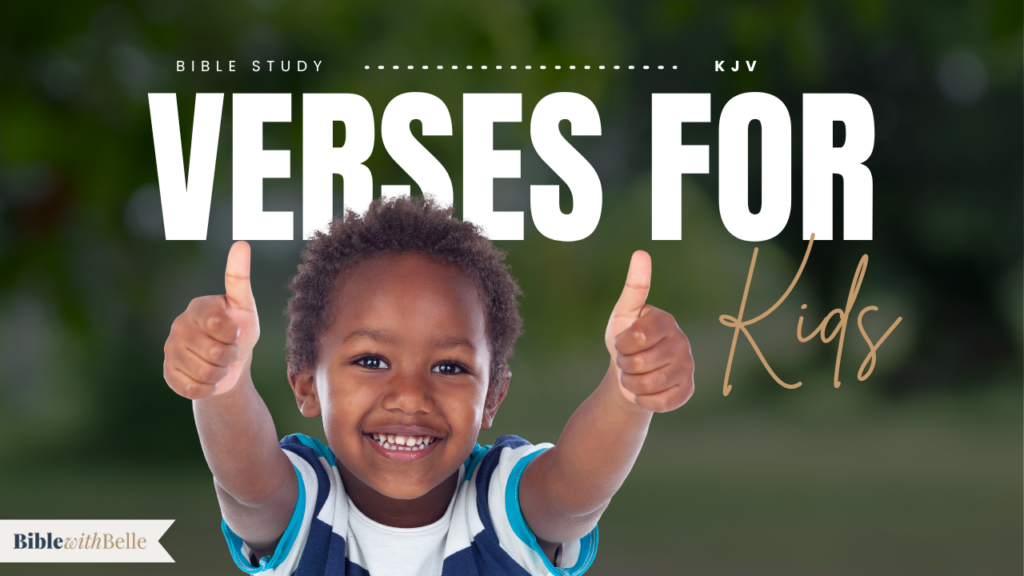
Teaching children about God is one of the most meaningful ways we can help them build a foundation of faith. Children are never too young to begin learning about Jesus, discovering what the Bible teaches and understanding how God’s Word can guide their lives.
Bible verses for kids can help them learn about God’s love, kindness, courage, obedience, forgiveness and trust. These Scriptures can also give parents opportunities to talk with their children about faith in ways that are simple, practical and suited to their age.
The following Bible verses are from the King James Version (KJV), with explanations to help children understand what each passage means and how they can apply it to everyday life.
Quick Answer: What Are Good Bible Verses for Kids?
Some of the best Bible verses for children teach them that Jesus welcomes them, God can be trusted, kindness matters and God’s Word helps us make wise choices.
Good verses for children to learn include passages about God’s love, obeying parents, telling the truth, loving others, being courageous and remembering Scripture. Parents can introduce one verse at a time, explain its meaning in simple language and help children practise what it teaches.
The goal is not simply to help children memorise words. It is to help them understand God’s truth and gradually learn what it means to follow Jesus.
Bible Verses About Jesus Loving Children
Children need to know that they matter to God. The Bible shows that Jesus welcomed children and made room for them, even when others thought they should stay away.
Mark 10:14 — Jesus Welcomes Children
“But when Jesus saw it, he was much displeased, and said unto them, Suffer the little children to come unto me, and forbid them not: for of such is the kingdom of God.”
Jesus did not consider children unimportant or too young to come to Him. When His disciples tried to stop people from bringing children to Him, Jesus corrected them.
This passage reminds children that they are welcome to learn about Jesus. They do not need to wait until they are adults before they can begin knowing Him, trusting Him and learning His Word.
Simple lesson for kids: Jesus welcomes children, and you can learn about Him at any age.
Matthew 19:14 — Let the Children Come to Jesus
“But Jesus said, Suffer little children, and forbid them not, to come unto me: for of such is the kingdom of heaven.”
Jesus repeated this message when people brought children to Him. His response showed that children were not an interruption to His ministry.
Parents can use this verse to encourage children to ask questions about God, read the Bible and develop their own understanding of who Jesus is.
Simple lesson for kids: You are not too young to learn about Jesus and grow in faith.
Bible Verses About God’s Love
Children often need reassurance that they are loved. The Bible teaches that God’s love is greater than human affection and that He demonstrated His love by sending Jesus Christ.
John 3:16 — God Loves the World
“For God so loved the world, that he gave his only begotten Son, that whosoever believeth in him should not perish, but have everlasting life.”
This verse explains the heart of the gospel. God loved the world and sent His Son so that those who believe in Him can receive everlasting life.
Children can begin to understand that God’s love is not just something we talk about. He showed His love through Jesus, who came to save sinners.
Simple lesson for kids: God showed His love for us by sending Jesus.
1 John 4:19 — God Loved Us First
“We love him, because he first loved us.”
We can love God because He loved us first. Our relationship with Him begins with His love and grace, not with our ability to do everything perfectly.
This verse can help children understand that loving God means responding to the love He has already shown us.
Simple lesson for kids: We can love God because He loved us first.
Bible Verses About Obeying Parents
The Bible teaches children to honour and obey their parents. This is part of learning wisdom, responsibility and respect within the family.
These verses should be taught alongside the understanding that children deserve to be safe and cared for. Obedience to parents does not mean that a child should keep abuse or danger secret.
Ephesians 6:1–3 — Children, Obey Your Parents
“Children, obey your parents in the Lord: for this is right.
Honour thy father and mother; which is the first commandment with promise;
That it may be well with thee, and thou mayest live long on the earth.”
Paul teaches children to obey their parents in the Lord and to honour their mother and father.
Obedience includes listening to appropriate instructions, following reasonable rules and learning to take responsibility for our actions. Honouring parents also involves treating them with respect.
Children can learn that obedience is not only about avoiding trouble. It is part of growing in wisdom and learning to live in a way that pleases God.
Simple lesson for kids: Listen to your parents, follow their good instructions and treat them with respect.
Colossians 3:20 — Obey Your Parents in All Things
“Children, obey your parents in all things: for this is well pleasing unto the Lord.”
This verse reinforces the importance of obedience within the family.
Parents can explain that God wants children to learn to listen, cooperate and follow appropriate family rules. When children make mistakes, they can admit what happened, apologise and try to make a better choice next time.
Simple lesson for kids: God wants you to learn to listen and obey.
Bible Verses About Kindness
Kindness is an important part of Christian character. Children can practise kindness at home, with friends, at church and in their everyday interactions.
Ephesians 4:32 — Be Kind and Forgiving
“And be ye kind one to another, tenderhearted, forgiving one another, even as God for Christ’s sake hath forgiven you.”
This verse teaches children to be kind, compassionate and willing to forgive.
Kindness can be as simple as sharing with someone, helping a sibling, speaking gently or including a child who feels left out. Forgiveness means being willing to let go of revenge when someone has hurt us, although it does not mean pretending that serious wrongdoing is acceptable.
Simple lesson for kids: Be kind to people and learn to forgive when someone makes a mistake.
Proverbs 15:1 — Gentle Words Can Help
“A soft answer turneth away wrath: but grievous words stir up anger.”
This proverb teaches us that the way we speak can affect how a situation develops.
When children feel frustrated, they may be tempted to shout, insult someone or say something hurtful. This verse encourages them to consider whether a calmer response could help prevent an argument from becoming worse.
Gentle words do not mean being afraid to speak up when something is wrong. Children can be respectful while still explaining their feelings or asking a trusted adult for help.
Simple lesson for kids: Try to use calm and respectful words, even when you feel upset.
Bible Verses About Trusting God
Children experience worries just as adults do. They may feel nervous about school, friendships, changes at home or things they do not understand.
The Bible teaches that we can turn to God and seek His wisdom when we feel uncertain.
Proverbs 3:5–6 — Trust in the Lord
“Trust in the Lord with all thine heart; and lean not unto thine own understanding.
In all thy ways acknowledge him, and he shall direct thy paths.”
These verses encourage us to trust God rather than assuming that we understand everything ourselves.
Children can learn that they do not need to have every answer. They can ask God for wisdom, learn what the Bible teaches and seek help from trustworthy adults when they face difficult situations.
Trusting God does not mean that every problem will disappear immediately. It means learning to depend on Him while taking wise steps forward.
Simple lesson for kids: When you do not know what to do, trust God and ask for wisdom.
Psalm 56:3 — Trust God When You Are Afraid
“What time I am afraid, I will trust in thee.”
This short verse is especially helpful for children who struggle with fear.
The psalmist acknowledges being afraid and chooses to trust God. The verse does not say that believers will never experience fear. Instead, it reminds us that fear can be a reason to turn towards God.
Children can learn to talk to God about their worries and tell a trusted adult when they need comfort or support.
Simple lesson for kids: When you feel afraid, you can turn to God and ask for help.
Isaiah 41:10 — Do Not Be Afraid
“Fear thou not; for I am with thee: be not dismayed; for I am thy God: I will strengthen thee; yea, I will help thee; yea, I will uphold thee with the right hand of my righteousness.”
God spoke these words to His people to reassure them of His presence and help.
This verse reminds children that God is not unaware of their struggles. They can learn to depend on Him when they feel worried or discouraged, remembering that His presence and strength are greater than their fears.
Simple lesson for kids: You can ask God for strength when something feels difficult.
Bible Verses About Courage and Strength
Being courageous does not mean that we never feel scared. It means learning to do what is right and trusting God when something feels difficult.
Joshua 1:9 — Be Strong and Courageous
“Have not I commanded thee? Be strong and of a good courage; be not afraid, neither be thou dismayed: for the Lord thy God is with thee whithersoever thou goest.”
God spoke these words to Joshua as he prepared to lead the Israelites after Moses’ death. Joshua faced a significant responsibility, and God encouraged him to be courageous as he carried out his task.
Children can learn that courage may mean trying something challenging, telling the truth, asking for help or standing up for someone who is being treated unfairly.
Simple lesson for kids: Be brave enough to do what is right, and remember that you can trust God.
Philippians 4:13 — Christ Gives Strength
“I can do all things through Christ which strengtheneth me.”
Paul wrote these words while explaining that he had learned to be content in different circumstances, including times of need and times of plenty.
This verse is not a promise that children can accomplish absolutely anything they imagine. Rather, it teaches that Christ strengthens believers to endure and remain faithful through the circumstances they face.
Simple lesson for kids: Jesus can help you find strength to keep going when life is hard.
Bible Verses About Telling the Truth
Honesty is important because it helps build trust. Children need to learn that telling the truth matters even when they have made a mistake or are worried about getting into trouble.
Proverbs 12:22 — God Delights in Truthfulness
“Lying lips are abomination to the Lord: but they that deal truly are his delight.”
This proverb contrasts lying with truthful behaviour.
Children may sometimes be tempted to hide the truth because they feel embarrassed, frightened or ashamed. Parents can use this verse to teach that honesty matters and that mistakes should be dealt with truthfully.
It is also important for children to understand that they can tell a trusted adult when something frightening or harmful has happened. They should never be pressured to hide abuse, threats or unsafe behaviour.
Simple lesson for kids: Tell the truth, even when it is difficult.
Bible Verses About Loving Others
Jesus taught that loving others is an important part of following Him. Children can begin learning this through ordinary acts of care, fairness and compassion.
John 13:34–35 — Love One Another
“A new commandment I give unto you, That ye love one another; as I have loved you, that ye also love one another.
By this shall all men know that ye are my disciples, if ye have love one to another.”
Jesus told His disciples to love one another according to the example He had given them.
Children can put this teaching into practice by helping a friend, including someone who is lonely, sharing when appropriate and speaking respectfully to others.
Loving people does not mean agreeing with everything they do. It means treating them with care and dignity while learning to follow what Jesus taught.
Simple lesson for kids: Show people that you care through your words and actions.
Luke 6:31 — Treat Others as You Would Like to Be Treated
“And as ye would that men should do to you, do ye also to them likewise.”
Jesus teaches us to consider how we would like to be treated and to extend that same consideration to others.
Children can use this principle when thinking about friendships, playground disagreements and family relationships. Before saying something unkind, they can ask themselves how those words might make another person feel.
This does not mean allowing someone to hurt them. It means treating others fairly while also seeking help when they are being mistreated.
Simple lesson for kids: Treat other people with the kindness and respect you would want them to show you.
Bible Verses About Forgiveness
Children sometimes struggle with forgiveness because hurt feelings can be difficult to manage. The Bible teaches us to forgive others, while also allowing room for honesty, safety and appropriate boundaries.
Ephesians 4:31–32 — Put Away Bitterness
“Let all bitterness, and wrath, and anger, and clamour, and evil speaking, be put away from you, with all malice:
And be ye kind one to another, tenderhearted, forgiving one another, even as God for Christ’s sake hath forgiven you.”
These verses encourage us to move away from bitterness, cruelty and deliberately hurtful behaviour.
Children can learn to apologise when they have done something wrong and to consider forgiving someone who has hurt them. Parents can help them understand that forgiveness may take time and that it is okay to talk about hurt feelings.
If someone repeatedly harms a child, forgiveness does not mean the child must continue to spend time with that person or keep the behaviour secret. Safety comes first, and a trusted adult should help.
Simple lesson for kids: Learn to forgive, but always tell a safe adult if someone is hurting you.
Bible Verses About Learning God’s Word
The Bible gives children wisdom and teaches them about God’s character. Helping children become familiar with Scripture can give them a foundation they can continue building on as they grow.
Psalm 119:11 — Hide God’s Word in Your Heart
“Thy word have I hid in mine heart, that I might not sin against thee.”
The psalmist describes keeping God’s Word in his heart so that it can guide his life.
Memorising Scripture can help children remember what God teaches when they face decisions or difficult situations. However, memorisation is only one part of learning the Bible. Children also need help understanding what verses mean and how they fit within the wider message of Scripture.
Simple lesson for kids: Learn God’s Word and remember what it teaches you about how to live.
2 Timothy 3:15 — Scripture Can Make You Wise
“And that from a child thou hast known the holy scriptures, which are able to make thee wise unto salvation through faith which is in Christ Jesus.”
Paul wrote to Timothy, reminding him that he had known the Scriptures from childhood.
This verse shows the value of introducing children to God’s Word while they are young. Scripture teaches us about God’s plan of salvation through Jesus Christ and helps us understand the truth of the gospel.
Children do not need to understand every difficult passage immediately. They can begin with the stories and teachings they are ready to understand, gradually learning more as they grow.
Simple lesson for kids: Start learning the Bible while you are young, and keep growing in your understanding of Jesus.
Bible Verses About Doing Good
Following Jesus involves more than knowing what the Bible says. Christians are also called to put God’s teaching into practice through their choices and actions.
Galatians 6:9 — Do Not Grow Weary in Doing Good
“And let us not be weary in well doing: for in due season we shall reap, if we faint not.”
Paul encourages believers to continue doing what is good rather than giving up when they become tired or discouraged.
Children can learn that doing the right thing is worthwhile even when it is not immediately rewarded. They might help with a task, include someone who is left out or continue practising a skill that takes time to learn.
Doing good does not mean children must make everyone happy or accept every demand placed on them. It means learning to act with kindness, faithfulness and wisdom.
Simple lesson for kids: Keep trying to do what is right, even when it is difficult.
Colossians 3:23 — Do Your Best
“And whatsoever ye do, do it heartily, as to the Lord, and not unto men;”
Paul teaches believers to approach their work with sincerity, remembering that their service ultimately matters to God.
Children can apply this principle to learning, helping at home, practising a musical instrument or completing a task. The goal is not to be perfect at everything, but to work with care and a willing attitude.
Simple lesson for kids: Do your best and remember that how you do things matters.
How to Help Kids Learn Bible Verses
Children learn in different ways. Some enjoy reading aloud, others remember songs or pictures, and some need repetition and extra time to understand new ideas.
You do not need to turn Bible learning into a difficult task. A simple, consistent approach can help children become familiar with Scripture without feeling overwhelmed.
1. Learn one verse at a time.
Choose a short verse that suits your child’s age and understanding. Read it together and explain its meaning before moving on to another passage.
2. Explain the verse in everyday language.
Ask your child what they think the verse means. Give an example from everyday life, such as showing kindness to a friend or asking God for courage when feeling afraid.
3. Use repetition.
Read the verse together each day. You might say the first part and let your child finish the sentence, or take turns saying the words.
4. Make learning interactive.
Write the verse on a card, draw a picture that represents its meaning, or use simple actions to help your child remember it. Adapt the activity to your child’s interests and learning needs.
5. Connect the verse to real life.
If you are learning about kindness, look for a small opportunity to practise kindness that day. If you are learning about courage, talk about a time when doing the right thing required bravery.
6. Encourage questions.
Children may ask difficult questions about God, the Bible or things happening in their lives. Welcome those questions and answer honestly. If you do not know the answer, it is okay to say that you will look into it together.
7. Keep the experience positive.
Bible learning should help children grow in understanding, not make them feel ashamed when they forget a verse or struggle with a lesson. Encourage their effort and allow them to learn at their own pace.
Final Thought: Helping Children Grow in Faith
Teaching children Bible verses is about much more than helping them memorise words. It is an opportunity to introduce them to God’s character, explain the gospel of Jesus Christ and help them understand how Scripture can guide their lives.
Children can learn that God loves them, that Jesus welcomes them, that kindness matters and that they can turn to God when they feel afraid or uncertain. They can also learn the importance of honesty, forgiveness, obedience and treating others with compassion.
You do not have to teach everything at once. Start with a verse your child can understand, read it together and talk about what it means. Over time, these small moments can help build familiarity with God’s Word and encourage a growing understanding of the Christian faith.
The most important goal is not simply to raise children who can repeat Bible verses. It is to help them understand the truth of God’s Word and learn what it means to follow Jesus as they grow.
✨ Still Have a Question?
You can send it through the Ask a Bible Question page, and I’ll respond with guidance from God’s Word.
You can also leave your questions on my YouTube channel, where I share clear, practical encouragement, and answers to common questions.