
What Does The Bible Say About Women Teaching
June 20, 2024
What Does The Bible Say About Tithing
June 22, 2024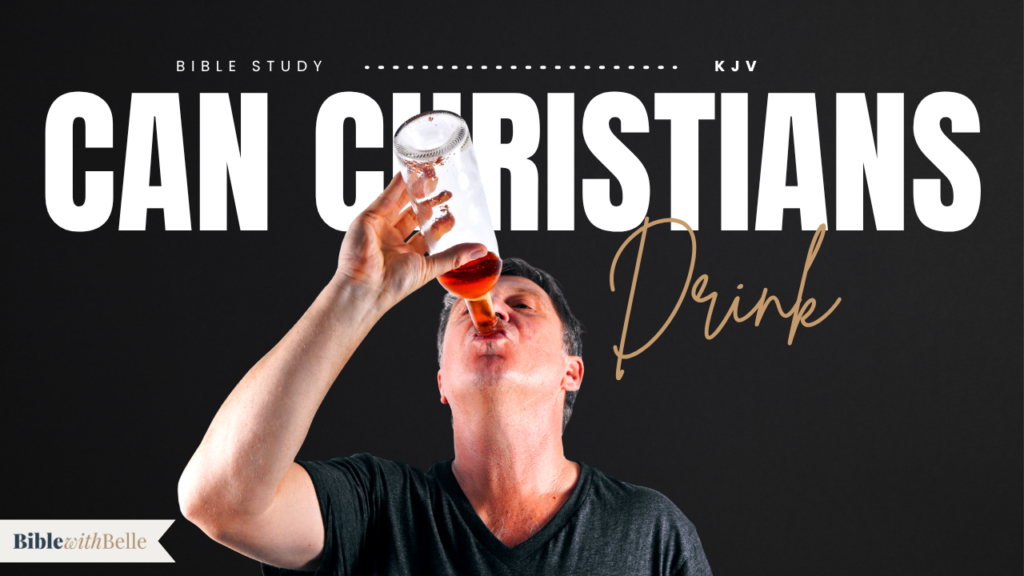
Alcohol is mentioned throughout the Bible, and Christians have different views about whether drinking is acceptable. Some believe that any alcohol consumption is sinful, while others believe that the Bible permits moderate drinking but clearly condemns drunkenness.
So, what does Scripture actually teach? Did Jesus drink wine? Is drinking alcohol a sin? Should Christians abstain completely, and what should we do if alcohol becomes a problem?
To answer these questions, we need to consider the Bible’s teaching as a whole. Scripture acknowledges the use of wine in certain contexts, warns strongly against drunkenness and calls believers to practise wisdom, self-control and love towards others.
Quick Answer: Is Drinking Alcohol a Sin According to the Bible?
The Bible does not forbid every use of alcohol, but it clearly condemns drunkenness and warns against the dangers of excessive drinking.
Jesus turned water into wine at a wedding, and wine appears in several biblical accounts. At the same time, Scripture warns that alcohol can lead to foolish decisions, loss of self-control and harmful behaviour.
Christians should therefore distinguish between drinking alcohol and becoming drunk. The Bible does not command every believer to abstain completely, but it also does not require Christians to drink. Some choose total abstinence because of personal convictions, health concerns, past struggles with alcohol or a desire to avoid causing harm to others.
The central principles are clear: avoid drunkenness, practise self-control, consider the wellbeing of others and make choices that honour God.
What Does the Bible Say About Drinking Alcohol?
The Bible discusses wine in both positive and negative contexts. It appears in accounts of ordinary life, celebrations and religious observances, but Scripture also repeatedly warns against its misuse.
Understanding these different passages helps us avoid two mistakes: claiming that the Bible forbids every use of alcohol when it does not explicitly do so, or assuming that because alcohol appears in Scripture, every form of drinking must be acceptable.
Psalm 104:14–15 — Wine as Part of God’s Provision
“He causeth the grass to grow for the cattle, and herb for the service of man: that he may bring forth food out of the earth;
And wine that maketh glad the heart of man, and oil to make his face to shine, and bread which strengtheneth man’s heart.”
This psalm celebrates God’s provision for His creation. It describes food, oil and wine among the things that contribute to human life and enjoyment.
The passage shows that wine is not presented as inherently sinful in every circumstance. However, it is not an endorsement of drunkenness or excessive drinking. Other passages explicitly warn against allowing alcohol to control our behaviour.
Christians should consider the whole biblical teaching rather than building their position on one verse alone.
Did Jesus Drink Wine?
The New Testament records Jesus attending a wedding where He turned water into wine. Wine was also part of the Last Supper, when Jesus shared the cup with His disciples.
These accounts are important because they show that the Bible does not present every use of wine as sinful. However, they do not give Christians permission to become drunk or to disregard the warnings Scripture gives about alcohol.
John 2:1–11 — Jesus Turns Water Into Wine
“And the third day there was a marriage in Cana of Galilee; and the mother of Jesus was there:
And both Jesus was called, and his disciples, to the marriage.
And when they wanted wine, the mother of Jesus saith unto him, They have no wine.
Jesus saith unto her, Woman, what have I to do with thee? mine hour is not yet come.
His mother saith unto the servants, Whatsoever he saith unto you, do it.
And there were set there six waterpots of stone, after the manner of the purifying of the Jews, containing two or three firkins apiece.
Jesus saith unto them, Fill the waterpots with water. And they filled them up to the brim.
And he saith unto them, Draw out now, and bear unto the governor of the feast. And they bare it.
When the ruler of the feast had tasted the water that was made wine, and knew not whence it was: (but the servants which drew the water knew;) the governor of the feast called the bridegroom,
And saith unto him, Every man at the beginning doth set forth good wine; and when men have well drunk, then that which is worse: but thou hast kept the good wine until now.
This beginning of miracles did Jesus in Cana of Galilee, and manifested forth his glory; and his disciples believed on him.”
Jesus performed His first recorded miracle at a wedding in Cana by turning water into wine. The account presents this as a sign that revealed His glory.
The passage does not say that Jesus encouraged drunkenness. Nor does it establish that Christians must drink alcohol. It demonstrates that wine itself was not treated as inherently sinful in this situation.
The important distinction remains between the use of alcohol and its misuse.
Matthew 26:27–29 — Wine at the Last Supper
“And he took the cup, and gave thanks, and gave it to them, saying, Drink ye all of it;
For this is my blood of the new testament, which is shed for many for the remission of sins.
But I say unto you, I will not drink henceforth of this fruit of the vine, until that day when I drink it new with you in my Father’s kingdom.”
At the Last Supper, Jesus gave His disciples the cup and connected it with His blood, which would be shed for the forgiveness of sins.
The passage refers to the cup as “the fruit of the vine.” It shows the importance of the cup in Jesus’ final meal with His disciples, but it does not establish a general command for Christians to consume alcoholic beverages.
Christians should therefore avoid using this passage either to claim that every form of alcohol is sinful or to justify excessive drinking.
The Bible Clearly Condemns Drunkenness
Although Scripture does not prohibit every use of alcohol, it repeatedly warns against drunkenness. Becoming intoxicated can impair judgement, weaken self-control and lead people into behaviour they would otherwise avoid.
Christians are called to live with wisdom and self-control rather than allowing alcohol to dominate their decisions.
Ephesians 5:18 — Do Not Be Drunk With Wine
“And be not drunk with wine, wherein is excess; but be filled with the Spirit;”
Paul gives a direct instruction against drunkenness. He contrasts being intoxicated with wine with being filled with the Spirit.
The issue is not simply whether a person has consumed alcohol. Paul warns against becoming drunk and losing the self-control that should characterise Christian living.
This passage also reminds us that the Christian life should be directed by the Holy Spirit rather than by substances or habits that take control of our behaviour.
The biblical principle: Christians should avoid drunkenness and pursue a life marked by spiritual wisdom and self-control.
Proverbs 20:1 — Alcohol Can Deceive
“Wine is a mocker, strong drink is raging: and whosoever is deceived thereby is not wise.”
This proverb warns that alcohol can deceive people and lead them towards foolish behaviour.
Drinking may initially appear harmless or enjoyable, but excessive consumption can affect judgement, relationships and decision-making. A person may underestimate how much they have consumed or fail to recognise the consequences of their behaviour.
The warning encourages wisdom rather than carelessness. Christians should not assume that alcohol is harmless simply because it is socially accepted.
The biblical principle: Treat alcohol with caution and do not allow it to lead you away from wise and responsible choices.
Proverbs 23:29–35 — The Dangers of Excessive Drinking
“Who hath woe? who hath sorrow? who hath contentions? who hath babbling? who hath wounds without cause? who hath redness of eyes?
They that tarry long at the wine; they that go to seek mixed wine.
Look not thou upon the wine when it is red, when it giveth his colour in the cup, when it moveth itself aright.
At the last it biteth like a serpent, and stingeth like an adder.
Thine eyes shall behold strange women, and thine heart shall utter perverse things.
Yea, thou shalt be as he that lieth down in the midst of the sea, or as he that lieth upon the top of a mast.
They have stricken me, shalt thou say, and I was not sick; they have beaten me, and I felt it not: when shall I awake? I will seek it yet again.”
This passage vividly describes the consequences of excessive drinking. It refers to sorrow, conflict, impaired judgement, physical harm and the desire to drink again despite the consequences.
The final words are particularly striking. The person described has experienced harm but still wants to return to alcohol. This reflects the way drinking can become a destructive pattern that is difficult to break.
The passage is not merely warning against one isolated mistake. It describes the danger of becoming consumed by drinking and continuing despite its damaging effects.
The biblical principle: Do not ignore the harm alcohol can cause. If drinking repeatedly damages your life or relationships, take the problem seriously and seek help.
Can Alcohol Become an Idol or Master in Your Life?
The Bible warns against allowing anything to control us in a way that competes with our responsibility to God. Alcohol becomes especially concerning when a person cannot stop drinking despite wanting to, or when it begins to dominate their priorities.
For some people, alcohol remains an occasional choice. For others, it becomes a destructive dependence. Christians should be honest about the difference and avoid assuming that everyone has the same relationship with alcohol.
1 Corinthians 6:12 — Do Not Be Brought Under the Power of Anything
“All things are lawful unto me, but all things are not expedient: all things are lawful for me, but I will not be brought under the power of any.”
Paul teaches that not everything permissible is beneficial, and he refuses to be brought under the power of anything.
Although this verse is not exclusively about alcohol, it provides an important principle for Christian decision-making. A person should consider not only whether something is permitted but also whether it is beneficial and whether it is beginning to control them.
If alcohol is affecting your health, relationships, finances or ability to fulfil your responsibilities, it is important to recognise the problem rather than relying on the argument that drinking is not always forbidden.
The biblical principle: Do not allow alcohol to become something that controls your life.
What Does the Bible Say About Being Sober-Minded?
The New Testament encourages believers to remain alert, exercise self-control and live with spiritual awareness. Alcohol can interfere with these qualities when it leads to intoxication or impaired judgement.
1 Peter 5:8 — Be Sober and Vigilant
“Be sober, be vigilant; because your adversary the devil, as a roaring lion, walketh about, seeking whom he may devour:”
Peter calls Christians to be sober and vigilant because they face spiritual opposition.
The instruction encourages believers to remain alert rather than careless. While the verse is not solely about drinking alcohol, sobriety and vigilance are important principles when considering choices that can impair judgement.
Christians should be thoughtful about anything that makes them less able to exercise self-control or respond wisely to difficult circumstances.
The biblical principle: Remain spiritually alert and avoid choices that undermine your ability to exercise wisdom and self-control.
Should Christians Avoid Alcohol to Protect Others?
The Bible teaches that Christian freedom should be guided by love. Even when an action is not inherently sinful, we should consider how it may affect other people.
This is particularly important when someone has struggled with alcohol dependence, is recovering from addiction or may be vulnerable to pressure to drink.
Romans 14:20–21 — Do Not Cause Another Person to Stumble
“For meat destroy not the work of God. All things indeed are pure; but it is evil for that man who eateth with offence.
It is good neither to eat flesh, nor to drink wine, nor any thing whereby thy brother stumbleth, or is offended, or is made weak.”
Paul discusses disagreements among believers about food and other matters of conscience. He teaches that Christians should not use their freedom in a way that harms another person’s faith or wellbeing.
Although the immediate context concerns disputes about food and observance, the principle is relevant when considering alcohol. A Christian may decide that abstaining is the wisest and most loving choice in a particular situation.
For example, someone who knows that a friend is recovering from alcohol dependence may choose not to drink around them. A person who has struggled with alcohol themselves may decide that complete abstinence is the safest option.
This does not mean every Christian must adopt the same personal decision. It means that love should shape how we exercise our freedom.
The biblical principle: Consider the effect your choices may have on others, and be willing to limit your freedom when doing so protects someone from harm.
Is It Better for Christians to Abstain From Alcohol Completely?
Some Christians choose not to drink at all. They may abstain because of personal conviction, health concerns, family history, previous addiction or a desire to avoid temptation.
The Bible includes examples of people who abstained from alcohol as part of a particular calling or commitment. These examples show that abstinence can be a meaningful choice, even though Scripture does not command every believer to follow the same practice.
Numbers 6:2–4 — The Nazirite Vow
“Speak unto the children of Israel, and say unto them, When either man or woman shall separate themselves to vow a vow of a Nazarite, to separate themselves unto the LORD:
He shall separate himself from wine and strong drink, and shall drink no vinegar of wine, or vinegar of strong drink, neither shall he drink any liquor of grapes, nor eat moist grapes, or dried.
All the days of his separation shall he eat nothing that is made of the vine tree, from the kernels even to the husk.”
These verses describe part of the Nazirite vow under the Old Testament Law. Those who took this vow were required to abstain from wine and other products of the vine during their period of separation.
This was a specific religious commitment rather than a universal command for every Israelite. It therefore demonstrates that abstinence could be part of a person’s dedication to God, but it does not establish that all Christians must abstain from alcohol.
Christians today may choose abstinence for many reasons, and they do not need to justify that decision by claiming that every use of alcohol is forbidden.
Luke 1:13–15 — John the Baptist
“But the angel said unto him, Fear not, Zacharias: for thy prayer is heard; and thy wife Elisabeth shall bear thee a son, and thou shalt call his name John.
And thou shalt have joy and gladness; and many shall rejoice at his birth.
For he shall be great in the sight of the Lord, and shall drink neither wine nor strong drink; and he shall be filled with the Holy Ghost, even from his mother’s womb.”
The angel told Zacharias that his son, John the Baptist, would abstain from wine and strong drink.
John had a distinctive calling in God’s purposes, and his abstinence was part of the description given before his birth. This is an example of someone who did not drink alcohol.
However, the passage does not say that every Christian must follow John’s specific practice. It shows that abstinence can be appropriate for a particular person or calling without establishing it as a universal requirement.
Does the Bible Require Christians to Drink Alcohol?
No. The fact that Scripture does not forbid every use of alcohol does not mean that Christians must drink.
A person can choose complete abstinence without being unbiblical or judging other believers. Some people have good reasons to avoid alcohol entirely, particularly if drinking could lead them towards addiction, harm their health or negatively affect their family.
Christians should not pressure someone to drink simply because they believe moderate drinking is permissible. Nor should they assume that someone who chooses to drink moderately is automatically living in sin.
The biblical principles are more important than pressuring everyone into the same personal practice: avoid drunkenness, exercise self-control, love others and seek to honour God.
Did Paul Recommend Wine for Timothy’s Health?
The New Testament contains a passage in which Paul gives Timothy advice concerning his stomach and frequent infirmities. This is sometimes mentioned in discussions about whether alcohol can ever be used for a practical purpose.
1 Timothy 5:23 — A Little Wine for Timothy’s Stomach
“Drink no longer water, but use a little wine for thy stomach’s sake and thine often infirmities.”
Paul advised Timothy to use a little wine for his stomach and frequent ailments.
The verse shows that Paul did not treat every use of wine as inherently sinful. However, it is a specific instruction to Timothy in a particular circumstance, not a general medical recommendation for everyone.
Modern health decisions should be made with appropriate medical guidance rather than relying on this verse as a reason to begin drinking. There is no need to consume alcohol for spiritual reasons, and people who abstain should not feel pressured to start.
How Should Christians Make Decisions About Alcohol?
The Bible gives Christians several principles to consider when deciding whether to drink. Rather than focusing only on whether drinking is technically permitted, believers should consider how their choices affect their faith, health, responsibilities and relationships.
1. Examine your motives.
Ask yourself why you want to drink. Is it an occasional choice, or are you using alcohol to escape emotional pain, manage stress or avoid difficult feelings? If drinking has become your main way of coping, it may be time to seek support.
2. Practise self-control.
Do not ignore signs that alcohol is affecting your judgement or becoming difficult to manage. If you cannot reliably control your drinking, abstinence and professional support may be the wisest course.
3. Consider your health and circumstances.
Alcohol is not suitable for everyone. Your health, medication, pregnancy status, family circumstances and personal history may all affect whether drinking is safe for you.
4. Consider other people.
Think about how your decisions may affect your family, friends and anyone who may be vulnerable to alcohol-related harm. Do not pressure others to drink or make them feel that abstinence is a sign of weak faith.
5. Be willing to abstain.
You do not have to drink to demonstrate Christian freedom. If abstaining helps you remain healthy, avoid temptation or protect others, it can be a wise and faithful choice.
6. Seek help if alcohol is causing problems.
If drinking is affecting your relationships, health, finances or daily responsibilities, do not ignore the warning signs. Talk to a doctor or an appropriate support service. If you drink heavily or regularly, seek medical advice before suddenly stopping, because alcohol withdrawal can be dangerous.
7. Keep Christ at the centre.
Your decisions should reflect a desire to honour God, rather than a desire to justify a habit or judge another person’s choices. Let Scripture guide your conscience and seek wisdom when circumstances are complicated.
Final Thought: Honour God in Your Choices About Alcohol
The Bible does not forbid every use of alcohol, but it gives serious warnings about drunkenness, excessive drinking and allowing anything to control our lives.
Jesus turned water into wine at Cana, and wine appears in other biblical contexts. These passages show that alcohol itself is not universally condemned in Scripture. However, they do not weaken the clear biblical instruction to avoid drunkenness and practise self-control.
Christians may choose to drink moderately or abstain completely. What matters is that their decisions are guided by biblical wisdom, love for others and a sincere desire to honour God.
If you choose to drink, do not ignore Scripture’s warnings about intoxication or the potential harm alcohol can cause. If you choose not to drink, you do not need to feel that you are missing a spiritual obligation.
And if alcohol has become a struggle in your life, remember that seeking help is not a failure of faith. You can turn to God for wisdom while also receiving practical and professional support.
The question is not simply whether a Christian can drink alcohol. It is whether our choices reflect self-control, wisdom, love and devotion to Jesus Christ.
Let your decisions be shaped by God’s Word, and never allow alcohol to take the place that belongs to Him alone.
✨ Still Have a Question?
You can send it through the Ask a Bible Question page, and I’ll respond with guidance from God’s Word.
You can also leave your questions on my YouTube channel, where I share clear, practical encouragement, and answers to common questions.