
Bible Verses About Depression
August 6, 2024
Bible Verses About Idols
August 13, 2024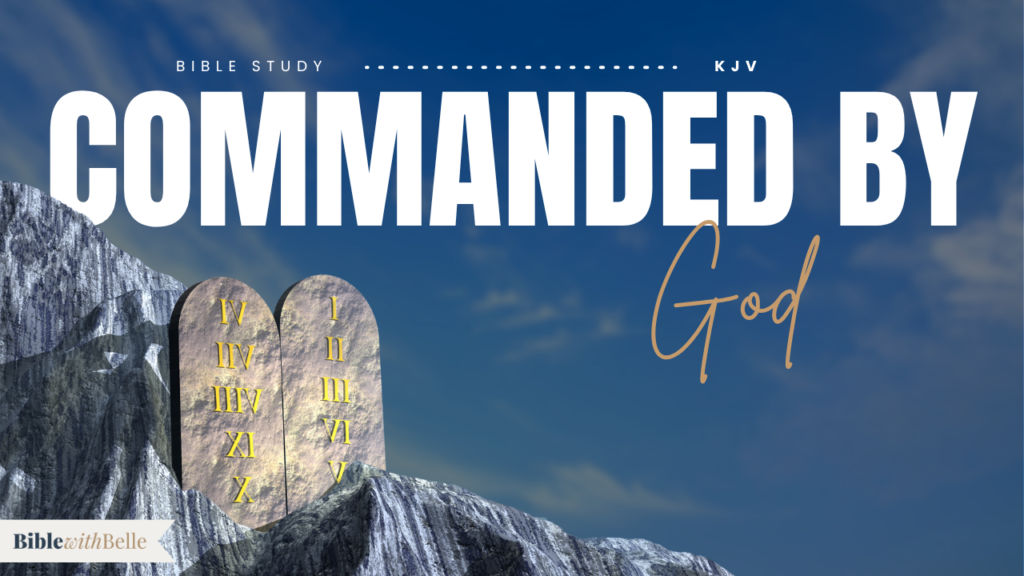
The Ten Commandments are some of the best-known words in the Bible. Most people have heard of them, but that doesn’t necessarily mean we understand what they mean or how they apply to Christians today.
Why did God give the Ten Commandments? Are Christians still supposed to follow them? Are we saved by keeping God’s commandments? And if Jesus fulfilled the law, does that mean God’s commands no longer matter?
These are important questions because the Ten Commandments aren’t simply a list of rules. They reveal something about God’s holiness, expose sin in our lives and help us understand why we need a Saviour.
Quick Answer
The Ten Commandments were given by God to Israel through Moses and are recorded in Exodus 20 and Deuteronomy 5. They teach God’s people to worship Him alone and to live rightly toward others.
Christians are not saved by keeping the Ten Commandments. Salvation is by God’s grace through faith in Jesus Christ, not by earning our way into God’s favour through perfect obedience.
At the same time, God’s commandments still matter. Jesus did not teach His followers that sin no longer matters. He fulfilled the law, and He taught that loving God and loving our neighbour summarise the heart of God’s commands.
For Christians, obedience is not a way to earn salvation. It is a response to God’s grace and our love for Christ.
What Are the Ten Commandments?
The Ten Commandments were given to Israel after God brought the Israelites out of slavery in Egypt.
They are recorded in Exodus 20:1–17 and repeated in Deuteronomy 5:4–21.
The commandments address both our relationship with God and our relationship with other people.
They teach God’s people not to worship other gods, not to make idols, not to misuse God’s name, to honour the Sabbath, to honour parents, and not to murder, commit adultery, steal, give false testimony or covet what belongs to someone else.
These commandments were given to a specific covenant people at a specific point in biblical history, but the moral truths they reveal continue to teach us about God’s character and what He calls sinful.
God Himself Gave the Commandments
The Ten Commandments weren’t created by Moses.
Moses was the person through whom God gave them to Israel.
Exodus 20:1–3
“And God spake all these words, saying,
I am the Lord thy God, which have brought thee out of the land of Egypt, out of the house of bondage.
Thou shalt have no other gods before me.”
The commandments begin with God identifying Himself as the One who rescued Israel.
That matters.
God’s commands weren’t given by a distant ruler who had done nothing for His people. They came from the God who had already delivered them.
The First Commandment: Have No Other Gods
Exodus 20:3
“Thou shalt have no other gods before me.”
The first commandment establishes the most important foundation.
God alone is God.
His people were not to divide their worship between Him and other gods.
This remains important for Christians because anything we place above God can become an idol.
An idol doesn’t have to be a statue.
Money, relationships, success, possessions, approval, comfort or even our own desires can become more important to us than God.
The question is not simply, “Do I have a statue in my house?”
The deeper question is, “Who or what has first place in my heart?”
The Second Commandment: Do Not Make Idols
Exodus 20:4–5
“Thou shalt not make unto thee any graven image, or any likeness of any thing that is in heaven above, or that is in the earth beneath, or that is in the water under the earth:
Thou shalt not bow down thyself to them, nor serve them…”
God commanded Israel not to make images and worship them as gods.
Throughout the Old Testament, idolatry repeatedly pulled God’s people away from Him.
The New Testament continues to warn Christians about idolatry.
1 Corinthians 10:14
“Wherefore, my dearly beloved, flee from idolatry.”
The principle is still relevant.
God doesn’t want anything taking the place that belongs to Him.
The Third Commandment: Do Not Take God’s Name in Vain
Exodus 20:7
“Thou shalt not take the name of the Lord thy God in vain; for the Lord will not hold him guiltless that taketh his name in vain.”
God’s name represents who He is.
Using God’s name carelessly, falsely or disrespectfully is therefore a serious matter.
This commandment also reminds us that our words matter.
We shouldn’t claim to speak for God when He hasn’t spoken, use His name to manipulate people, or attach God’s authority to something simply because we want others to believe us.
Honouring God’s name means treating Him with the reverence He deserves.
The Fourth Commandment: Remember the Sabbath
Exodus 20:8–10
“Remember the sabbath day, to keep it holy.
Six days shalt thou labour, and do all thy work:
But the seventh day is the sabbath of the Lord thy God…”
The Sabbath was given to Israel as part of the covenant God made with them.
It provided a regular day of rest and worship and reminded Israel that their lives ultimately depended on God.
Christians have different convictions about how the Sabbath command applies under the New Covenant. The New Testament does not present Christians as being justified before God by observing a particular Sabbath day.
Paul writes:
Colossians 2:16–17
“Let no man therefore judge you in meat, or in drink, or in respect of an holyday, or of the new moon, or of the sabbath days:
Which are a shadow of things to come; but the body is of Christ.”
The principle of trusting God, worshipping Him and recognising our need for rest remains valuable, but Christians should be careful not to turn Sabbath observance into a measure of salvation.
The Fifth Commandment: Honour Your Parents
Exodus 20:12
“Honour thy father and thy mother: that thy days may be long upon the land which the Lord thy God giveth thee.”
Family relationships matter to God.
Children are called to honour their parents, and the New Testament repeats this command.
Ephesians 6:1–2
“Children, obey your parents in the Lord: for this is right.
Honour thy father and mother; which is the first commandment with promise…”
Honouring parents does not mean pretending that everything a parent does is right.
It doesn’t mean obeying a parent when they demand something sinful, and it doesn’t require someone to remain in an abusive or unsafe situation.
God’s commands should never be used to justify abuse.
The command teaches the importance of honour and respect within the family while still recognising that every person is accountable to God.
The Sixth Commandment: Do Not Murder
Exodus 20:13
“Thou shalt not kill.”
The commandment establishes the seriousness of taking innocent human life.
Jesus also went deeper than the outward act by addressing the anger and hatred that can exist within the heart.
Matthew 5:21–22
“Ye have heard that it was said by them of old time, Thou shalt not kill; and whosoever shall kill shall be in danger of the judgment:
But I say unto you, That whosoever is angry with his brother without a cause shall be in danger of the judgment…”
Jesus shows that God’s concern is not merely with what we physically do.
He cares about what is happening in our hearts.
This doesn’t mean every experience of anger is identical to murder. Rather, Jesus exposes the sinful heart attitudes that can lie behind destructive actions.
The Seventh Commandment: Do Not Commit Adultery
Exodus 20:14
“Thou shalt not commit adultery.”
Marriage is important to God, and sexual faithfulness is part of God’s design for marriage.
Jesus later taught that sexual purity involves more than simply avoiding physical adultery.
Matthew 5:27–28
“Thou shalt not commit adultery: But I say unto you, That whosoever looketh on a woman to lust after her hath committed adultery with her already in his heart.”
Jesus brought the commandment into the realm of the heart.
Sexual attraction itself isn’t automatically sinful, and temptation isn’t the same thing as sin. But deliberately cultivating lust is something Christians are called to take seriously.
The Eighth Commandment: Do Not Steal
Exodus 20:15
“Thou shalt not steal.”
God cares about honesty and respecting what belongs to other people.
Stealing can seem obvious, but the principle extends to the way we conduct ourselves more broadly.
Christians are called to work honestly, deal fairly with others and refuse to take what doesn’t belong to them.
Ephesians 4:28
“Let him that stole steal no more: but rather let him labour, working with his hands the thing which is good…”
Notice that Paul doesn’t simply say, “Stop stealing.”
He also gives a positive alternative: work honestly and use what you have to help others.
Biblical obedience isn’t only about stopping bad behaviour.
It is about becoming the kind of person who does what is good.
The Ninth Commandment: Do Not Bear False Witness
Exodus 20:16
“Thou shalt not bear false witness against thy neighbour.”
This commandment specifically addresses false testimony against another person.
But Scripture consistently teaches the broader importance of truthfulness.
Ephesians 4:25
“Wherefore putting away lying, speak every man truth with his neighbour: for we are members one of another.”
God cares about truth.
Lies can destroy trust, damage reputations and deeply hurt other people.
Christians are called to be people whose words can be trusted.
The Tenth Commandment: Do Not Covet
The final commandment is particularly interesting because it goes directly to the heart.
Exodus 20:17
“Thou shalt not covet thy neighbour’s house, thou shalt not covet thy neighbour’s wife…”
The command continues by listing other things belonging to our neighbour.
Coveting isn’t simply noticing that someone has something we would like.
It is an inward desire that becomes discontented with what God has given us and fixated on what belongs to someone else.
This shows us something important about God’s law.
God isn’t only concerned with outward behaviour.
He cares about our hearts.
Why Did God Give the Ten Commandments?
The Ten Commandments reveal God’s standards and show us what sin is.
Paul explains this clearly.
Romans 3:20
“For by the law is the knowledge of sin.”
The law acts like a mirror.
A mirror doesn’t wash your face for you. It shows you that your face needs washing.
In a similar way, God’s law reveals our sin.
When we honestly compare our lives with God’s holy standard, we realise that we cannot stand before God and claim that we have earned righteousness through our own goodness.
That points us toward our need for Christ.
Nobody Keeps God’s Law Perfectly
The Ten Commandments aren’t a test that you can pass if you are simply good enough.
None of us has lived perfectly.
Romans 3:23
“For all have sinned, and come short of the glory of God.”
We’ve all fallen short, all sinned in different ways and all needed forgiveness.
This is why Christianity isn’t ultimately about becoming good enough for God.
It is about what God has done for sinners through Jesus Christ.
Are We Saved by Keeping the Ten Commandments?
No.
This is one of the most important things to understand.
You cannot earn salvation by keeping the Ten Commandments.
Ephesians 2:8–9
“For by grace are ye saved through faith; and that not of yourselves: it is the gift of God:
Not of works, lest any man should boast.”
Salvation is God’s gift.
We are saved through faith in Jesus Christ, not because we have managed to become morally perfect.
That doesn’t make God’s commands irrelevant.
It means we understand their purpose correctly.
The law exposes our sin.
Christ saves us from our sin.
Did Jesus Abolish the Ten Commandments?
Jesus said something very important about the law.
Matthew 5:17
“Think not that I am come to destroy the law, or the prophets: I am not come to destroy, but to fulfil.”
Jesus did not come to declare that God’s law was evil or meaningless.
He fulfilled it.
He lived in perfect obedience to God and accomplished what the law and the prophets pointed toward.
The Christian life therefore isn’t about throwing away everything God previously revealed.
At the same time, Christians are not under the Mosaic covenant in exactly the same way Israel was.
The New Testament teaches believers to understand the Old Testament law through Christ and the New Covenant.
Jesus Summarised the Law
When Jesus was asked which commandment was the greatest, He didn’t give His listeners a completely new concept.
He summarised the heart of God’s law.
Matthew 22:37–40
“Jesus said unto him, Thou shalt love the Lord thy God with all thy heart, and with all thy soul, and with all thy mind.
This is the first and great commandment.
And the second is like unto it, Thou shalt love thy neighbour as thyself.
On these two commandments hang all the law and the prophets.”
Love God.
Love your neighbour.
That doesn’t make the rest of God’s commands meaningless. It helps us understand what they are ultimately about.
If you love God, you shouldn’t want to worship idols.
If you love your neighbour, you shouldn’t want to steal from them, lie about them or murder them.
Love and obedience belong together.
Jesus Taught That Obedience Matters
Jesus said:
John 14:15
“If ye love me, keep my commandments.”
Obedience isn’t how we purchase God’s love.
We obey because we belong to Christ and love Him.
There is an important difference between trying to earn salvation and responding to salvation.
A person who thinks, “If I obey enough, God will finally accept me,” has misunderstood grace.
A Christian says, “God has shown me mercy through Christ, so I want my life to honour Him.”
Grace Does Not Give Us Permission to Sin
Sometimes people hear that salvation is by grace and conclude that obedience doesn’t matter.
Paul strongly rejects that idea.
Romans 6:1–2
“What shall we say then? Shall we continue in sin, that grace may abound?
God forbid. How shall we, that are dead to sin, live any longer therein?”
Grace is not permission to deliberately continue in sin.
Grace forgives us, but it also changes us.
We won’t obey perfectly in this life, but genuine faith should produce a desire to follow Christ.
The Ten Commandments Reveal God’s Holiness
The commandments help us understand that God isn’t like us.
His standard is holy.
Romans 7:12
“Wherefore the law is holy, and the commandment holy, and just, and good.”
God’s law is not evil.
It is holy, just and good.
The problem is not God’s standard.
The problem is that sinful human beings don’t naturally live up to it.
That is why we need grace.
The Ten Commandments and the Christian Life
So what should Christians actually do with the Ten Commandments?
We should read them, understand what they reveal about God, allow them to expose sin in our own hearts and we should recognise where their moral principles are reaffirmed and deepened in the teaching of Christ and the New Testament.
And we should obey God from a heart of faith rather than trying to earn salvation.
The Christian life is not:
“Keep enough rules and maybe God will love you.”
It is:
“God has loved me and saved me through Christ, so I want to live for Him.”
What About the Sabbath?
The Sabbath question deserves special attention because Christians have different views about it.
The Sabbath command was given to Israel as part of the Mosaic covenant.
Some Christians believe believers should continue observing a particular Sabbath day, while others believe that the New Covenant gives Christians freedom regarding the day.
The important point is that Christians should not treat Sabbath observance as the basis of salvation or use it to condemn other believers.
Romans 14:5–6
“One man esteemeth one day above another: another esteemeth every day alike. Let every man be fully persuaded in his own mind.
He that regardeth the day, regardeth it unto the Lord…”
Whatever conviction you hold, the focus should remain on honouring the Lord rather than judging fellow believers.
The Ten Commandments Still Teach Us About Sin
Even though Christians are not saved by keeping the Mosaic law, the commandments remain valuable for understanding God’s moral standards.
The New Testament continues to condemn things such as murder, adultery, stealing, lying, coveting and idolatry.
Jesus also deepened our understanding by addressing the heart behind these behaviours.
This is why the Ten Commandments are still worth studying.
They teach us about God’s holiness and expose attitudes that we might otherwise overlook.
What If I Break One of the Commandments?
If you sin, don’t hide from God.
Confess it.
Repent.
Ask for forgiveness.
1 John 1:9
“If we confess our sins, he is faithful and just to forgive us our sins, and to cleanse us from all unrighteousness.”
The Christian life isn’t about pretending you never fail.
It’s about what you do when you do.
Don’t allow guilt to drive you away from God.
Let conviction bring you back to Him.
There is a difference between conviction and hopeless condemnation.
The Holy Spirit brings sin into the light so that we can repent and turn back to God.
The Ten Commandments Point Us to Jesus
The more honestly we look at God’s standard, the more clearly we see our need for a Saviour.
We can’t save ourselves, can’t undo our past, can’t make ourselves righteous simply by promising to do better from now on which is why we need Jesus.
Galatians 3:24
“Wherefore the law was our schoolmaster to bring us unto Christ, that we might be justified by faith.”
The law points us toward Christ.
It shows us our need for grace.
And the Gospel tells us that Jesus came to do what we could never do for ourselves.
What Does the Bible Say About the Ten Commandments?
Here are some important Bible passages to read when studying the Ten Commandments and God’s law.
Exodus 20:1–17
“And God spake all these words, saying…”
This is the main passage where the Ten Commandments are given to Israel.
Deuteronomy 5:4–21
“The Lord talked with you face to face in the mount out of the midst of the fire…”
This passage records the commandments again as Moses speaks to Israel.
Psalm 19:7
“The law of the Lord is perfect, converting the soul: the testimony of the Lord is sure, making wise the simple.”
God’s law is described as perfect and beneficial.
Psalm 119:97
“O how love I thy law! it is my meditation all the day.”
The psalmist valued God’s instruction and meditated on it.
Romans 3:20
“For by the law is the knowledge of sin.”
The law reveals our sin.
Romans 3:23
“For all have sinned, and come short of the glory of God.”
Every person needs God’s grace.
Romans 7:12
“Wherefore the law is holy, and the commandment holy, and just, and good.”
God’s law reflects His holy character.
Matthew 5:17
“Think not that I am come to destroy the law, or the prophets: I am not come to destroy, but to fulfil.”
Jesus fulfilled the law.
Matthew 22:37–40
“Thou shalt love the Lord thy God with all thy heart…”
Jesus summarised the law through love for God and love for neighbour.
John 14:15
“If ye love me, keep my commandments.”
Jesus connects love for Him with obedience.
Romans 6:14
“For sin shall not have dominion over you: for ye are not under the law, but under grace.”
Christians live under grace rather than trying to earn righteousness through the law.
Ephesians 2:8–9
“For by grace are ye saved through faith…”
Salvation is God’s gift, not something we earn.
How Should Christians Respond to the Ten Commandments?
Read them with humility.
Don’t read them thinking, “Look at all the things I’m doing right.”
Read them asking, “What do these commandments reveal about God, and what do they reveal about my need for Him?”
Allow God’s Word to expose sin.
Repent when you need to repent.
Thank God for His grace.
And then follow Christ in obedience.
Micah 6:8
“He hath shewed thee, O man, what is good; and what doth the Lord require of thee, but to do justly, and to love mercy, and to walk humbly with thy God?”
God isn’t looking for empty religious performance.
He wants a people who know Him, love Him, walk humbly with Him and allow their faith to affect the way they live.
Final Encouragement
The Ten Commandments are not simply a list of ancient rules that have nothing to do with us.
They reveal the holiness of God, they show us what sin looks like and they teach us important truths about how we should treat God and other people.
And perhaps most importantly, they show us that we cannot save ourselves.
If you read the commandments honestly, none of us can stand before God and say, “I’ve done enough. I don’t need forgiveness.”
We need Jesus.
Romans 10:4
“For Christ is the end of the law for righteousness to every one that believeth.”
We don’t have to spend our lives trying to earn God’s acceptance.
Jesus has done what we could never do.
So don’t look at the Ten Commandments simply as a list of rules.
Let them show you God’s holiness, let them expose sin when you need correction and let them remind you of your need for grace.
And then look to Jesus.
Follow Him.
Love God.
Love others.
And allow the grace you’ve received to produce a life of obedience.
✨ Still Have a Question?
You can send it through the Ask a Bible Question page, and I’ll respond with guidance from God’s Word.
You can also leave your questions on my YouTube channel, where I share clear, practical encouragement, and answers to common questions.