
Bible Verses About 7 Days Of Creation
January 22, 2025
Bible Verses About Kind Words
January 23, 2025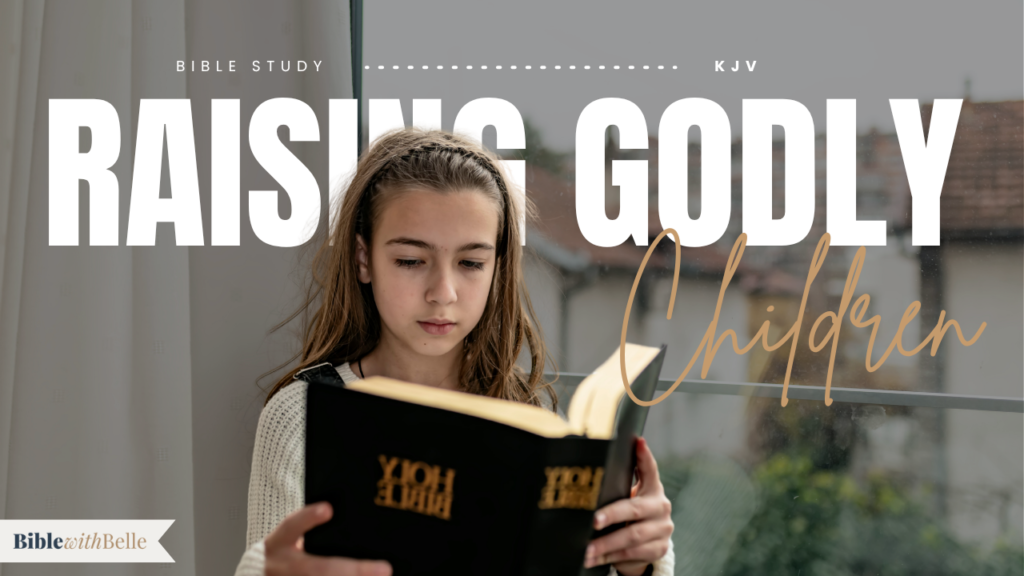
Raising children is one of the greatest responsibilities a parent can have. It can also be one of the most challenging. Parents want to protect their children, teach them right from wrong, help them grow in wisdom and, for Christian parents, lead them toward knowing and following God.
The Bible has a lot to say about raising children. Scripture teaches parents to instruct their children, correct them, love them, discipline them wisely and model a godly life before them. At the same time, biblical parenting is not about controlling every outcome or expecting perfection from either the parent or the child.
Children are individuals who will eventually make their own choices, and parents cannot control every decision their children will make. What parents can do is faithfully teach, guide, love, correct and pray for their children while trusting God with what they cannot control.
Quick Answer
The Bible teaches that parents should raise their children with love, wisdom, instruction, discipline and godly example. Children need guidance, boundaries and correction, but Scripture also warns parents not to provoke or discourage their children.
Biblical parenting is not about being a perfect parent. It is about faithfully doing what God has entrusted you to do and continually asking Him for the wisdom and patience you need.
Children Are a Gift From God
The Bible describes children as a blessing and a heritage from the Lord.
Psalm 127:3 — Children Are an Heritage of the Lord
“Lo, children are an heritage of the LORD: and the fruit of the womb is his reward.”
Children are not presented in Scripture as an inconvenience or something without value. They are a gift entrusted to parents, which makes raising them a significant responsibility.
Parenting can be exhausting and difficult, but recognising the value God places on children can help parents remember that the everyday work of caring for them matters.
Parents Are Called to Teach Their Children
One of the clearest responsibilities given to parents is teaching their children about God and His ways.
Deuteronomy 6:6–7 — Teach Your Children God’s Word
“And these words, which I command thee this day, shall be in thine heart:
And thou shalt teach them diligently unto thy children, and shalt talk of them when thou sittest in thine house, and when thou walkest by the way, and when thou liest down, and when thou risest up.”
Teaching children is not meant to be limited to one particular moment during the week. This passage describes God’s Word becoming part of everyday family life.
Parents can teach their children through conversations, correction, prayer, reading Scripture together and the way they respond to ordinary situations. Children learn not only from what their parents tell them, but also from what their parents consistently demonstrate.
Train Your Children in the Way They Should Go
One of the most well-known parenting verses is Proverbs 22:6.
Proverbs 22:6 — Train Up a Child
“Train up a child in the way he should go: and when he is old, he will not depart from it.”
This verse highlights the importance of intentional guidance. Children need parents who teach them, establish boundaries and help them understand what is right and wrong.
However, this verse should not be treated as a guarantee that a child will never make sinful choices or walk away from what they were taught. Scripture also recognises that people make their own choices.
Proverbs 22:6 encourages parents to take seriously the responsibility they have to train their children. It does not promise that parents can control every decision their children will make throughout their lives.
Parents Should Correct Their Children
Biblical parenting includes correction and discipline. Children need boundaries, and parents have a responsibility to teach them that actions have consequences.
Proverbs 29:17 — Correct Your Child
“Correct thy son, and he shall give thee rest; yea, he shall give delight unto thy soul.”
Correction is intended to teach rather than simply punish. A child needs to learn why something is wrong and what should be done differently.
Healthy discipline should therefore be consistent, appropriate and motivated by the child’s wellbeing rather than by a parent’s desire to release anger.
Discipline Should Not Come From Anger
The Bible gives parents an important warning alongside its teaching about discipline.
Ephesians 6:4 — Do Not Provoke Your Children
“And, ye fathers, provoke not your children to wrath: but bring them up in the nurture and admonition of the Lord.”
Parents have authority, but that authority is not unlimited permission to treat children however they want.
The same God who tells children to obey their parents tells parents not to provoke their children. Christian parenting should involve nurture and instruction rather than cruelty, humiliation or uncontrolled anger.
Correction can be necessary, but parents should be careful not to discipline simply because they are frustrated.
Do Not Discourage Your Children
Paul gives another warning to parents in Colossians.
Colossians 3:21 — Do Not Discourage Your Children
“Fathers, provoke not your children to anger, lest they be discouraged.”
Children need correction, but they also need encouragement. Constant criticism can leave a child feeling that nothing they do is ever good enough.
This does not mean parents should praise everything a child does or avoid correcting wrong behaviour. Rather, correction should exist alongside love, encouragement and reassurance.
A child should know that being corrected does not mean they are unloved.
Parents Should Model What They Teach
Children learn from what they see. A parent can tell a child to be patient while constantly responding with anger, or tell a child to speak respectfully while speaking harshly to everyone around them.
Our example matters.
Titus 2:7 — Show Yourself a Pattern of Good Works
“In all things shewing thyself a pattern of good works: in doctrine shewing uncorruptness, gravity, sincerity,”
Although this passage is broader than parenting, the principle applies. Teaching is more powerful when our lives support what we are telling our children.
Christian parents should therefore think not only about what they want their children to learn, but also about what their children regularly see them doing.
When parents make mistakes, apologising can also teach children something important. It shows them that Christians are not perfect people who never get anything wrong; they are people who can acknowledge their mistakes, seek forgiveness and change.
Teach Your Children About God
For Christian parents, one of the most important responsibilities is teaching children about God.
Psalm 78:5–7 — Tell the Next Generation
That they might set their hope in God, and not forget the works of God, but keep his com
“For he established a testimony in Jacob, and appointed a law in Israel, which he commanded our fathers, that they should make them known to their children:
That the generation to come might know them, even the children which should be born; who should arise and declare them to their children:
✨ Still have a question?
You can send it through the Ask a Bible Question page, and I’ll respond with guidance from God’s Word.
You can also leave your questions on my YouTube channel, where I share clear, practical encouragement, and answers to common questions.